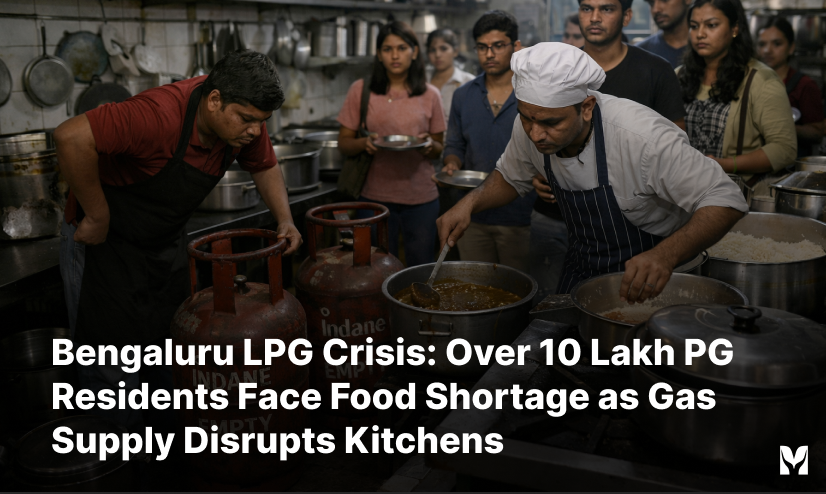
A sudden shortage of commercial LPG cylinders in Bengaluru is beginning to disrupt daily life for thousands of residents living in paying guest (PG) accommodations across the city. With cooking gas supplies declining, many PG kitchens are struggling to prepare meals, forcing operators to reduce menus and conserve fuel.
Bengaluru is home to an estimated 15,000 PG accommodations housing more than 10 lakh residents, including students, IT professionals, and migrant workers who rely heavily on in-house mess facilities for their daily meals. However, PG owners now warn that their remaining gas stock may last only a few days to a week if the supply disruption continues.
Menus Shrinking as Gas Runs Low
In response to the shortage, many PG operators have begun simplifying meal plans and avoiding gas-intensive dishes. Residents who once had multiple food options are now seeing limited menus, often consisting of basic rice and simple curries.
Some PG kitchens have started experimenting with electric rice cookers and induction stoves, but these appliances cannot easily replace LPG for large-scale cooking required to feed dozens of residents.
As a result, both residents and operators are preparing for the possibility of temporary disruptions to regular meal services.
Wider Impact on Restaurants and Hotels
The LPG shortage is not limited to PG accommodations. Restaurants, small eateries, and catering services across Bengaluru are also facing difficulties as deliveries of commercial LPG cylinders have slowed dramatically.
Several establishments have already reduced their menus or temporarily suspended operations due to the lack of cooking fuel.
Industry groups warn that if supplies are not restored soon, the crisis could spread across the entire hospitality sector, affecting food availability across the city.
Geopolitical Tensions Affect Energy Supply
The shortage is linked partly to global supply disruptions caused by escalating tensions in West Asia, which have affected energy shipments through critical maritime routes. India imports a significant portion of its LPG from the region, making the country vulnerable to such disruptions.
To manage the situation, authorities have prioritized LPG supply for households, which has reduced the availability of commercial cylinders used by hotels, restaurants, and PG kitchens.
Government Response
Karnataka Chief Minister Siddaramaiah and Deputy Chief Minister D.K. Shivakumar have raised concerns about the shortage and urged the central government to intervene to restore supplies quickly. Officials warn that continued disruption could impact businesses and daily food services in the city.
Meanwhile, industry associations are working with oil companies to find short-term solutions while urging authorities to ensure uninterrupted deliveries.
Conclusion
The LPG shortage has quickly exposed how dependent Bengaluru’s PG ecosystem is on a steady supply of commercial cooking gas. For the over one million residents living in PG accommodations, mess facilities are often their primary source of daily meals.
If gas supplies do not stabilize soon, PG operators may be forced to further restrict meals or temporarily halt kitchen operations, leaving thousands of students and workers scrambling for alternatives in an already expensive city.
For now, residents and business owners alike are watching closely, hoping the crisis is resolved before it turns into a full-scale food disruption in India’s tech capital.
"The decisions we make today will shape the world for generations to come."