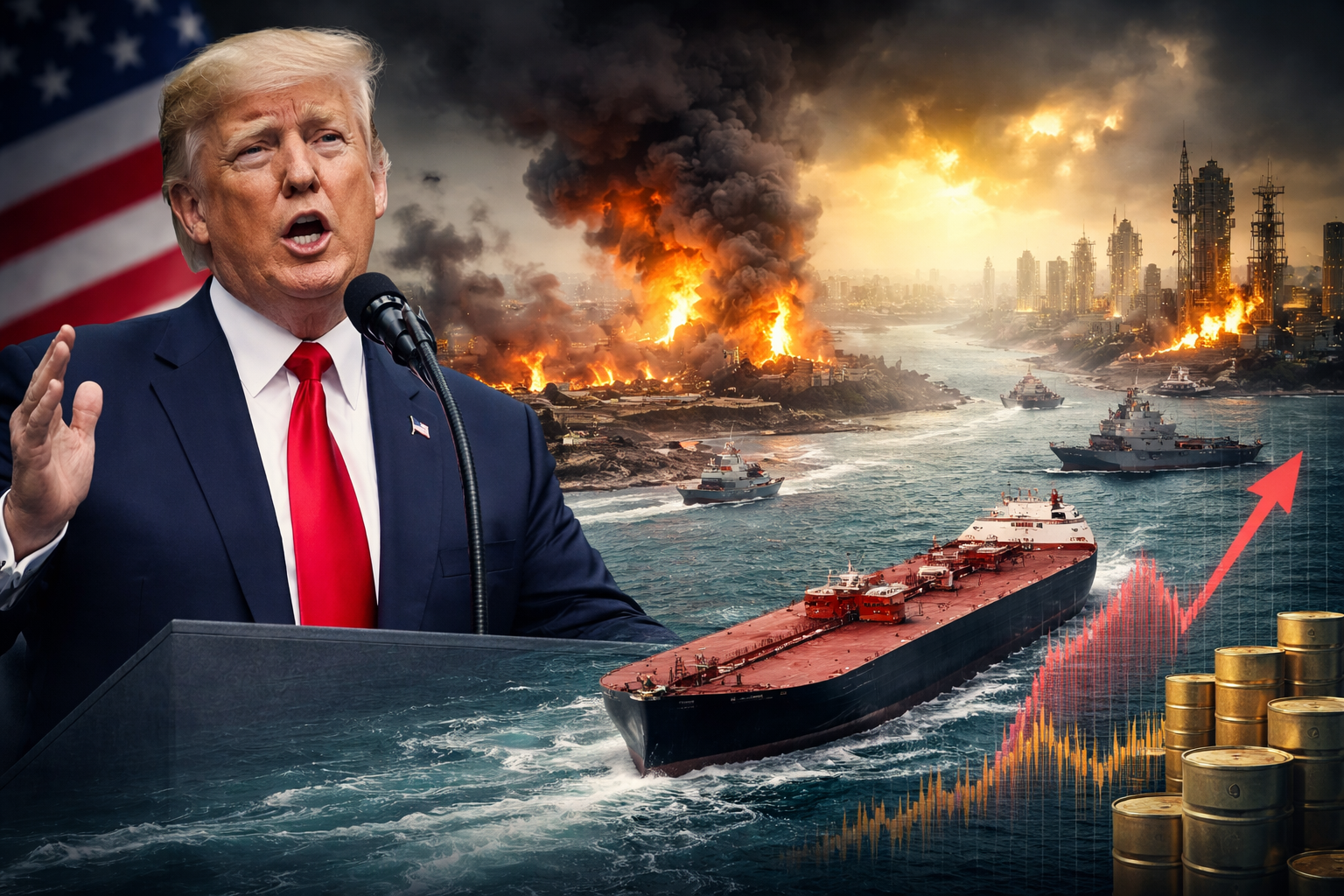
In a high-profile national address, US President Donald Trump delivered a decisive message on the ongoing conflict with Iran, describing the situation as approaching its “endgame.” The speech comes at a critical moment when geopolitical tensions, rising oil prices, and concerns over global trade routes are dominating international headlines.
A War Nearing Its Conclusion — Or Not?
Trump’s speech focused heavily on military progress made by the United States in the region. He claimed that Iran’s strategic capabilities—including missile systems, naval operations, and key defense infrastructure—have been significantly weakened due to sustained US operations. According to Trump, these developments indicate that the conflict is entering its final phase.
However, despite the confident tone, the President did not provide a clear timeline for when the war would officially end. This lack of specificity has left analysts and global observers cautious. Military experts suggest that while tactical victories may have been achieved, Iran still retains enough capability to prolong the conflict or respond asymmetrically.
This uncertainty highlights a broader reality: modern conflicts are rarely resolved quickly, and declarations of an “endgame” often signal a transition rather than a conclusion.
Oil Prices Surge, Global Impact Intensifies
One of the most immediate consequences of the conflict has been seen in global energy markets. Oil prices have surged significantly, crossing key psychological thresholds and triggering economic concerns worldwide.
Trump directly blamed Iran for the spike, accusing it of disrupting maritime trade and targeting oil infrastructure. These disruptions have created a ripple effect, impacting supply chains and increasing transportation costs globally.
For everyday consumers, this translates into higher petrol and diesel prices. In countries like India, where fuel costs directly influence inflation, the impact is particularly significant. Rising fuel prices can lead to increased costs for goods and services, putting pressure on household budgets and slowing economic growth.
Economists warn that if the crisis continues, it could lead to prolonged inflationary trends, affecting both developed and developing economies.
The Strategic Importance of the Strait of Hormuz
At the center of the crisis lies the Strait of Hormuz, one of the most critical maritime routes in the world. This narrow passage connects the Persian Gulf to the open ocean and is responsible for transporting nearly a fifth of the world’s oil supply.
Any disruption in this region has immediate global consequences. Reports of blockades, attacks, or military activity in and around the Strait have heightened fears of a full-scale energy crisis.
In his speech, Trump emphasized the need to keep this route open at all costs. He also suggested that other nations, especially those heavily dependent on Middle Eastern oil, should contribute more actively to securing the passage. This statement reflects a shift toward shared responsibility but also underscores the seriousness of the threat.
A Strong Warning to Iran
Trump’s address was not just about reassurance—it was also a clear warning. He stated that if Iran fails to cooperate or continues its aggressive actions, the United States is prepared to escalate its military response.
This includes the possibility of targeting critical infrastructure and expanding operations in the region. Such statements reinforce the administration’s hardline stance but also raise concerns about the risk of further escalation.
Critics argue that aggressive rhetoric could worsen the situation, while supporters believe it is necessary to maintain pressure and deter further conflict.
Market Reactions and Economic Uncertainty
Global financial markets reacted cautiously to Trump’s speech. Stock markets showed volatility, reflecting investor uncertainty about the future of the conflict and its economic implications.
The combination of rising oil prices, geopolitical instability, and unclear policy direction has created a challenging environment for investors and policymakers alike. Businesses are also facing increased costs and unpredictability, particularly those reliant on global supply chains.
Experts suggest that until there is clear evidence of de-escalation, markets are likely to remain unstable.
The Bigger Picture: What Comes Next?
While Trump’s speech framed the situation as a nearing victory, the reality remains complex. Iran’s long-term strategy, regional alliances, and potential for asymmetric warfare mean that the conflict could evolve rather than simply end.
Moreover, the broader geopolitical landscape—including the involvement of other global powers—adds another layer of uncertainty. The situation is not just a bilateral conflict but a global issue with far-reaching consequences.
"The decisions we make today will shape the world for generations to come."