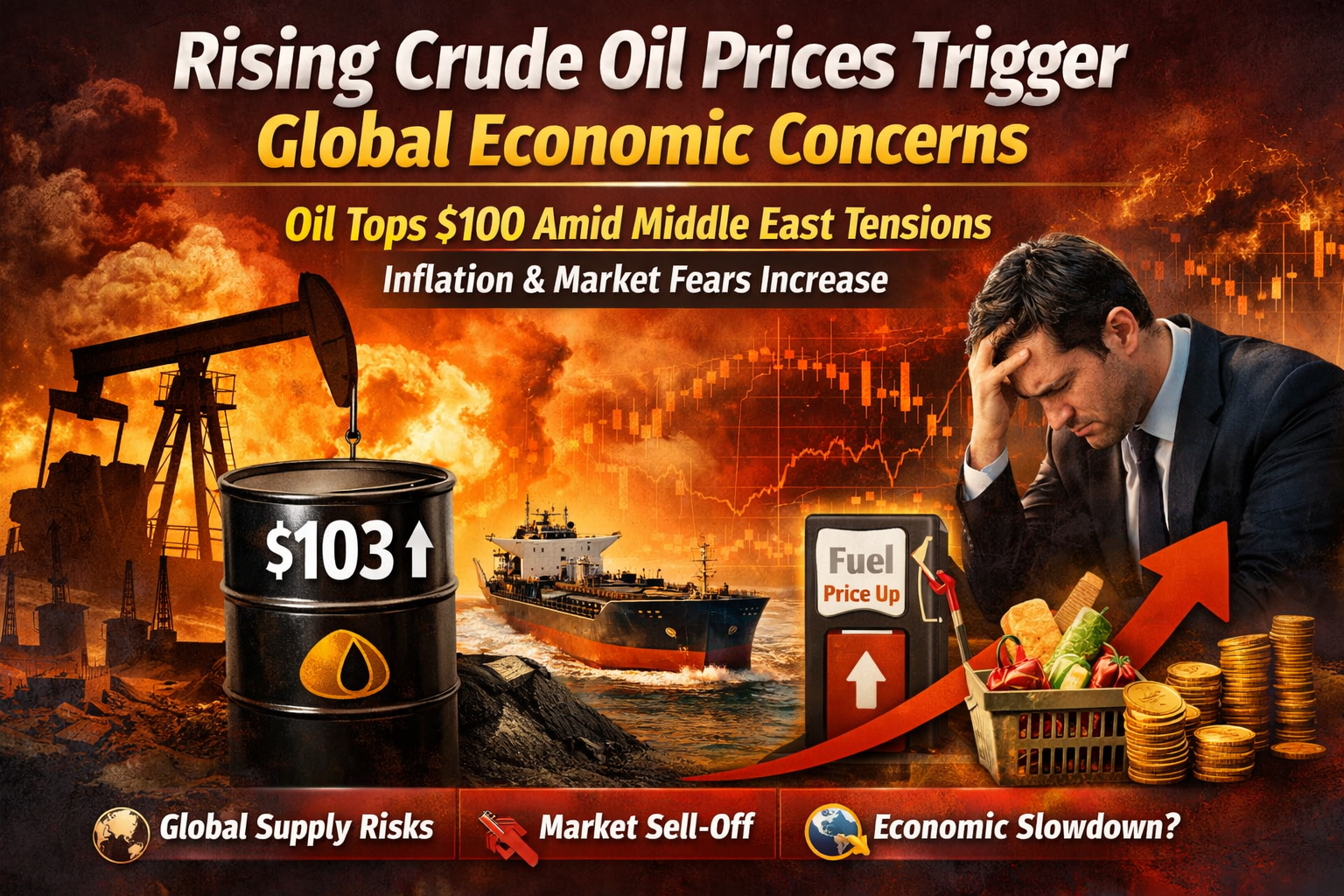
Global energy markets are witnessing significant volatility as crude oil prices surge sharply amid escalating geopolitical tensions in the Middle East. In recent days, international crude prices have crossed the $100 per barrel mark, sparking concerns among investors, policymakers, and economists about the potential impact on the global economy.
The sharp rise in oil prices is largely linked to fears of supply disruptions in the Gulf region, which plays a crucial role in global energy production and transportation. Strategic shipping routes and major oil infrastructure located in the region are under close watch as tensions continue to rise. These uncertainties have pushed energy traders to react quickly, driving prices upward in international markets.
Energy analysts warn that if the geopolitical situation continues to remain unstable, oil prices could climb even higher in the coming weeks. Higher crude prices generally translate into increased fuel costs, including petrol, diesel, and aviation fuel, which can significantly impact transportation, manufacturing, and logistics sectors worldwide.
Countries that rely heavily on imported crude oil may feel the pressure more strongly. For emerging economies such as India, rising energy costs could increase inflationary pressures and widen trade deficits. Higher fuel prices often lead to increased costs of goods and services, ultimately affecting consumers and businesses alike.
Financial markets have also reacted cautiously to the surge in energy prices. Several global stock markets have experienced declines as investors assess the risks associated with rising inflation and potential economic slowdown. Market participants are closely monitoring developments in the Middle East and policy responses from major oil-producing nations.
Experts believe that the direction of oil prices in the near future will depend largely on geopolitical developments and supply conditions in the global energy market. Until stability returns to the region, volatility in energy prices and financial markets is likely to remain a key concern for the global economy.
"The decisions we make today will shape the world for generations to come."