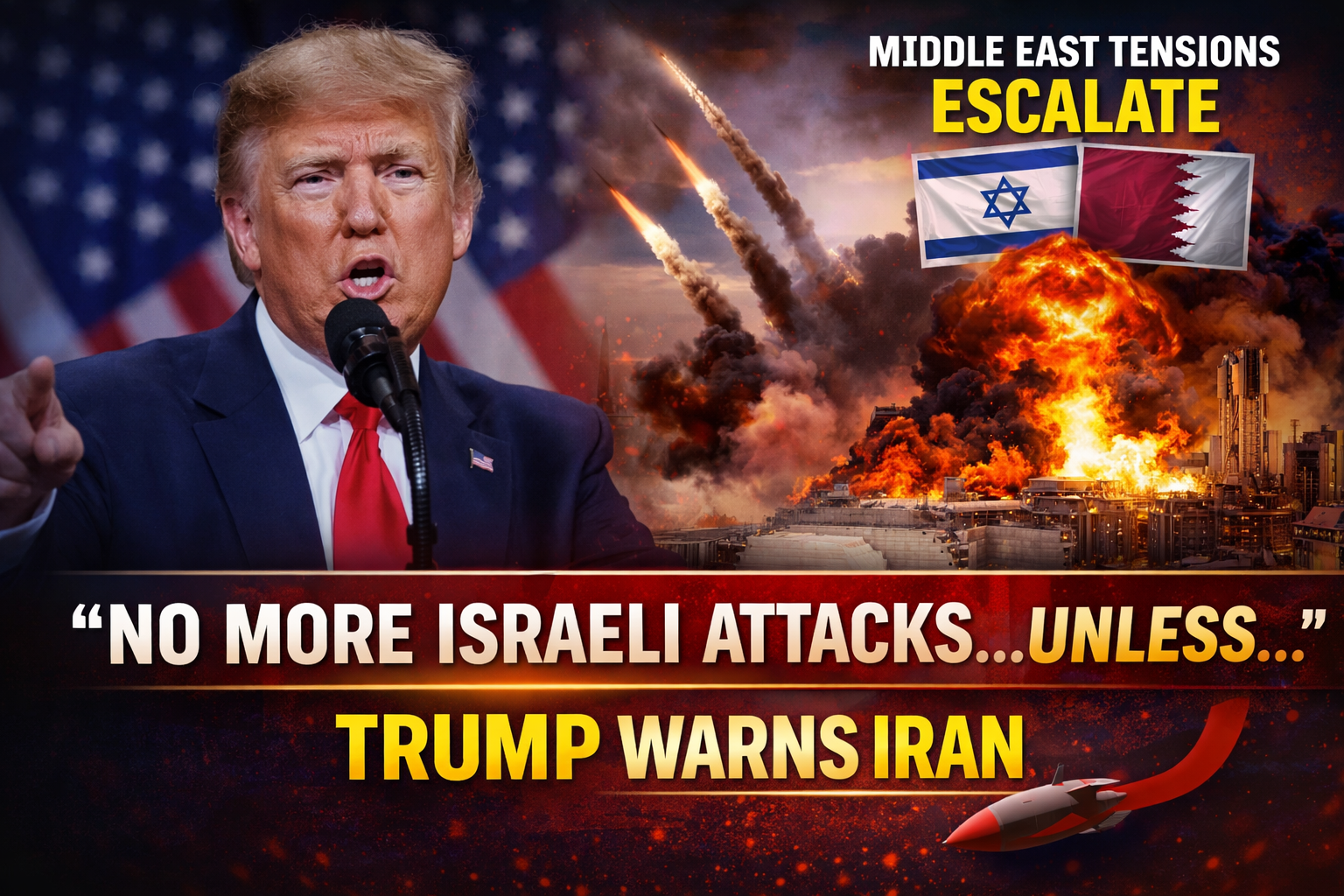
A fresh wave of geopolitical tension has emerged in the Middle East following a retaliatory strike by Iran on a key liquefied natural gas facility in Qatar. The development marks a significant escalation in the ongoing regional conflict and has raised global concerns over energy security and stability.
The situation intensified after earlier attacks on Iran’s energy infrastructure, prompting a strong response from Tehran. The targeting of Qatar’s LNG plant—an essential hub for global gas exports—has added a new dimension to the crisis, signaling that the conflict is expanding beyond direct adversaries and potentially affecting neutral or economically strategic nations.
Amid these developments, Donald Trump issued a statement indicating a possible pause in further Israeli military action, but with a clear condition. He suggested that Israel would refrain from launching additional strikes unless Iran carries out further attacks on Qatar. This conditional stance reflects an attempt to balance deterrence with de-escalation, while keeping pressure on Tehran.
Trump’s remarks highlight the delicate nature of the current situation. On one hand, the statement appears to be a diplomatic effort to prevent an all-out escalation. On the other, it serves as a warning that any further aggression could trigger renewed military responses. Such messaging underscores the fragile equilibrium currently shaping the region.
The broader implications of this development extend beyond regional politics. Qatar’s LNG infrastructure plays a crucial role in supplying natural gas to global markets. Any disruption to its operations could tighten energy supplies, drive up prices, and contribute to inflationary pressures worldwide. Countries dependent on energy imports are particularly vulnerable to such shocks.
Analysts believe that the coming days will be critical in determining whether the conflict stabilizes or intensifies further. Much will depend on Iran’s next move and how other global and regional powers respond to the evolving situation. Diplomatic channels may be tested as efforts to prevent further escalation gain urgency.
In conclusion, the latest developments reflect a complex interplay of military action and strategic messaging. While Trump’s conditional warning introduces a possibility of restraint, the underlying tensions remain unresolved. As the Middle East stands at a critical juncture, the world watches closely, aware that even a single miscalculation could have far-reaching global consequences.
"The decisions we make today will shape the world for generations to come."