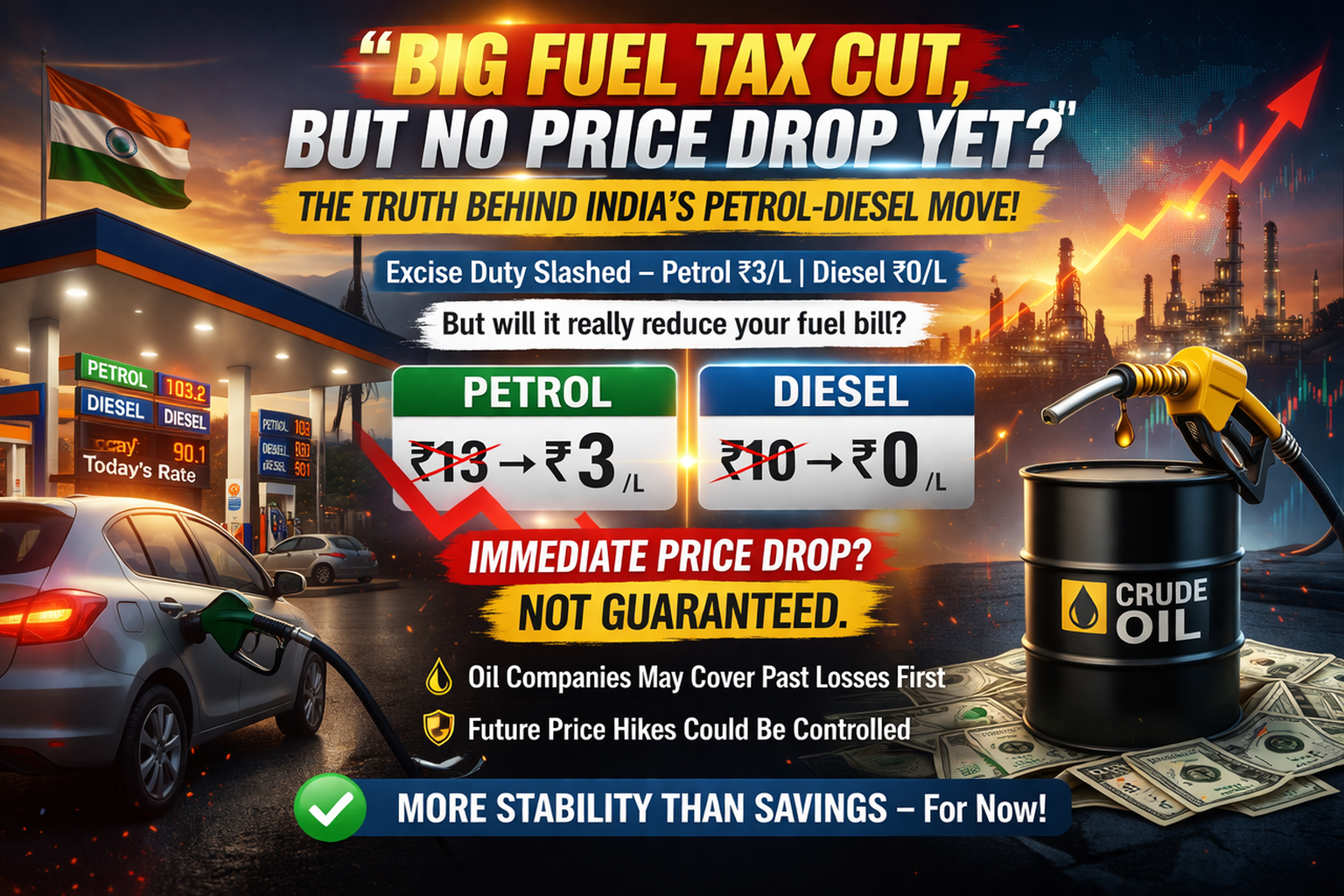
In a major economic move, the Government of India has announced a sharp reduction in excise duty on petrol and diesel. Petrol duty has been reduced to ₹3 per litre, while diesel has effectively been brought down to zero. While this decision has grabbed headlines and sparked hopes of cheaper fuel, the real impact on consumers may not be immediate.
The backdrop of this decision lies in the rising global crude oil prices. Ongoing geopolitical tensions, particularly in the Middle East, have disrupted supply chains and increased the cost of crude oil imports. As India depends heavily on imported oil, this has created significant pressure on both the economy and oil marketing companies.
To ease this burden, the government has stepped in with a tax cut. However, unlike earlier times when such reductions directly led to cheaper fuel, the current situation is different. Oil companies in India have been absorbing losses for a while to keep fuel prices stable despite rising crude costs.
Now, with the excise duty reduced, these companies are likely to use the benefit to offset their past losses rather than immediately lowering retail prices. This means that while the government has reduced its share of taxes, the final price paid by consumers may remain unchanged for now.
That said, the move is not without benefits. By reducing the tax burden, the government has created a buffer that can prevent future price hikes. In simple terms, even if global oil prices continue to rise, the impact on Indian consumers may be less severe than it would have been otherwise.
For the common man, this translates into indirect relief. While you may not notice a drop in fuel prices today, you are less likely to face sudden increases tomorrow. Additionally, stable fuel prices help control inflation, as transportation costs play a major role in determining the prices of everyday goods.
In conclusion, this excise duty cut is more about stability than savings. It may not deliver instant relief at petrol pumps, but it acts as a protective step to keep the economy balanced during uncertain global conditions.
"The decisions we make today will shape the world for generations to come."