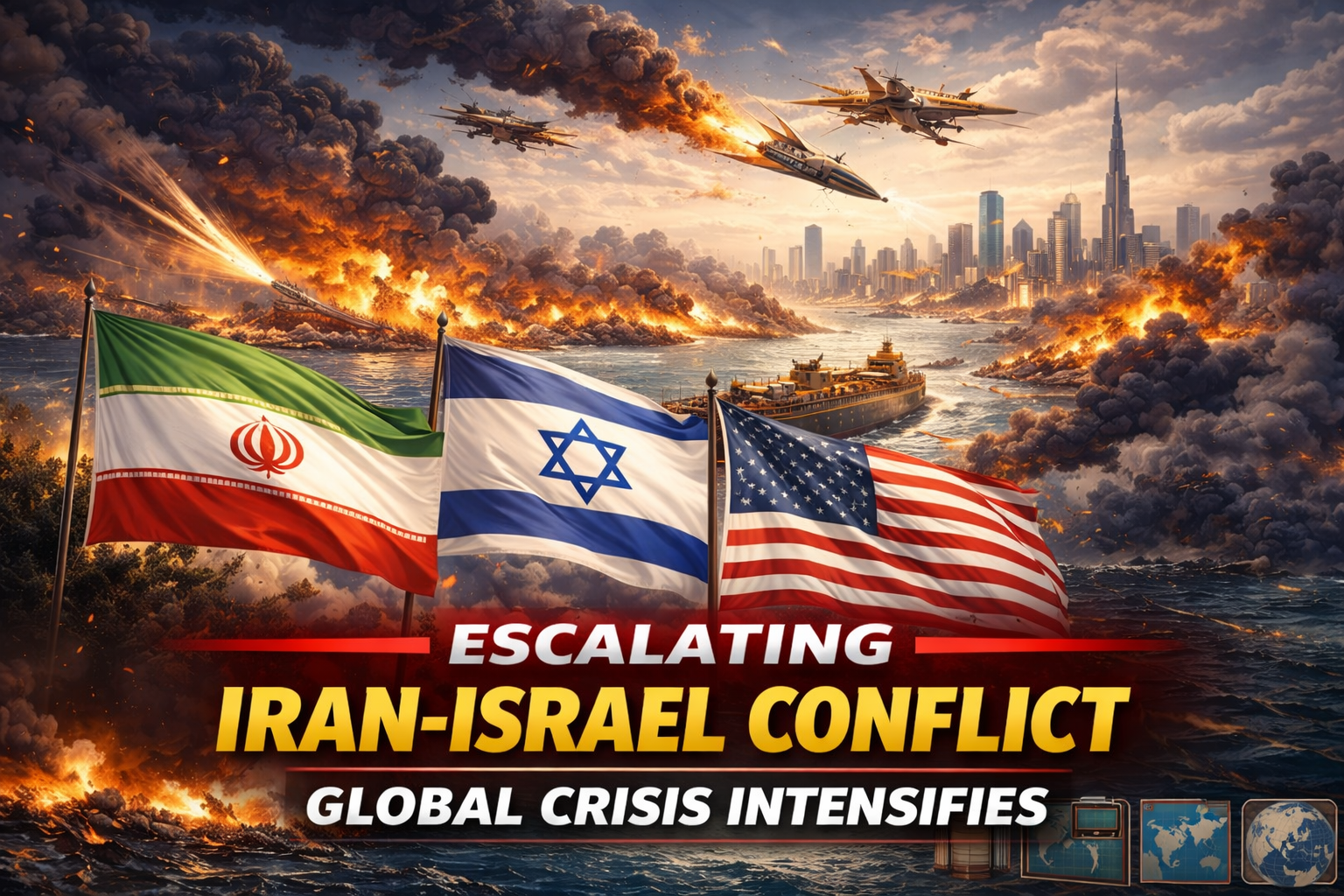
The Middle East is witnessing a sharp escalation in tensions as Iran, Israel, and the United States become increasingly involved in a rapidly intensifying conflict. The situation has not only raised regional concerns but has also begun affecting global economic stability.
Iran’s recent military actions, including missile launches and drone strikes, have triggered strong retaliation from Israel and the United States. These developments have created a cycle of escalation, making the situation highly unpredictable and dangerous.
A major point of concern remains the Strait of Hormuz, which plays a vital role in global oil transportation. With rising threats in the region, crude oil prices have surged, increasing the risk of inflation and economic slowdown in multiple countries.
The global response has been cautious yet concerned. The United Nations and several world leaders have urged restraint and emphasized the importance of dialogue. However, despite ongoing diplomatic efforts, there has been no clear breakthrough toward peace.
Analysts believe that the current crisis could have long-term implications for global security and trade. If tensions continue to escalate, the impact could extend far beyond the Middle East, affecting economies and political relations worldwide.
"The decisions we make today will shape the world for generations to come."