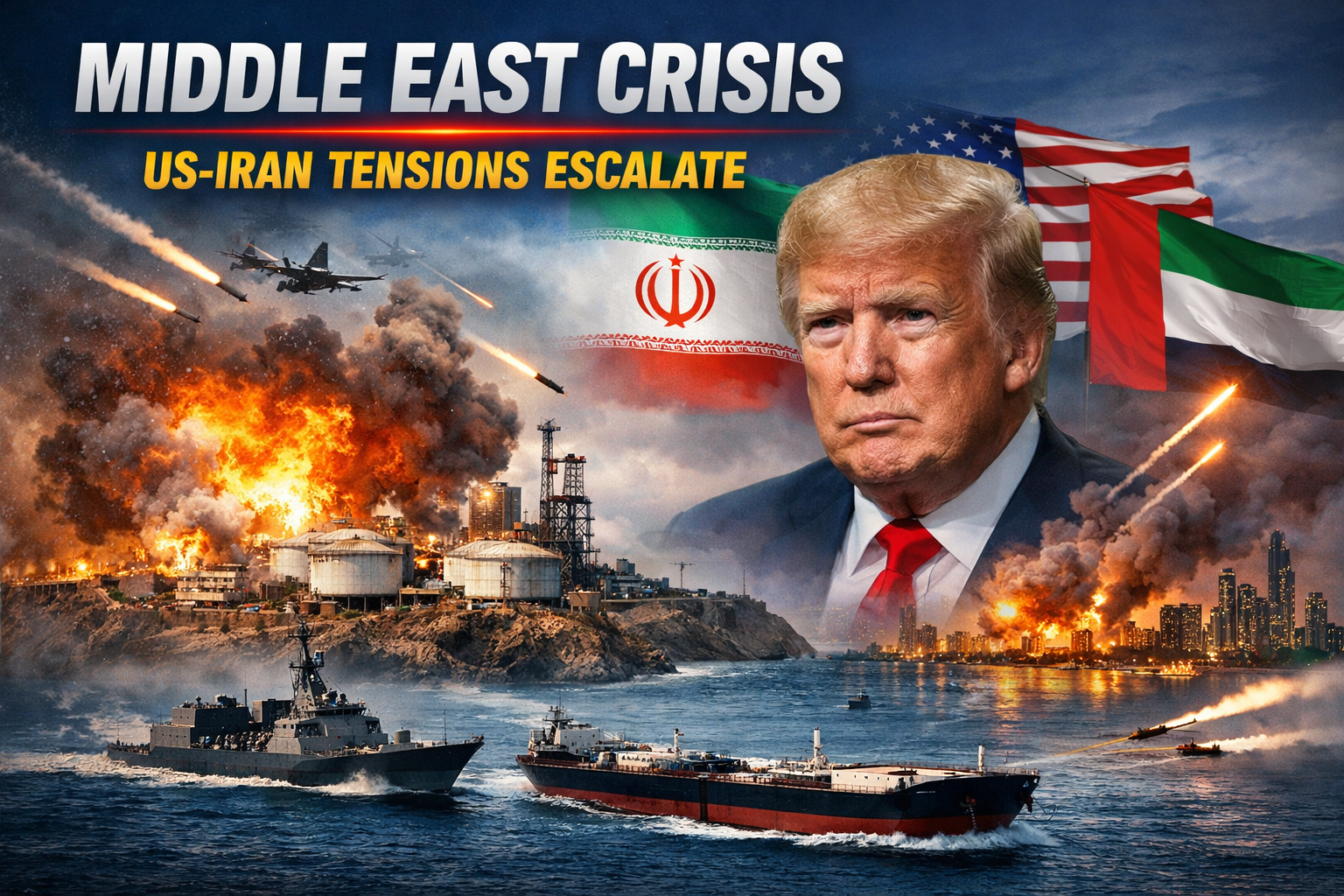
Tensions in the Middle East have escalated sharply after the United States carried out large-scale strikes on Kharg Island, one of Iran’s most critical energy hubs. The operation targeted multiple strategic locations on the island, which plays a major role in Iran’s crude oil exports.
Speaking about the strikes, former US President Donald Trump said American forces had “decimated” key infrastructure and military installations on the island. According to US officials, the attack focused on facilities believed to support Iranian military logistics and energy export operations.
Kharg Island is considered the backbone of Iran’s oil export system, handling a significant portion of the country’s crude shipments. Any disruption to operations there could have a wider impact on global oil markets and regional energy supply.
At the same time, Iran has intensified its military activity across the Gulf region. Reports indicate that Iranian forces have launched missiles and drones targeting sites in several Gulf states that host US military facilities. These developments have raised concerns about a broader regional conflict.
Trump also expressed surprise that Iran chose to target Gulf countries directly rather than focusing solely on American or Israeli positions. Analysts believe Tehran’s strategy may be aimed at pressuring regional allies of the United States and disrupting logistical support in the Gulf.
The crisis is unfolding near the strategically vital Strait of Hormuz, a narrow waterway through which a large share of the world’s oil supply passes. Any escalation in this area could disrupt shipping routes and increase volatility in global energy markets.
International observers are closely monitoring the situation as diplomatic efforts continue to prevent the conflict from spreading further. However, with both sides increasing military activity, the Middle East remains on edge.
"The decisions we make today will shape the world for generations to come."