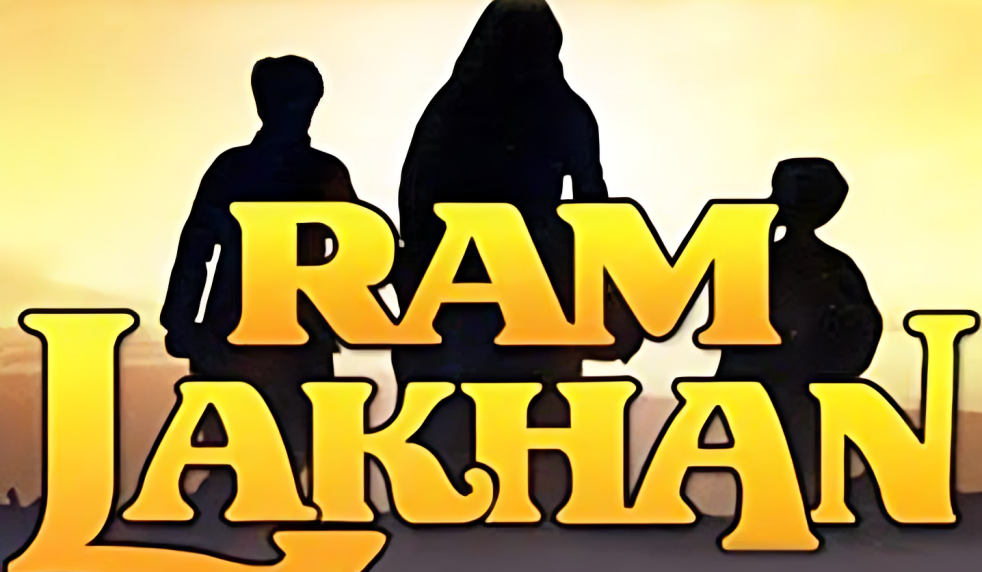
The date was January 27, 1989. The Indian film industry was at a crossroads, navigating the shift from the gritty action of the 80s to the romantic musical era of the 90s. Amidst this transition, a cinematic storm titled Ram Lakhan arrived in theaters, forever altering the landscape of the "Masala" genre. Today, as we mark 37 years since its release, the film remains not just a nostalgic memory, but a blueprint for commercial filmmaking that few have been able to replicate.
Directed by the "Showman" Subhash Ghai, Ram Lakhan was more than just a story of two brothers; it was a cultural phenomenon. It gave us the definitive bromance of Jackie Shroff and Anil Kapoor, the meteoric rise of Madhuri Dixit, and a soundtrack that still compels every Indian to tap their feet the moment they hear a synthesizer riff.
The Architecture of a Blockbuster
At its core, Ram Lakhan followed a traditional trope: the "Lost and Found" and "Revenge" themes. After the virtuous Sharda (played with heartbreaking intensity by Rakhee) loses her husband to the greed of his cousins, Bhishamber (Amrish Puri) and Bhanu (Paresh Rawal), she raises her sons with one mission—justice.
However, Ghai’s genius lay in the contrast of the two leads:
Ram (Jackie Shroff): The personification of Maryada (honor). An upright police officer, Ram represented the stoic, selfless protector.
Lakhan (Anil Kapoor): The lovable rogue. Ambitious, slightly corrupt, and fiercely energetic, Lakhan was the "common man" who wanted a shortcut to the good life.
This dichotomy created a friction that fueled the film's drama. While Ram wanted to follow the law, Lakhan wanted to own the system. Their eventual clash and reunion provided the emotional stakes that kept audiences hooked for nearly three hours.
"My Name Is Lakhan": The Song That Never Ended
You cannot discuss Ram Lakhan without its music. The duo Laxmikant-Pyarelal delivered a soundtrack for the ages. "My Name Is Lakhan" did more than just top the charts; it created a persona for Anil Kapoor that he carries to this day. The iconic step—the hand across the chest, the flick of the fingers—is arguably the most recognized dance move in the history of Hindi cinema.
But the album had range. From the soulful "Bada Dukh Dina O Ramji" (picturized on a luminous Madhuri Dixit) to the romantic "Tera Naam Liya" and the patriotic-familial anthem "Mere Do Anmol Ratan," every song served the narrative. It was also a landmark release as the first Hindi film soundtrack to be released on CD by HMV.
A Gallery of Icons
Ram Lakhan was a masterclass in ensemble casting.
The Villains: Amrish Puri as Bhishamber was chilling, but it was the chemistry between the villains that added flavor. Gulshan Grover’s "Bad Man" became a lifelong moniker, and Raza Murad’s Sir John added an international menace.
The Leading Ladies: Madhuri Dixit as Radha and Dimple Kapadia as Geeta weren't just love interests; they were the moral anchors. Madhuri’s "Ek Do Teen" (from Tezaab) had already made her a star, but Ram Lakhan solidified her status as the queen of hearts.
The Comic Relief: The pairing of Anupam Kher and Satish Kaushik (as Kanshiram and Devdhar) provided legendary comedic moments, proving that a Subhash Ghai film was a complete "Thali" of entertainment.
The "Showman" and the Lack of a Script
In a fascinating bit of trivia, Subhash Ghai has often revealed that Ram Lakhan began filming without a complete, bound script. Much of the film was improvised on set, driven by Ghai's instinct for drama and the "larger-than-life" visuals captured by cinematographer Ashok Mehta.
Ghai understood the pulse of the audience. He knew that the sight of Ram and Lakhan reuniting to walk through the fire in the climax would evoke a visceral reaction. This "commercial instinct" is what earned him the title of the modern-day Raj Kapoor.
Legacy and the 37-Year Milestone
Even in 2026, the film’s influence is undeniable. Modern directors like Rohit Shetty often cite Ram Lakhan as the inspiration for the "Cop Universe." The film taught Bollywood how to balance multiple stars without diminishing their individual light—a feat that remains difficult for many filmmakers today.
As Anil Kapoor and Jackie Shroff celebrate this milestone, their off-screen bond mirrors their on-screen brotherhood. They remain the "Ram and Lakhan" of the industry, a symbol of an era where cinema was loud, proud, and unapologetically emotional.
Ram Lakhan is not just a movie; it’s a celebration of the spirit of Bombay Cinema. It’s about a mother’s vow, a brother’s redemption, and the ultimate triumph of good over evil—all served with a side of spectacular dance and unforgettable dialogue. As it completes 37 years, we tip our hats to the film that told us that no matter how far a "Lakhan" wanders, there is always a "Ram" and a "Sharda" waiting to bring him home.
"The decisions we make today will shape the world for generations to come."