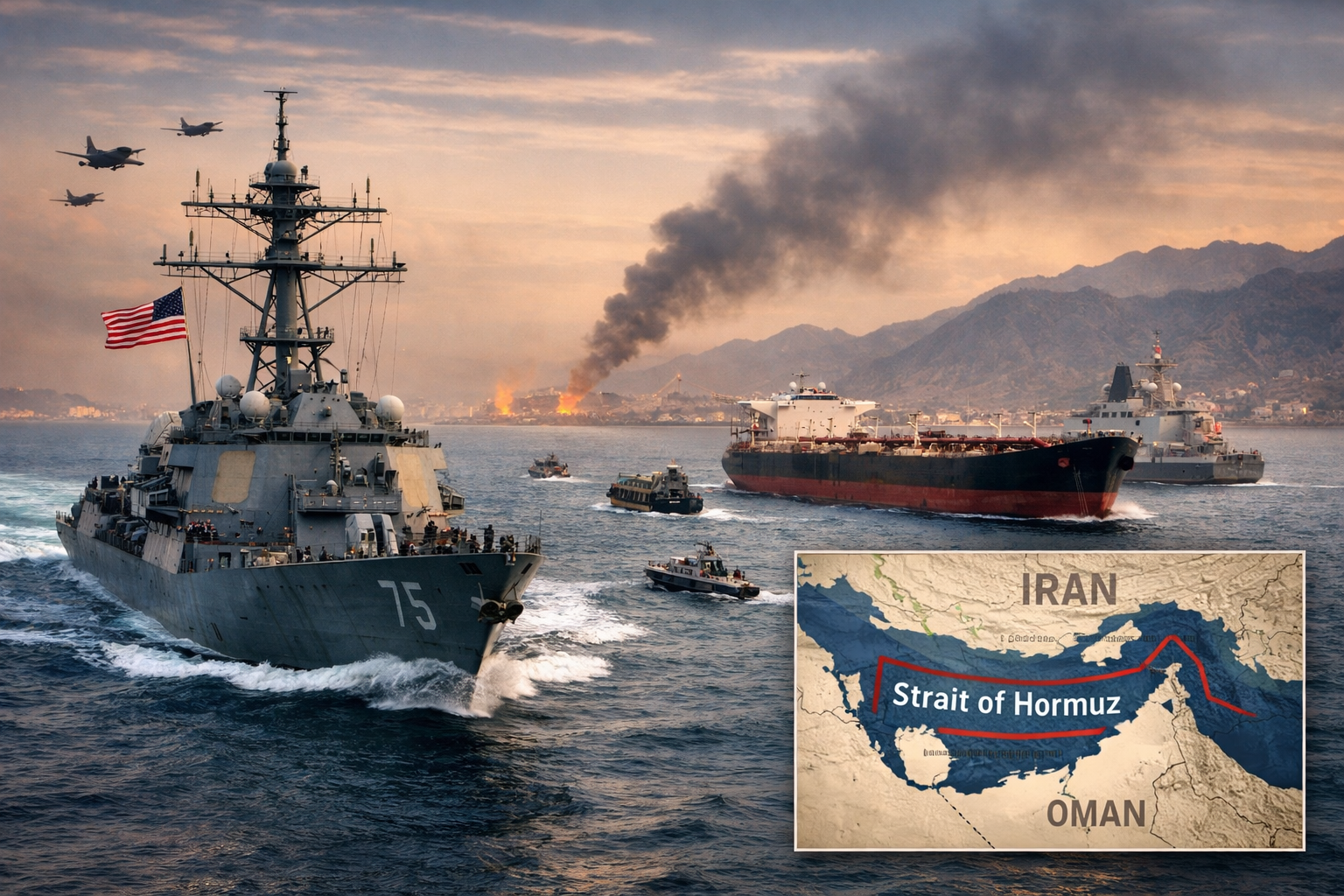
Rising tensions in the Middle East have once again drawn global attention to the strategic importance of the Strait of Hormuz, one of the most vital maritime chokepoints for global energy supply. Former U.S. President Donald Trump has urged several powerful nations to help secure the waterway as fears grow over potential disruptions linked to the ongoing conflict involving Iran.
The Strait of Hormuz is a narrow shipping corridor that connects the Persian Gulf with the Arabian Sea. Nearly one-fifth of the world’s oil and a large portion of liquefied natural gas shipments pass through this route daily. Any disruption in the strait could have immediate consequences for global energy markets and fuel prices.
In light of the escalating tensions between United States, Israel, and Iran, Trump suggested that several countries with strong naval capabilities should take part in safeguarding commercial shipping in the region. According to the report, around seven nations possess the naval strength and strategic reach to respond effectively to this call.
Among the countries often mentioned are United Kingdom, France, China, Japan, South Korea, and India, along with the United States itself. These nations maintain advanced naval fleets capable of escorting commercial vessels and ensuring maritime security in high-risk regions.
Security experts warn that if the Strait of Hormuz were to become unsafe or blocked, it could trigger a global energy shock. Countries that rely heavily on oil imports from the Gulf region would face supply disruptions and rising costs.
As geopolitical tensions continue to evolve, the protection of critical maritime routes like the Strait of Hormuz has become a priority for many nations. The coming weeks may determine whether a multinational naval effort will emerge to ensure that one of the world’s most important energy corridors remains open and secure.
"The decisions we make today will shape the world for generations to come."