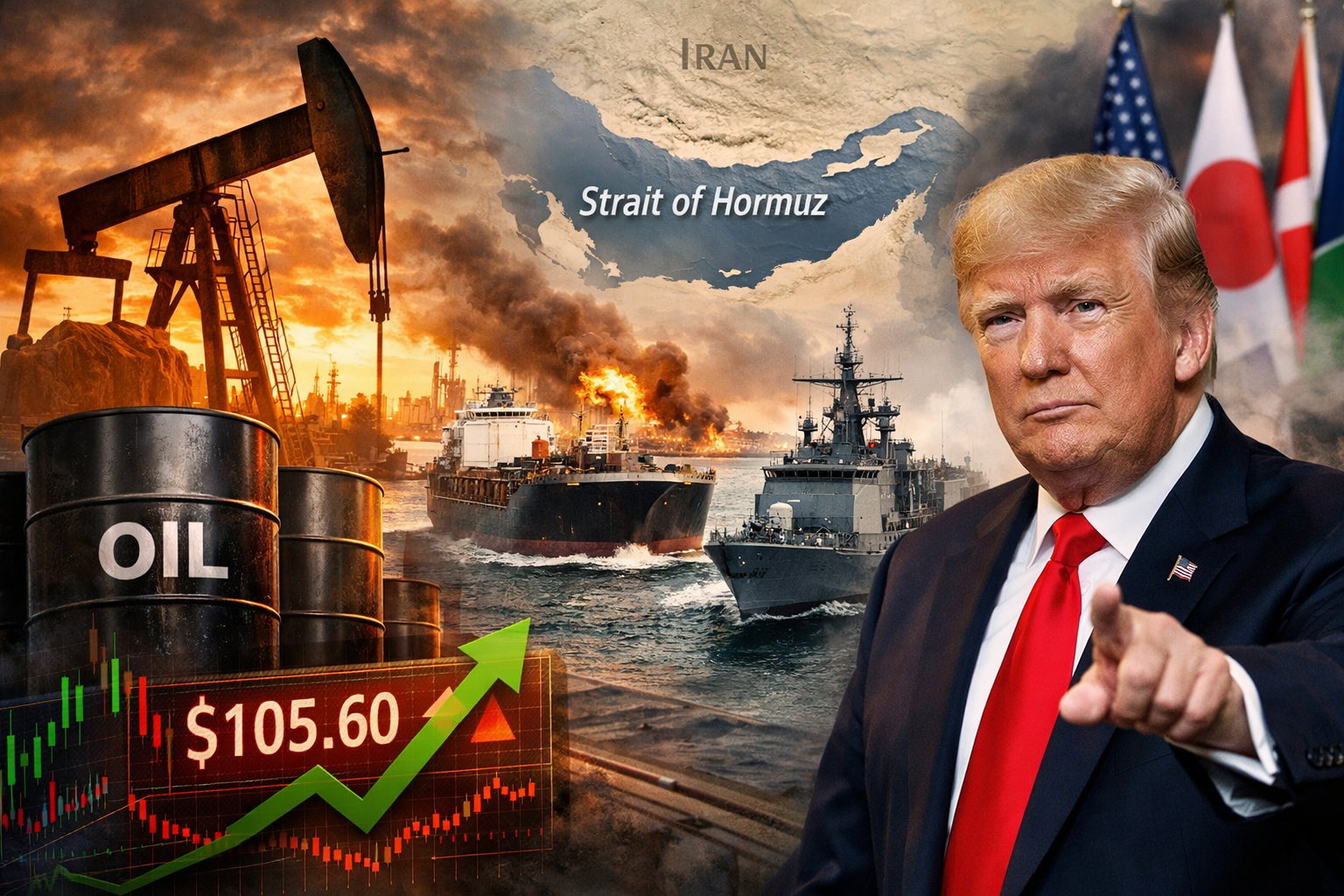
Global oil prices are climbing rapidly as geopolitical tensions in the Middle East continue to disrupt energy markets. The situation intensified after Donald Trump called for an international coalition to help secure and reopen the critical Strait of Hormuz, one of the world’s most important oil shipping routes.
The Strait of Hormuz connects the Persian Gulf with the Arabian Sea and is responsible for transporting nearly one-fifth of the world’s oil supply. However, ongoing military tensions involving Iran, the United States, and regional allies have created serious risks for commercial shipping in the area. Several oil tankers have either delayed their journeys or rerouted to avoid potential threats.
As uncertainty grows, international oil markets have reacted strongly. Benchmark crude prices have risen significantly as traders fear a potential disruption in global supply chains. Energy analysts say that if the route remains unstable for a prolonged period, it could trigger further increases in fuel prices across many countries.
In response to the crisis, Trump has urged multiple nations to form a coordinated maritime security coalition. The aim is to escort commercial ships and ensure safe passage through the strategic waterway. The proposal highlights growing international concern over maintaining stability in one of the world’s most vital energy corridors.
Countries dependent on Middle Eastern oil, including major Asian economies, are closely monitoring the developments. Any prolonged closure or restriction in the Strait of Hormuz could affect global fuel availability and drive inflation in energy-importing nations.
Experts believe that diplomatic efforts and international cooperation will play a crucial role in resolving the situation. Until a clear solution emerges, volatility in oil prices is expected to remain high as markets react to every new development in the region.
"The decisions we make today will shape the world for generations to come."