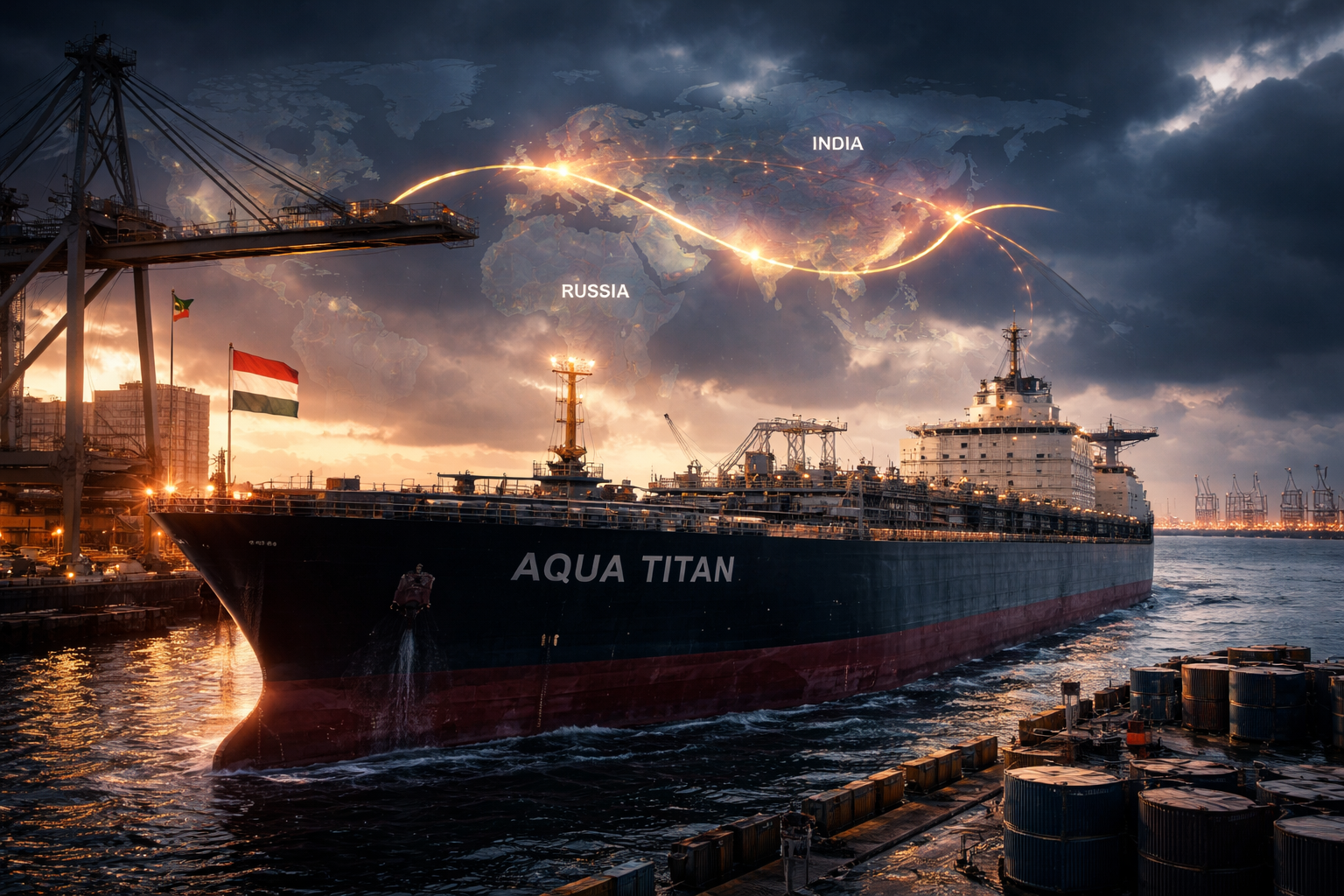
Global tensions between the United States, Israel, and Iran are no longer limited to military headlines—they are now clearly impacting the flow of oil across the world. A recent development highlights this shift: a Russian oil tanker named Aqua Titan, which was originally on its way to China, has now docked at New Mangalore port in India.
This change in route might seem like a minor logistical update, but it actually reflects a deeper disruption in the global energy network. The ongoing conflict has raised concerns over the safety of key shipping routes, especially in the Middle East. The Strait of Hormuz, one of the world’s most critical oil transit points, is facing heightened risk due to increasing tensions and potential threats to commercial vessels.
As uncertainty grows, oil companies and governments are making quick decisions to secure stable supply chains. In this case, diverting the tanker to India signals a strategic adjustment. India, being one of the world’s largest energy consumers, is actively ensuring that its fuel needs are met without interruption. By accepting diverted shipments, the country is strengthening its position in the global energy landscape.
Russia, on the other hand, continues to play a significant role as an alternative oil supplier. With shifting alliances and changing trade routes, Russian crude is finding new buyers more frequently, especially in Asia. This flexibility benefits both exporters and importers during uncertain times.
The arrival of Aqua Titan in India is more than just a single shipment—it represents how global trade adapts during crises. It shows that while conflicts may disrupt traditional routes, countries and companies are quick to respond, ensuring that essential resources like oil continue to flow.
In the coming days, such diversions may become more common as the world watches closely how the geopolitical situation unfolds. For now, one thing is clear: the impact of war is being felt far beyond the battlefield, reaching deep into global markets and everyday economies.
"The decisions we make today will shape the world for generations to come."