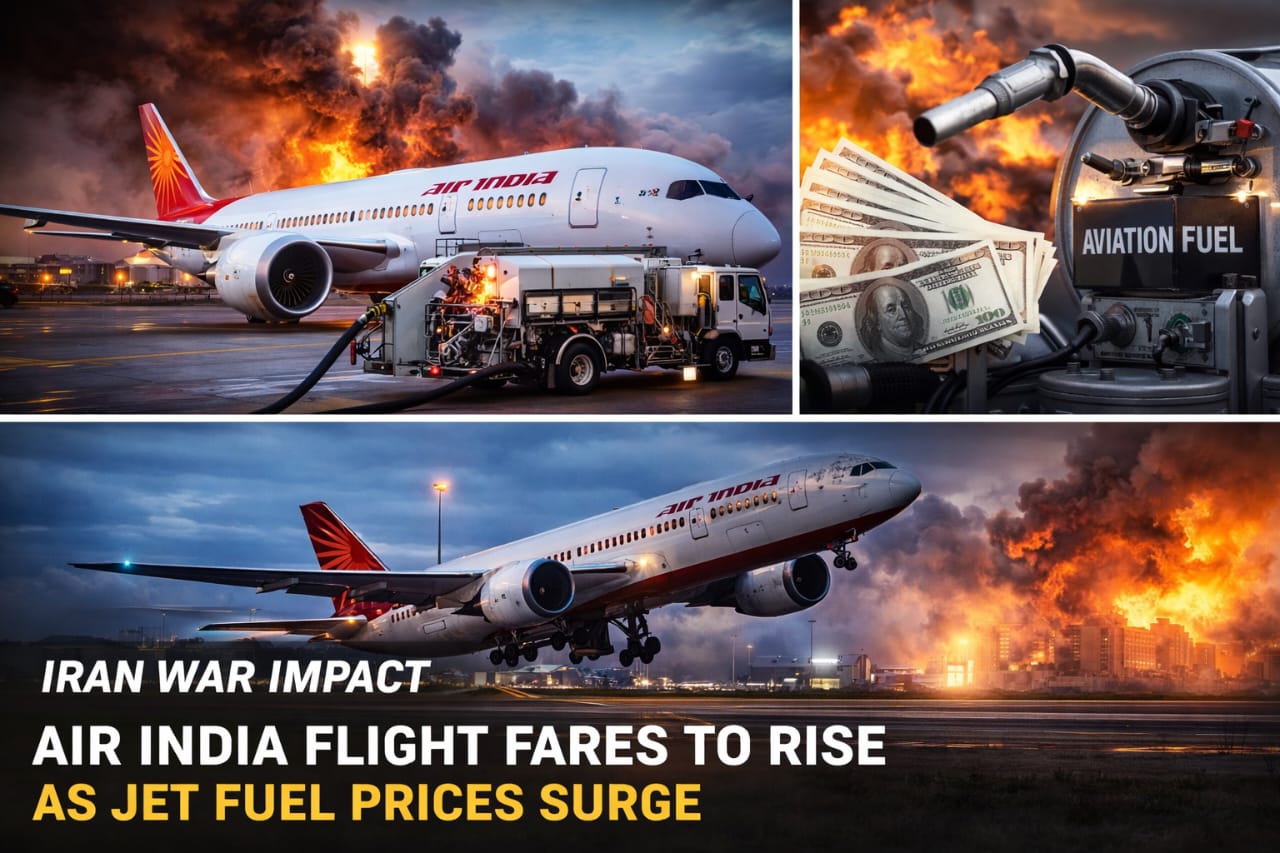
Air India has indicated that passengers may soon face higher ticket prices as the airline responds to rising aviation fuel costs linked to tensions in the Middle East. The conflict involving Iran has triggered a surge in crude oil prices, increasing operational expenses for airlines worldwide.
Aviation turbine fuel is one of the most significant costs for airlines, and even a small increase in global oil prices can have a major impact on the industry. With energy markets reacting strongly to geopolitical instability, airlines are being forced to reconsider their pricing strategies.
To manage the growing fuel expenses, Air India plans to introduce an additional fuel surcharge on its flight tickets. This surcharge will apply to both domestic and international routes and is expected to increase the overall cost of air travel.
Experts believe the decision reflects broader trends in the aviation industry, where airlines often adjust ticket prices when fuel costs rise. The Middle East plays a critical role in global oil production, and any conflict in the region tends to affect energy prices across international markets.
The airline sector is particularly sensitive to fuel price fluctuations, and prolonged geopolitical tensions could continue to impact travel costs. If the situation worsens or oil prices remain elevated, passengers may see further fare adjustments in the future.
Despite the potential increase in ticket prices, airlines are also focusing on maintaining operational efficiency and minimizing disruptions for travelers.
As the global situation continues to evolve, both airlines and passengers are watching closely to see how energy prices and geopolitical developments will influence the future of air travel.
"The decisions we make today will shape the world for generations to come."