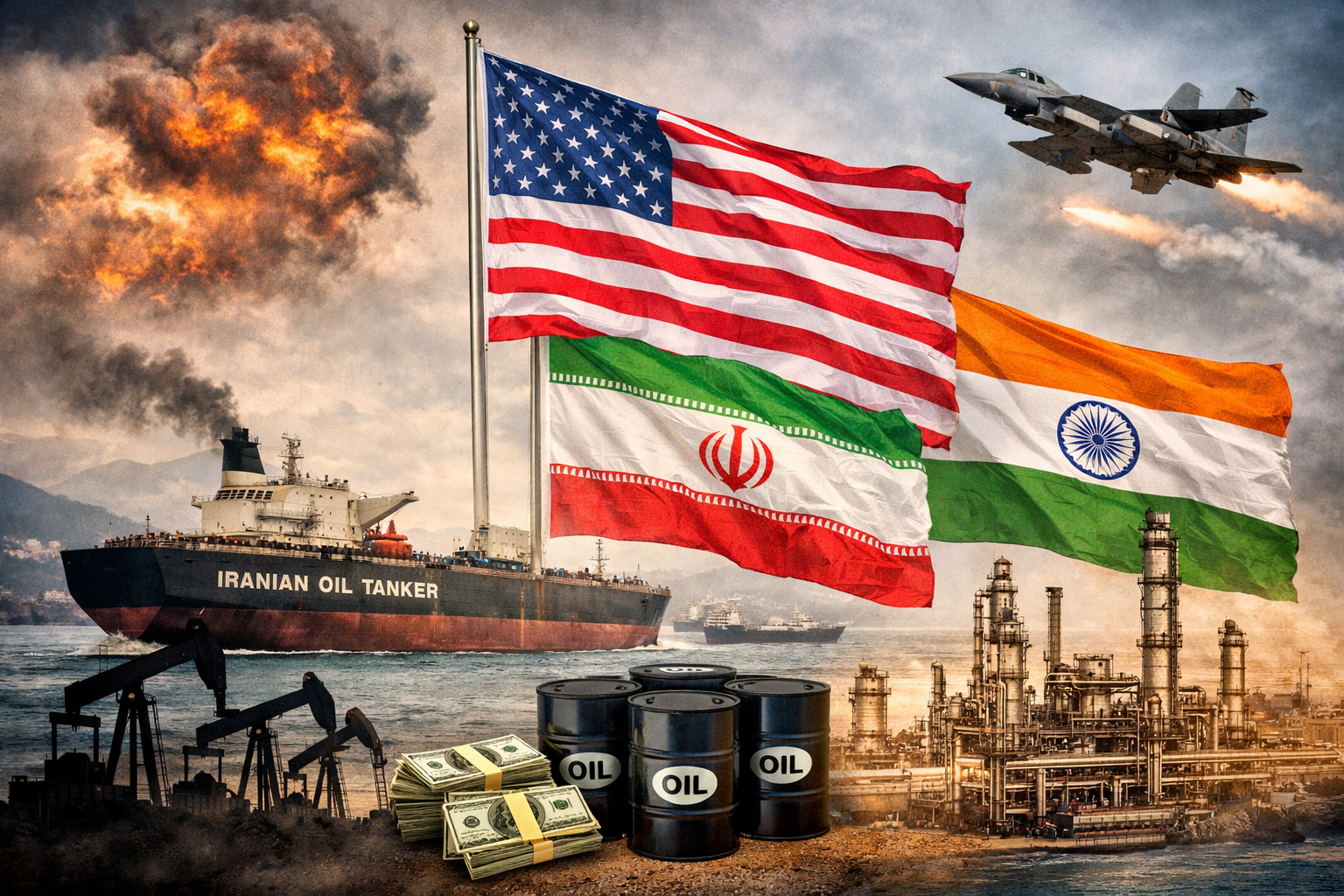
In the middle of rising tensions between Iran and Israel, the global oil market has found itself at a critical turning point. What began as a regional conflict is now reshaping energy strategies across continents. The latest trigger? A temporary decision by the United States to relax sanctions on Iranian oil exports.
At first glance, the move may seem technical or short-term—but its impact is far wider. For countries like India, which rely heavily on imported crude, this decision opens a door that has been shut for years. Iranian oil, once a key part of India’s energy basket, could now make a brief comeback.
The reason behind this shift is simple: supply pressure. The ongoing conflict has raised serious concerns around the Strait of Hormuz, one of the most important oil transit routes in the world. Even the fear of disruption in this narrow waterway has been enough to push global oil prices higher and unsettle markets.
In such a situation, allowing Iranian oil into the system—even temporarily—acts like a pressure valve. It increases supply, calms markets, and gives major economies some breathing space.
But for Indian refiners, the situation is not as straightforward as it appears. Yes, Iranian crude is often cheaper and comes with flexible terms, making it an attractive option. However, the challenges lie beneath the surface. Payment mechanisms remain complicated due to lingering financial restrictions. There is also the question of timing—when a policy is only valid for a few weeks, companies hesitate to make large commitments.
Beyond economics, there’s also geopolitics at play. Every barrel of oil traded in this environment carries diplomatic weight. The U.S. must balance its strategic stance with market realities, while Iran sees an opportunity to reassert itself in global energy conversations.
What this moment truly highlights is how deeply interconnected the world has become. A conflict in one region doesn’t stay contained—it ripples through trade routes, fuel prices, and national policies thousands of miles away.
For now, the easing of sanctions is less of a solution and more of a pause—a brief window in an otherwise tense and uncertain landscape. Whether this leads to lasting change or fades as a temporary adjustment will depend on how the conflict evolves in the coming weeks.
"The decisions we make today will shape the world for generations to come."