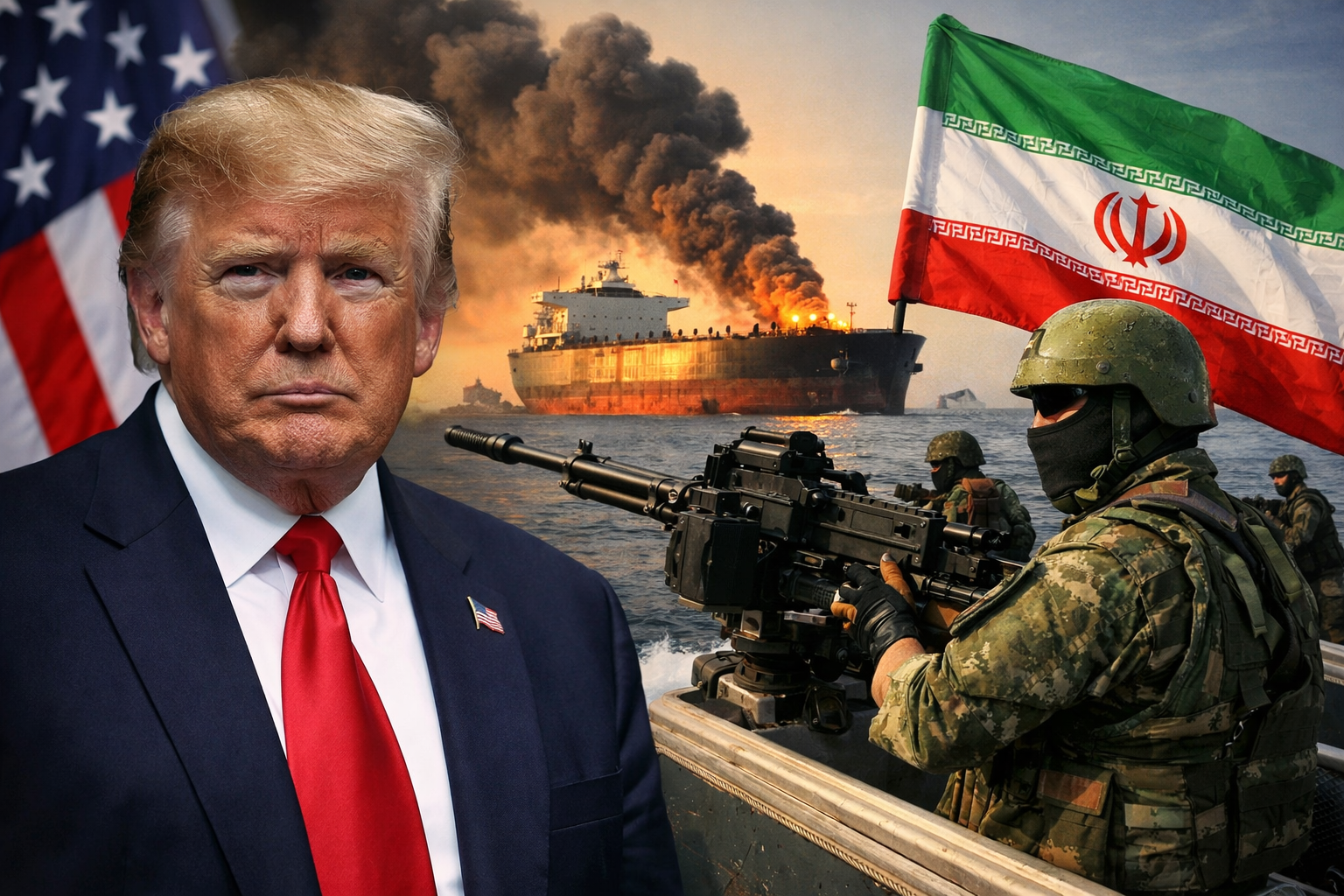
In a development that could reshape global geopolitical dynamics, Donald Trump has reportedly indicated a willingness to end the ongoing conflict with Iran—even if the crucial oil transit route, the Strait of Hormuz, remains closed.
This statement reflects a significant shift in priorities. Traditionally, the Strait of Hormuz has been considered the lifeline of global oil trade, with nearly a fifth of the world’s oil passing through this narrow channel. Any disruption here typically triggers panic in global markets, pushing fuel prices higher and straining economies worldwide.
However, Trump’s reported stance suggests that ending military tensions may now outweigh immediate economic concerns tied to oil flow. It signals a strategic recalibration—one where de-escalation of conflict is seen as a necessary first step, even if it comes at the cost of short-term disruptions in energy supply.
The implications of such a move are far-reaching. If the conflict ends but the Strait remains closed, global oil markets could continue to face instability. Countries heavily dependent on Middle Eastern oil exports may struggle to secure supply, leading to prolonged volatility in fuel prices. For developing economies in particular, this could translate into inflationary pressure and slower economic growth.
At the same time, the statement may also be interpreted as a diplomatic signal directed at Iran. By separating the end of conflict from the reopening of the Strait, the United States could be attempting to create leverage in negotiations—suggesting that peace is possible, but normalization of trade routes would require further agreements.
Critics, however, argue that such an approach carries risks. A closed Strait of Hormuz, even in the absence of active conflict, remains a flashpoint that could reignite tensions at any moment. Moreover, global markets thrive on stability, and uncertainty surrounding such a vital route could keep investors on edge.
Despite these concerns, the possibility of ending the conflict offers a glimmer of hope in an otherwise tense geopolitical landscape. It underscores a broader reality: in modern warfare, economic considerations and military strategies are deeply intertwined, but sometimes, the urgency of peace can outweigh immediate financial interests.
"The decisions we make today will shape the world for generations to come."