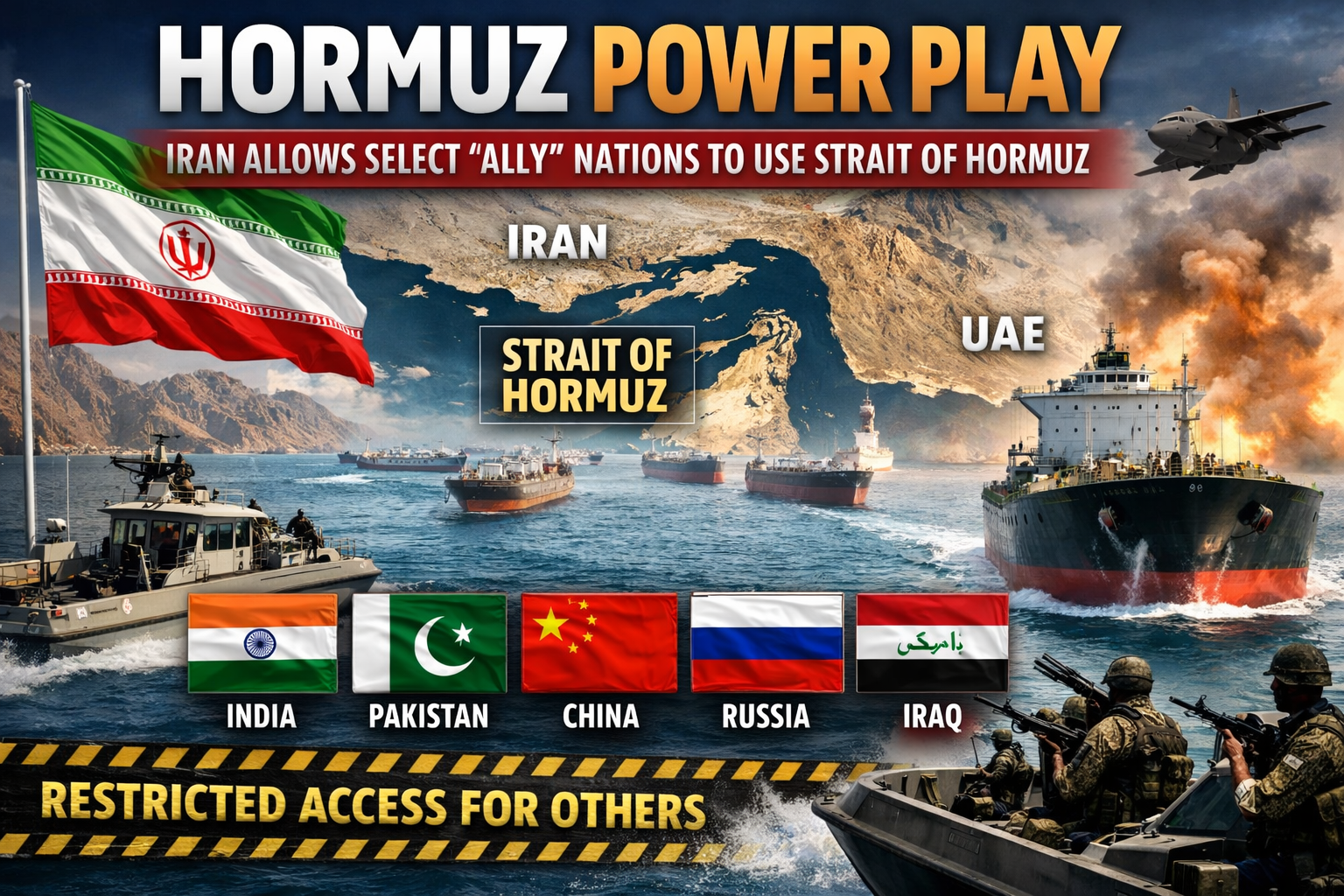
In a bold and strategic move during escalating regional tensions, Iran has partially opened the critical Strait of Hormuz—but not for everyone. Instead of allowing unrestricted global access, Tehran has chosen a selective approach, permitting only a handful of “friendly” nations to pass through one of the world’s most vital oil corridors.
Countries such as India, Pakistan, China, Russia, and Iraq are reportedly among those granted conditional access. This decision comes at a time when global oil markets are already under pressure due to ongoing conflict involving Iran and its adversaries.
The Strait of Hormuz is not just any waterway—it is the backbone of global energy movement, with nearly 20% of the world’s oil supply passing through it daily. Any disruption here can send shockwaves across economies, leading to rising fuel prices and supply chain instability. By controlling who gets access, Iran is effectively influencing the flow of global energy.
From a geopolitical perspective, this move is being seen as a calculated strategy. Iran is not only asserting its dominance over a crucial maritime route but also sending a clear diplomatic message: cooperation comes with access, while opposition may face restrictions. This “friend vs foe” approach adds a new layer of complexity to an already tense global situation.
For India, the development brings a sense of temporary relief. As a major oil importer, continued access through the Strait ensures that energy supplies remain stable for now. However, the situation remains uncertain, and any escalation could quickly change the dynamics.
It’s important to note that access is not entirely free-flowing even for friendly nations. Ships are required to follow strict guidelines, including prior approvals and compliance with Iranian maritime regulations. There have already been instances where vessels were turned back for not adhering to these rules, highlighting Iran’s tight control over the passage.
Globally, markets are reacting cautiously. Oil prices remain sensitive to any news related to the Strait, and analysts warn that prolonged restrictions or further escalation could trigger a broader economic impact.
In essence, Iran’s selective opening of the Strait of Hormuz is more than just a wartime adjustment—it is a powerful geopolitical move. While it ensures limited continuity for some nations, it also underscores how a single strategic chokepoint can influence the balance of global trade and power.
"The decisions we make today will shape the world for generations to come."