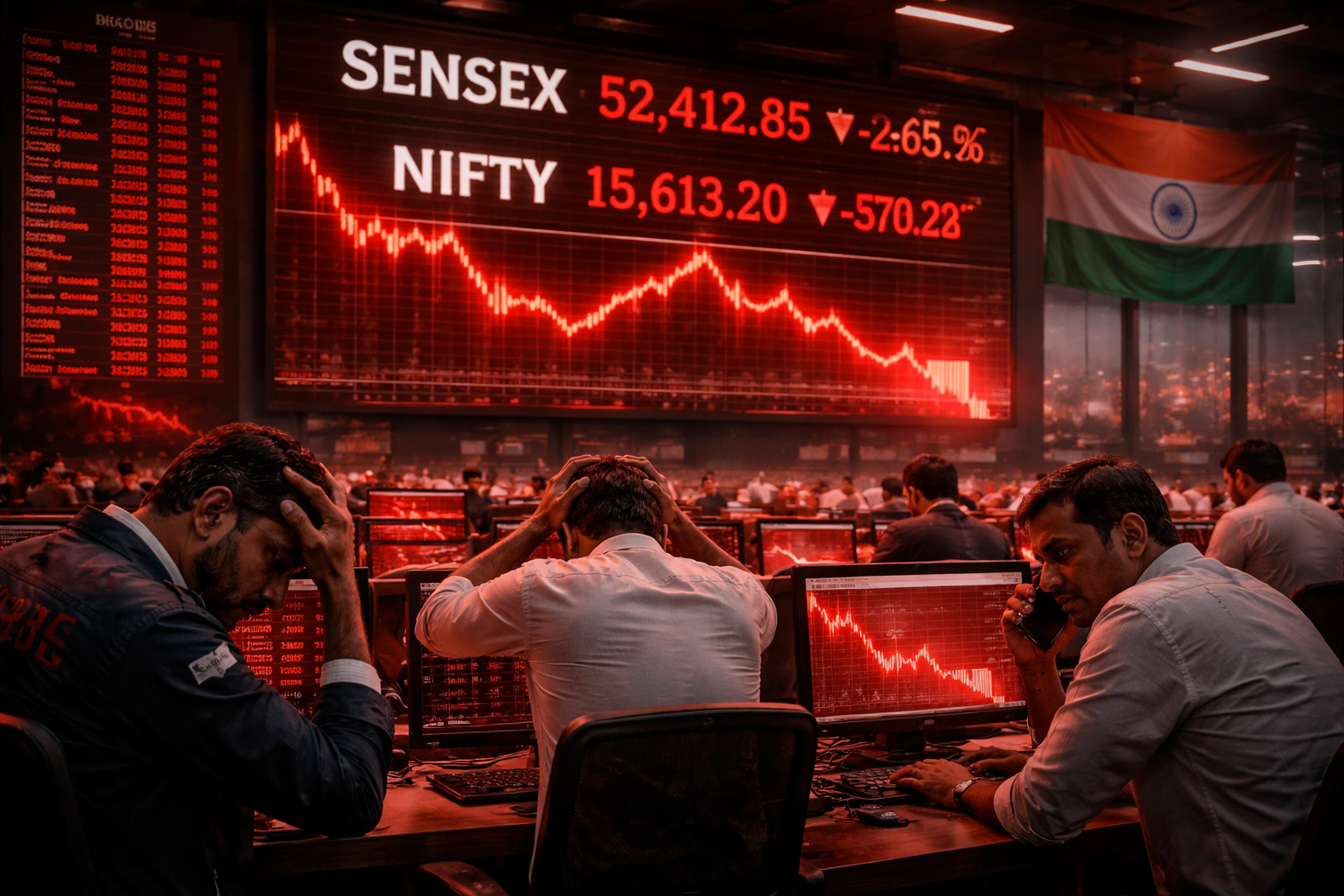
The Indian stock market closed the financial year 2025–26 on a weak and volatile note, with benchmark indices witnessing a sharp sell-off driven by global uncertainties and weakening macroeconomic indicators.
The BSE Sensex plunged over 1,600 points, ending near 71,900 levels, while the Nifty 50 dropped more than 2% to settle around 22,300. The massive decline wiped out nearly ₹9 lakh crore in investor wealth in a single trading session, reflecting widespread panic across Dalal Street.
Broad-Based Selling Across Markets
The sell-off was not limited to large-cap stocks. Midcap and smallcap indices also declined sharply, indicating a broader risk-off sentiment among investors. Key sectors such as IT, banking, and real estate led the losses, while only a few defensive pockets managed to stay resilient.
Global Tensions Weigh on Sentiment
One of the primary triggers behind the market fall has been escalating geopolitical tensions in the Middle East, particularly involving Iran. The uncertainty has pushed global crude oil prices above $115 per barrel, raising concerns for India, which relies heavily on oil imports.
Higher oil prices directly impact inflation, fiscal balance, and corporate profitability, making equities less attractive in the short term.
Foreign Investors Continue Exit
Foreign Institutional Investors (FIIs) have been aggressively pulling money out of Indian equities. Over the course of FY26, outflows have reached nearly $19 billion, making it one of the largest capital exits in recent years.
This sustained selling pressure has significantly weakened market momentum and added to the downside risk.
Rupee Hits Record Low
The Indian rupee also came under pressure, falling to an all-time low of around ₹95 against the US dollar. A weaker currency increases import costs and signals reduced investor confidence, further aggravating market sentiment.
Sectoral Impact
- IT Sector: Among the worst performers, impacted by global slowdown fears
- Banking & Financials: Pressured by liquidity concerns and regulatory tightening
- Real Estate: Hit due to rising interest rates and reduced demand
Meanwhile, selective sectors such as defence and metals showed relative resilience amid global uncertainties.
FY26 Performance Overview
The overall performance of the market in FY26 remained subdued:
- Sensex declined by approximately 7%
- Nifty 50 fell around 5%
This marks the worst fiscal performance since the pandemic-driven crash in 2020.
Market Outlook
In the near term, markets are expected to remain volatile and sensitive to global cues. Key factors to watch include crude oil prices, geopolitical developments, and central bank interventions.
Despite current challenges, domestic growth drivers such as infrastructure spending and manufacturing expansion provide some hope for medium-term recovery.
Conclusion
The Indian stock market is currently navigating a phase of heightened uncertainty driven by global and domestic pressures. While the long-term outlook remains structurally positive, short-term volatility is likely to persist until key macroeconomic risks stabilize.
"The decisions we make today will shape the world for generations to come."