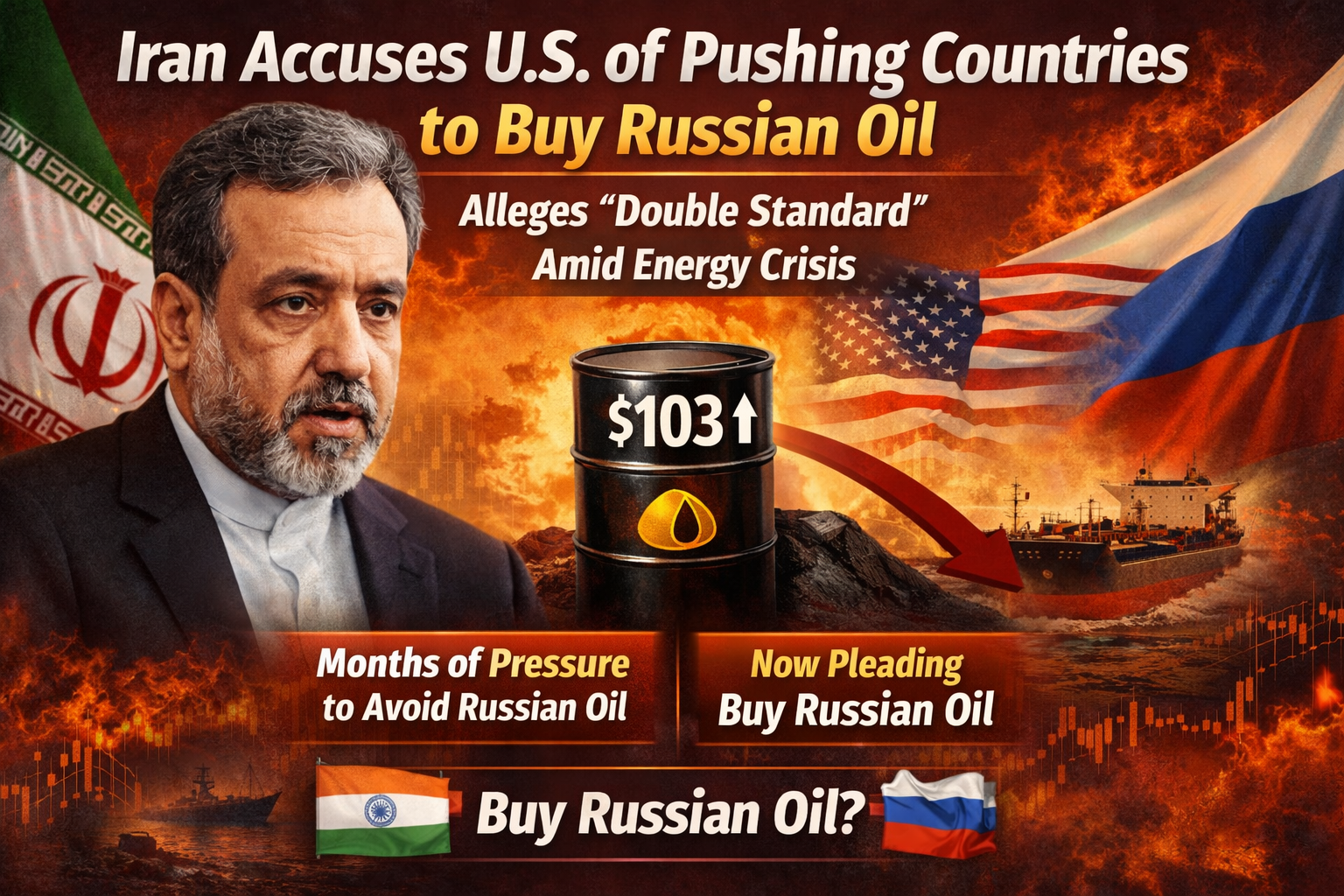
Tensions in global energy politics intensified after Iran accused the United States of changing its position on Russian oil imports. Iranian Foreign Minister Seyed Abbas Araghchi recently criticized Washington, claiming that the U.S. is now encouraging countries around the world, including India, to purchase crude oil from Russia despite earlier opposing such trade.
According to Araghchi, the U.S. had previously spent months pressuring nations to reduce or stop buying Russian oil as part of broader sanctions following geopolitical conflicts. However, rising tensions in the Middle East and fears of supply disruptions in global oil routes have created a new challenge for international energy markets.
The Iranian minister argued that the changing approach reflects what he described as a “double standard” in U.S. policy. He stated that countries were earlier warned against relying on Russian energy, but are now being indirectly encouraged to maintain those purchases to prevent shortages in global oil supply.
The issue has become more sensitive as oil prices have surged in recent weeks due to instability in key energy-producing regions. With fears of supply disruptions increasing, energy-importing countries are seeking alternative sources to ensure stable fuel supplies. In this context, Russian crude remains an important option for several large economies.
India, one of the world’s largest oil importers, has continued to purchase discounted Russian crude in recent years to manage energy costs and maintain fuel availability. The evolving global situation has once again placed India’s energy strategy under international attention.
Analysts believe that the ongoing geopolitical tensions could reshape global energy trade patterns in the coming months. As governments attempt to balance political alliances with economic realities, the debate over Russian oil purchases is likely to remain a key issue in international diplomacy and energy policy.
Experts note that stability in global oil markets will depend largely on geopolitical developments and the ability of major energy producers to maintain uninterrupted supply. Until the situation improves, energy markets may continue to face volatility and political scrutiny.
"The decisions we make today will shape the world for generations to come."