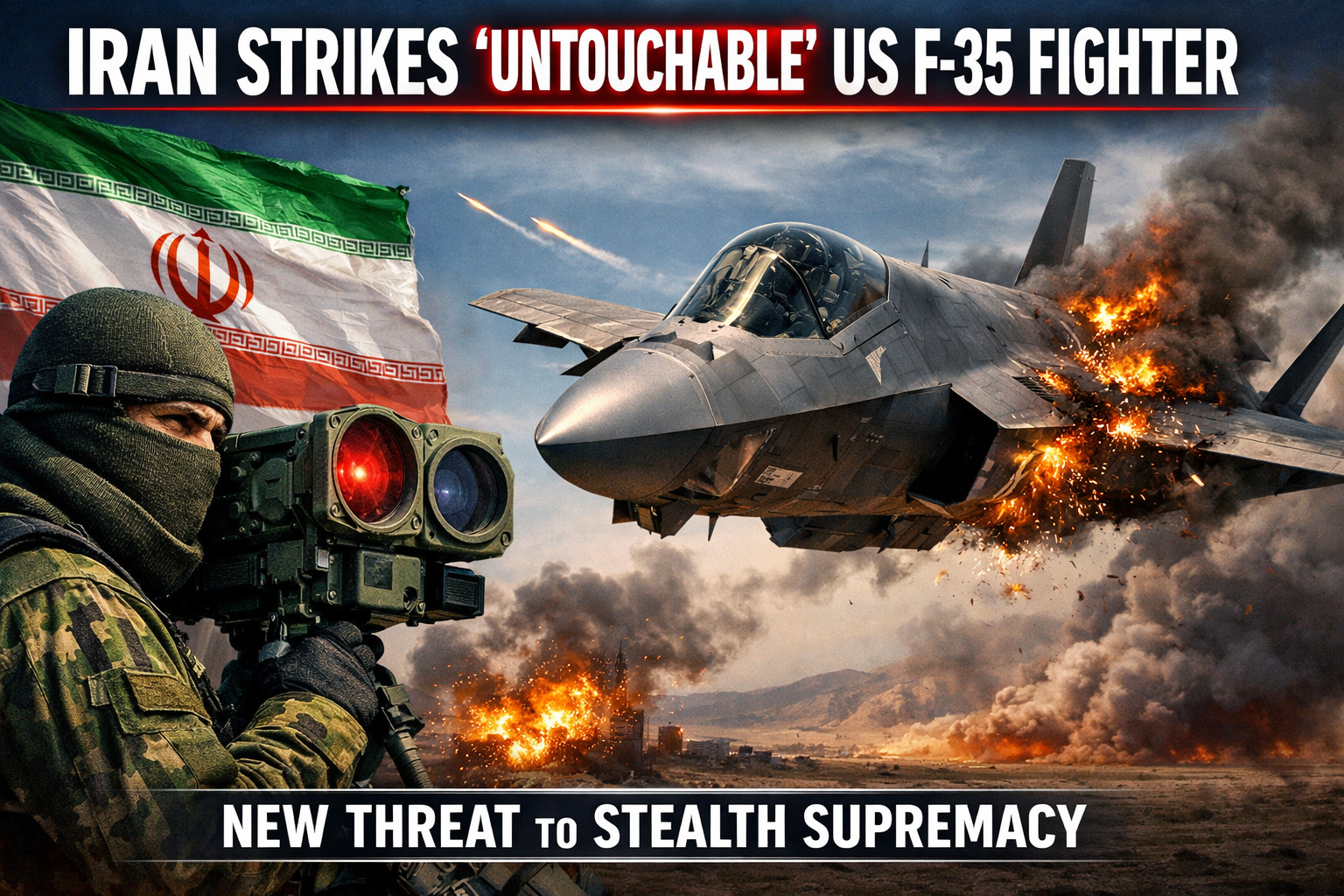
In a development that could reshape modern aerial warfare, reports have emerged suggesting that Iran may have successfully targeted one of the United States’ most advanced stealth aircraft — the Lockheed Martin F-35 Lightning II. Long regarded as nearly “untouchable” due to its cutting-edge stealth capabilities, this aircraft has been a symbol of American air dominance for years.
According to early reports, the jet was not destroyed but was forced into an emergency landing after sustaining damage during a combat mission. While official confirmations remain limited, the implications of even a partial hit on such a platform are significant.
Breaking the Myth of Stealth
The F-35 is designed to evade traditional radar systems, making it extremely difficult for enemy defenses to detect, track, or engage. Its advanced avionics, sensor fusion, and low observable design have made it one of the most sophisticated fighter jets ever built.
However, the reported incident suggests that stealth technology may not be as invulnerable as previously believed. Defense analysts speculate that Iran could have used alternative detection methods, particularly infrared tracking systems. Unlike radar, infrared sensors detect heat signatures, allowing them to identify aircraft even when they remain invisible to conventional systems.
Iran’s Evolving Air Defense Capabilities
Over the past decade, Iran has invested heavily in developing and upgrading its air defense network. Systems such as the Bavar-373 have been presented as domestically built alternatives to advanced foreign missile systems. These platforms are believed to incorporate modern tracking technologies that can challenge stealth aircraft under certain conditions.
If the reports are accurate, this incident could mark a turning point, demonstrating that emerging defense technologies are beginning to close the gap with high-end stealth systems.
Strategic Implications
The potential targeting of an F-35 carries broader strategic consequences. For the United States, it raises concerns about the survivability of its most advanced assets in contested environments. For Iran and its allies, it could serve as a symbolic and tactical victory, showcasing their ability to counter superior technology.
Military experts caution, however, that a single incident does not redefine the balance of power. The F-35 remains a highly capable and versatile aircraft, and its overall effectiveness in combat scenarios is well documented. Still, the psychological and strategic impact of such a claim cannot be ignored.
A New Phase in Modern Warfare
This development highlights a larger trend in global defense: the constant evolution of both offensive and defensive technologies. As stealth aircraft become more advanced, so too do the systems designed to detect and neutralize them.
Whether fully confirmed or not, the reported incident underscores an important reality — in modern warfare, no system is truly invincible. The contest between stealth and detection continues to evolve, and each breakthrough on one side is met by innovation on the other.
"The decisions we make today will shape the world for generations to come."