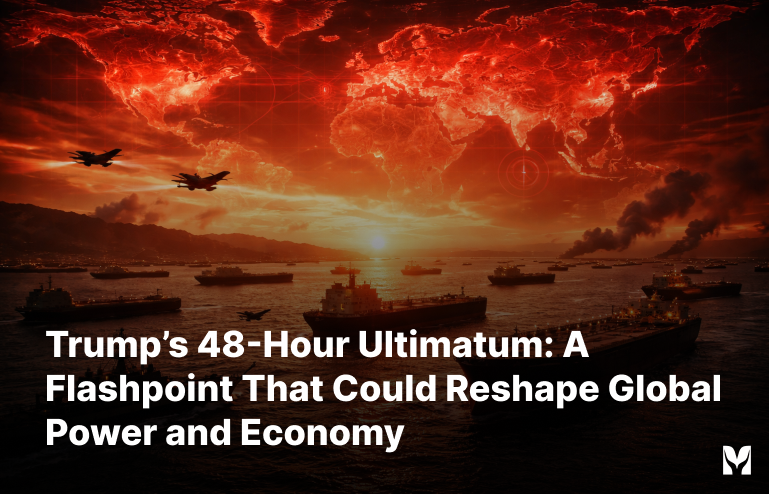
In a dramatic escalation of global tensions, Donald Trump issued a 48-hour ultimatum to Iran, demanding the immediate reopening of the Strait of Hormuz—one of the most critical arteries of global energy supply.
The message was blunt: comply within 48 hours or face direct U.S. military strikes targeting Iran’s energy infrastructure.
This wasn’t just another diplomatic warning—it marked a turning point in an already volatile conflict.
Why This Matters to the World
The Strait of Hormuz is not just a geographic location—it is the lifeline of global oil trade, carrying nearly 20% of the world’s oil supply.
When Iran restricted movement in the strait amid the ongoing war, it triggered:
- Panic in global markets
- Rising oil prices
- Military mobilization across regions
Trump’s ultimatum effectively turned this tension into a countdown toward possible war.
A Rapidly Escalating Conflict
The situation didn’t emerge overnight. It is part of the broader 2026 Iran war, which began with U.S.-Israel strikes on Iran.
Since then:
- Iran has launched missile attacks across the region
- The U.S. has increased troop deployments
- Both sides have issued threats targeting energy and infrastructure systems
Iran has warned it would respond with “zero restraint” and could even completely shut down the Strait of Hormuz if attacked.
This creates a dangerous loop:
Threat → Retaliation → Escalation → Wider conflict
Economic Shockwaves Already Visible
Even before any direct strike:
- Oil prices have surged beyond $100 per barrel in some markets
- Shipping routes are disrupted
- Insurance and freight costs are rising
If the strait closes fully, the world could face:
- Energy shortages
- Inflation spikes
- Stock market crashes
Impact on India
For countries like India, the stakes are especially high.
India imports a large portion of its oil through the Strait of Hormuz. Any disruption means:
- Higher petrol and diesel prices
- Increased inflation
- Pressure on household budgets
- Volatility in markets like Nifty and Sensex
There are even discussions about deploying naval support to secure energy routes.
What Happens Next?
With the 48-hour deadline expiring, the world is watching closely. Three realistic scenarios could unfold:
1. Diplomatic De-escalation
Iran partially reopens the strait → tensions ease
2. Limited Military Strike
U.S. targets specific infrastructure → short-term conflict
3. Full-Scale Escalation
Hormuz shuts completely → global crisis
Right now, the situation remains fluid, unpredictable, and extremely sensitive.
This isn’t just about two countries—it’s about global stability.
A narrow waterway in the Middle East has become the center of a geopolitical storm that could:
- Redefine energy security
- Shake financial markets
- Impact everyday life across the world
The 48-hour deadline may be over—but its consequences are only beginning.
"The decisions we make today will shape the world for generations to come."