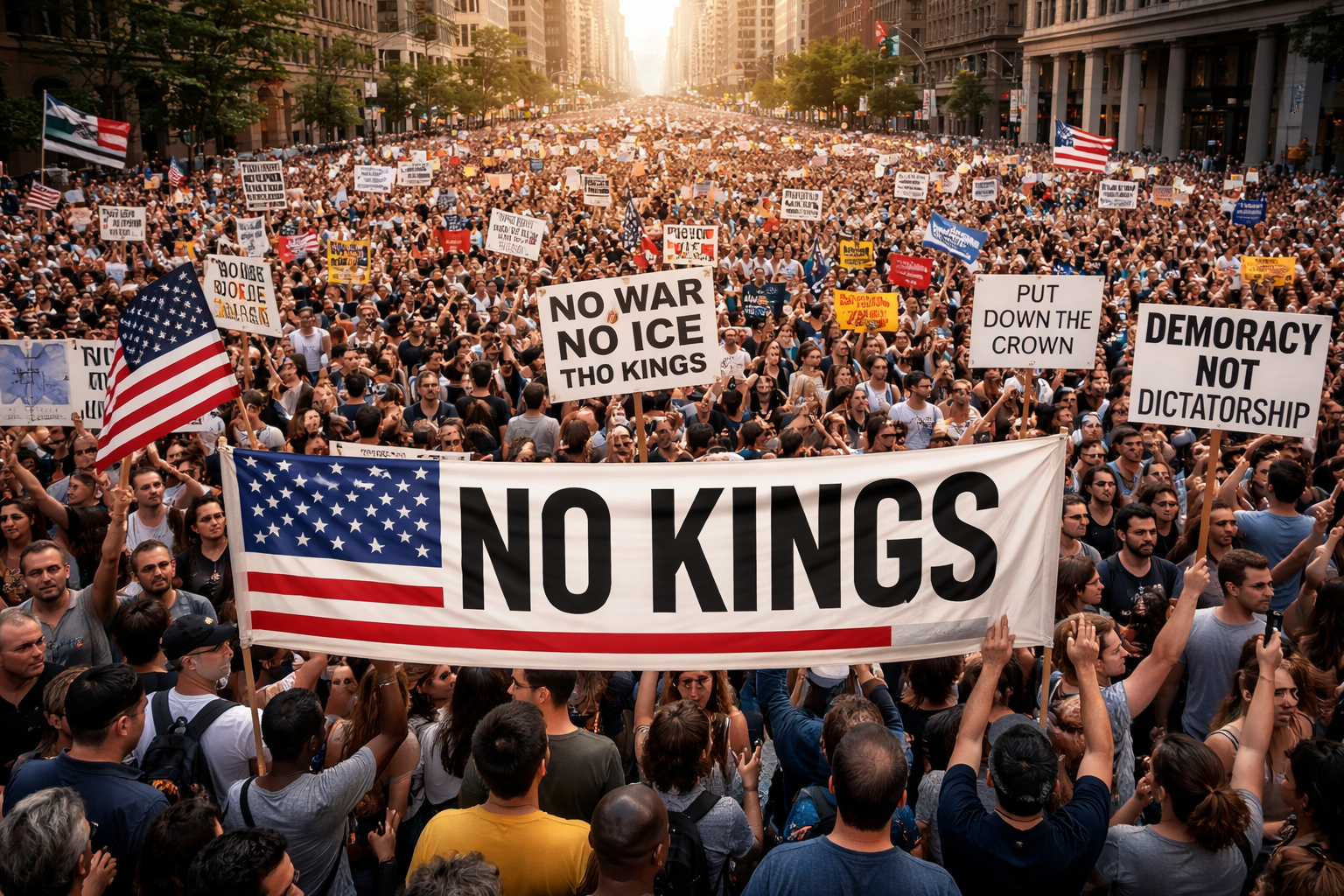
In an extraordinary display of public dissent, millions of people across the United States and parts of Europe have taken to the streets under the banner of the “No Kings” movement—an organized protest aimed at challenging the leadership style and policies of Donald Trump.
The phrase “No Kings” has quickly become more than just a slogan. It represents a deeper concern among citizens who believe that democratic values are being overshadowed by what they describe as increasingly authoritarian tendencies. Protesters argue that no individual, regardless of position, should wield power in a way that resembles monarchy in a democratic nation.
A Protest of Unprecedented Scale
Reports suggest that thousands of rallies were organized across major cities like New York City, Los Angeles, and Chicago, drawing massive crowds. The movement didn’t remain confined to the US; solidarity protests were also witnessed in European cities such as London and Paris.
From young students to senior citizens, people from diverse backgrounds marched together, holding banners and chanting slogans like “No Kings, Only Democracy” and “Power Belongs to the People.”
What Sparked the Outrage?
The protests stem from a combination of political and social concerns. Many participants have voiced strong opposition to recent developments involving foreign policy, particularly tensions linked to Iran, which have raised fears of a broader conflict.
Domestically, critics point to strict immigration policies, economic uncertainties, and perceived cuts in essential public services as key reasons behind the unrest. However, the most recurring theme among protesters has been the concern over democratic integrity and the balance of power.
A Movement Fueled by Fear and Hope
While anger and frustration are clearly visible, the protests also carry an undercurrent of hope. Demonstrators say their goal is not just to oppose, but to remind leaders that power in a democracy is temporary and accountable.
Many participants emphasized that their presence on the streets is a message—not just to the current administration—but to the world, that citizens are willing to stand up when they feel democratic norms are under threat.
Tensions and Challenges
Despite the largely peaceful nature of the demonstrations, some cities witnessed moments of tension between protesters and law enforcement. Authorities have urged calm, while organizers continue to call for non-violent participation.
The Bigger Picture
The “No Kings” movement highlights a growing global trend—citizens becoming more vocal and active in political discourse. Whether these protests will lead to tangible political change remains uncertain, but they have undeniably sent a strong signal.
At its core, this movement is not just about one leader. It is about the idea that democracy must remain people-driven, transparent, and accountable.
"The decisions we make today will shape the world for generations to come."