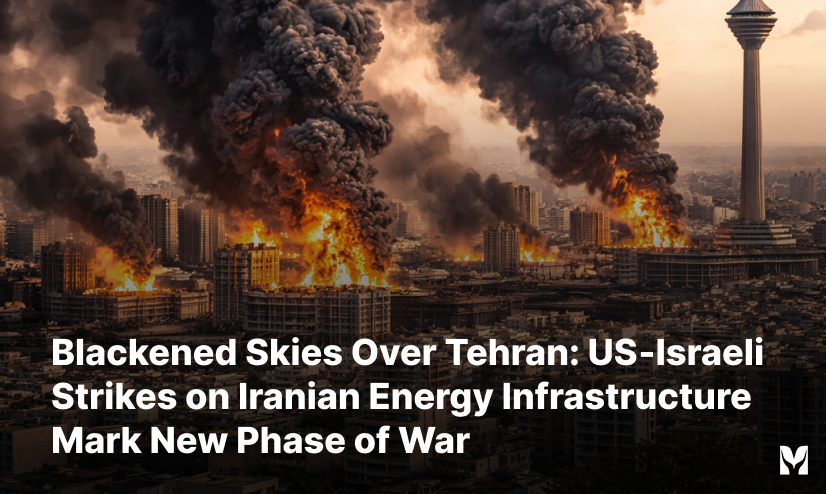
For the first time since the Middle East conflict escalated into full war in late February 2026, United States and Israeli forces have expanded their campaign to directly target Iran’s energy infrastructure, dealing a dramatic blow to the nation’s oil storage and refining capabilities.
Late Saturday evening, airstrikes struck multiple oil storage depots and refining facilities in Tehran and the nearby city of Karaj, unleashing huge explosions and towering fires that lit up the capital’s skyline. Thick black smoke filled parts of the city, while residents said they witnessed “blackened rain” — soot and burning residue falling from the sky as petroleum products burned in open air.
Iranian authorities reported that at least four people were killed, including oil tanker drivers caught in the blasts, and that significant infrastructure damage had occurred at facilities critical to the country’s fuel supply system.
According to the Israeli military, the strikes were aimed at fuel depots used to support Iran’s armed forces operations, part of a broader effort by the US–Israeli coalition to degrade Tehran’s strategic capabilities. Targets included multiple storage depots and petroleum transfer centers within Tehran and Alborz Province, as well as facilities in the Shahran and Karaj districts.
These attacks represent a significant escalation in the conflict, signaling a shift from traditional military targets — such as missile sites and command structures — to economic and logistical infrastructure that underpins both civilian life and Iran’s armed forces. Analysts say this could be intended to strain Tehran’s ability to sustain prolonged war operations.
While the strikes mark the first known attacks on Iranian oil infrastructure since the war began, Iranian state media and officials condemned the move as a blatant act of aggression against civilian economic assets. Tehran’s military has vowed continued retaliation; Iranian forces reportedly launched missiles at Israel’s Haifa refinery in response.
The visual aftermath was stark. Videos shared on social media depicted ignite “rivers of fire” where spilled fuel burned along city streets, while thick smoke persisted well into the following morning, prompting concerns about air quality and toxic fallout in several neighborhoods.
Global energy markets reacted immediately. Brent crude futures jumped as traders assessed the risk that expanded conflict could disrupt oil exports from the Persian Gulf, a region responsible for a significant share of global petroleum supply.
This phase of the war has also seen diplomatic fallout. Regional governments are increasingly alarmed as the conflict’s geographic footprint widens; missile alerts sounded in Gulf cities such as Dubai, and Iran has continued missile and drone reprisals across multiple nations.
Timeline: Major Events in the Iran–US/Israeli Conflict (Late Feb – Early Mar 2026)
| Date | Event |
|---|---|
| Feb 28, 2026 | Operation Epic Fury launched — US and Israeli forces commence large‑scale air campaign targeting Iranian missile sites and military infrastructure. |
| Mar 1, 2026 | Drone and missile exchanges escalate; Iranian proxies in the region respond with strikes on allied bases. |
| Mar 3, 2026 | Reports of initial outreach signals from Iranian intelligence to US via third‑party channels (possible willingness to explore de‑escalation). |
| Mar 4–5, 2026 | Continued bombardment of military and missile targets; diplomatic denials from Tehran about outreach. |
| Mar 7, 2026 | First confirmed strikes on energy infrastructure near Tehran and Karaj, marking a strategic expansion of target sets. |
| Mar 8, 2026 | Iranian counter‑strikes reported on Israeli facilities (e.g., Haifa refinery), indicating widening scope of conflict. |
| Ongoing | Commodity markets react; regional alerts in Gulf states; diplomatic back‑channels remain unclear. |
Comparison: Initial Military Targets vs. Expanded Energy Infrastructure Phase
| Phase I (First Days) | Phase II (Energy Infrastructure Attacks) |
|---|---|
| Ballistic missile storage sites | Oil storage depots near Tehran |
| Air defense and missile launch pads | Refinery facilities near Karaj |
| Command and control bunkers | Fuel transfer centers and petroleum tanks |
| Barracks and military bases | Logistics hubs critical for civilian fuel distribution |
| Communication nodes | Oil tanker staging areas |
| Defensive radar installations | Infrastructure indirectly supporting civilian economy |
| Early targets aimed at degrading Iran’s combat capability | New targets aim at disrupting Iran’s economic base and logistics |
Conclusion
The expansion of US and Israeli strikes to encompass Iran’s energy infrastructure represents a shift toward targeting the economic lifelines that sustain both civilian life and military logistics. Casualties among non‑combatants and environmental effects such as “blackened rain” underscore the broader human and societal costs of the conflict’s many fronts.
As the war continues, analysts say this new phase could prolong hostilities, disrupt regional energy markets, and further inflame tensions across the Middle East. Whether the pressure on Iranian economic infrastructure will compel diplomatic engagement — or provoke deeper retaliation — remains a central uncertainty as the conflict enters its second week.
"The decisions we make today will shape the world for generations to come."