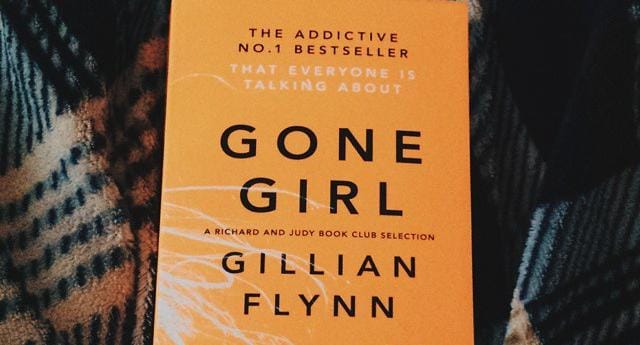
When Gillian Flynn’s Gone Girl hit bookshelves in 2012, it didn’t just top the bestseller lists; it fundamentally altered the DNA of the psychological thriller. It birthed a decade of "Girl" titles and "unreliable narrator" tropes, but few of its successors have managed to replicate its razor-sharp social commentary and its nihilistic exploration of the human psyche.
To understand Gone Girl, one must look past the "whodunnit" mechanics and see it for what it truly is: a scathing autopsy of a marriage performed against the backdrop of an eroding American Dream.
The Setup: A Marriage in Decay
The premise begins with a classic noir setup. On his fifth wedding anniversary, Nick Dunne returns home to find his wife, Amy Elliott Dunne, missing. The living room shows signs of a struggle. As the police investigation intensifies, the evidence begins to point squarely at Nick. He is detached, he’s lying about an affair, and he seems strangely unconcerned with his wife's disappearance.
Flynn structure’s the first half of the book through alternating perspectives: Nick’s present-day narration and Amy’s diary entries, which detail the slow disintegration of their romance. This dual-narrative creates a tug-of-war for the reader’s sympathy. We see the "Cool Girl" Amy—brilliant, beautiful, and effortless—gradually diminished by Nick’s lethargy and resentment.
The Midpoint Pivot: The Death of the "Cool Girl"
The true genius of Gone Girl lies in its mid-point twist. Flynn doesn't just pull the rug out from under the reader; she sets the floor on fire. We learn that Amy’s diary was a fabrication—a meticulously crafted piece of fiction designed to frame Nick for her murder.
This revelation leads into the most famous monologue in contemporary thriller history: the "Cool Girl" rant. Amy deconstructs the patriarchal expectation that women should be "hot and understanding," liking video games, beer, and cheeseburgers while remaining a size two. Amy’s fury isn't just at Nick; it’s at the performance of gender itself. She played the role of the Cool Girl to win Nick, and when he stopped playing the role of the Gallant Husband, she decided to burn their world down.
Socio-Economic Rot: The North Carthage Setting
Flynn places the Dunnes in North Carthage, Missouri—a ghost town of "McMansions" and shuttered malls. This setting is crucial. The 2008 financial crisis serves as the catalyst for their domestic war. Both Nick and Amy were high-flying writers in New York City before the industry collapsed, forcing them into a "flyover state" existence they both despise.
The economic downturn stripped away their status, leaving them with nothing but their projections of each other. In NYC, they could afford to be the best versions of themselves. In Missouri, they are forced to confront the mediocre reality of who they are. Flynn suggests that love is easy when you’re successful, but malice is the natural byproduct of failure and boredom.
The Psychology of Performative Identity
At its core, Gone Girl is an exploration of Identity Theory. Every character in the book is performing for an audience:
Nick performs the role of the grieving husband while hiding his infidelity.
Amy performs the victim, then the fugitive, then the triumphant survivor.
The Media (embodied by the Nancy Grace-esque Ellen Abbott) performs a ritual of public shaming and simplified narratives.
Flynn posits a terrifying idea: that we never truly know the person sleeping next to us because they are constantly curating a version of themselves for our consumption. Nick and Amy are "dancing a toxic tango," where the only thing keeping them together is their mutual talent for manipulation.
The Ending: A Victory of Cynicism
Perhaps the most controversial aspect of the novel is its ending. There is no traditional justice. Amy returns home, having murdered her ex-boyfriend Desi Collings and framed it as a kidnapping/rape scenario, and forces Nick into a stalemate. She is pregnant, and Nick—realizing he is trapped but also strangely addicted to the high-stakes game they play—stays.
This conclusion subverts the "happily ever after" and even the "justice is served" tropes. It is a cynical, pitch-black ending that suggests some people are "made for each other" not because of their virtues, but because of their shared darkness. They are two monsters who have finally found a worthy opponent.
Legacy and Impact
Gone Girl popularized the Unreliable Narrator to such an extent that it became a genre requirement for years to follow. However, Flynn’s work stands apart because of its prose. She writes with a surgical precision, using a "poisoned pen" style that makes even the most mundane observations feel dangerous.
The book also ignited a conversation about "likability" in female characters. Amy Dunne is one of the most villainous protagonists in modern fiction, yet her grievances against societal expectations resonate with millions. She is a "villain" born from the frustration of being a "trophy."
Gillian Flynn’s Gone Girl remains a masterpiece because it refuses to provide easy answers. It is a mirror held up to modern marriage, social media sensationalism, and the masks we wear to be loved. It suggests that the greatest horror isn't a stranger in the woods, but the person who knows your every weakness and is willing to use them against you.
Fourteen years after its release, it still serves as the gold standard for the psychological thriller—a reminder that the most dangerous weapon in any household isn't a knife or a gun, but a perfectly told lie.
"The decisions we make today will shape the world for generations to come."