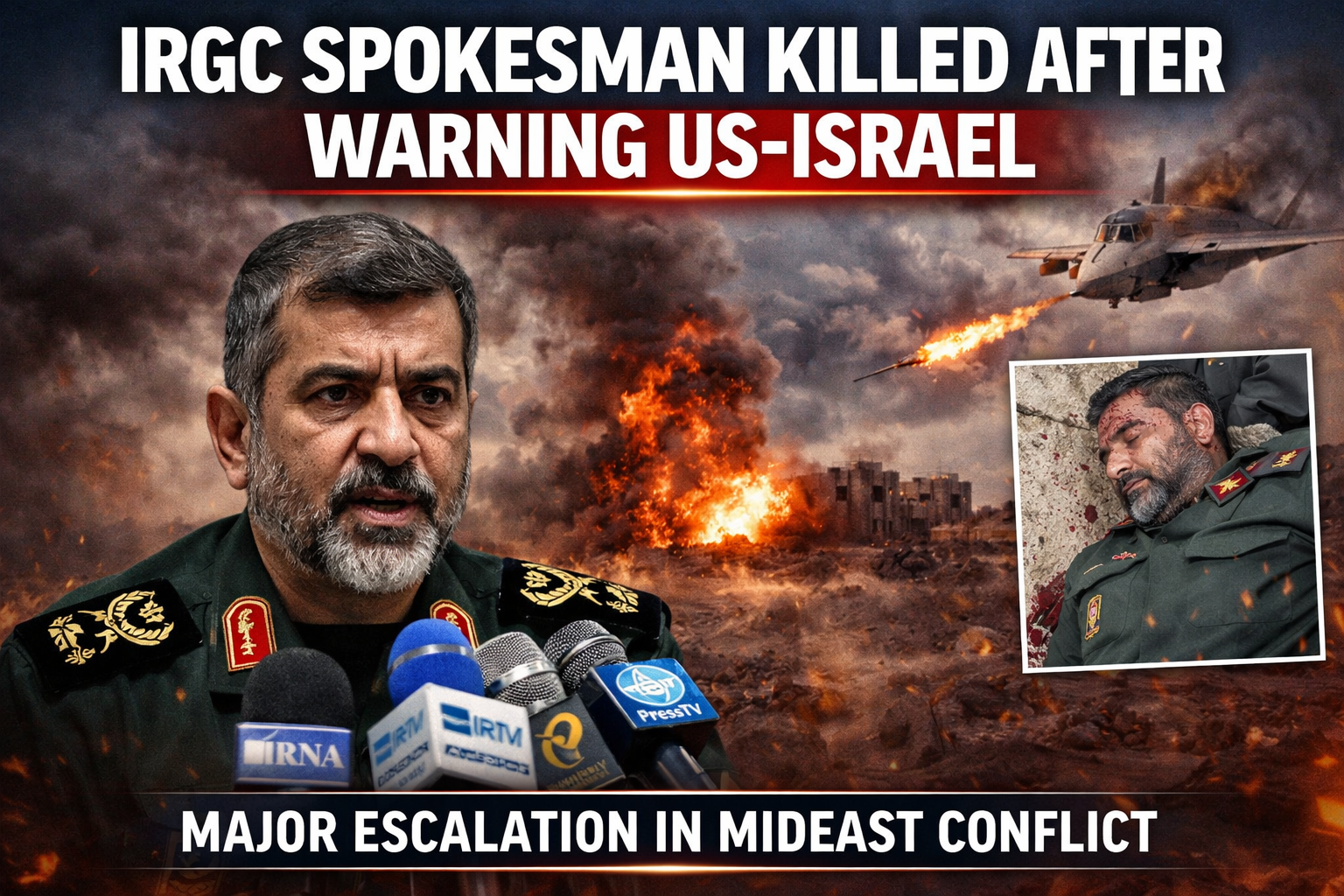
In a dramatic escalation of tensions in the Middle East, Ali Mohammad Naini, the official spokesperson of Iran’s powerful Islamic Revolutionary Guard Corps (IRGC), has reportedly been killed in a targeted strike shortly after issuing a strong warning to the United States and Israel. The timing of the incident has drawn global attention, highlighting the increasingly aggressive nature of the ongoing conflict.
According to emerging reports, Naini had publicly declared that Iran remained capable of launching unexpected retaliatory actions despite mounting pressure. His remarks were seen as a direct challenge to both Washington and Tel Aviv, signaling Iran’s unwillingness to back down. However, within hours of this defiant statement, he became the target of a precision strike, believed to be carried out as part of coordinated military operations.
A Calculated Strike on Leadership
The killing of a high-ranking spokesperson is not merely symbolic—it reflects a broader strategic pattern. By targeting influential figures within the IRGC, adversaries appear to be aiming at disrupting Iran’s communication, command structure, and morale. As the public face of the IRGC, Naini played a critical role in shaping narratives, issuing warnings, and maintaining internal and external messaging during wartime.
Such targeted eliminations suggest a shift toward high-value operations designed to weaken leadership rather than relying solely on conventional battlefield engagements.
Escalation Beyond the Battlefield
This incident underscores a growing trend in modern warfare—where psychological and strategic dominance is pursued alongside physical military gains. The rapid sequence of a warning followed by a fatal strike sends a powerful message: visibility and influence in wartime can come with immediate risks.
For Iran, the loss of another senior figure adds to mounting pressure on its military and political establishment. For its adversaries, the operation signals precision capability and intelligence reach deep into the opponent’s hierarchy.
Regional and Global Implications
The broader implications of this development are significant. As high-level targets become increasingly vulnerable, the risk of rapid escalation intensifies. Each such strike not only weakens operational leadership but also fuels retaliation cycles, pushing the region closer to a prolonged and potentially wider conflict.
International observers are closely monitoring the situation, as repeated incidents of this nature could destabilize the already fragile geopolitical balance in the region.
A Conflict Entering a New Phase
The reported killing of Ali Mohammad Naini marks more than just the loss of a spokesperson—it reflects a turning point in how this conflict is being fought. With leadership figures now in direct line of fire, the war appears to be entering a phase defined by precision, intelligence, and high-stakes targeting.
In such an environment, the line between strategic messaging and personal risk continues to blur, reinforcing a harsh reality of modern warfare: influence can make one a priority target.
"The decisions we make today will shape the world for generations to come."