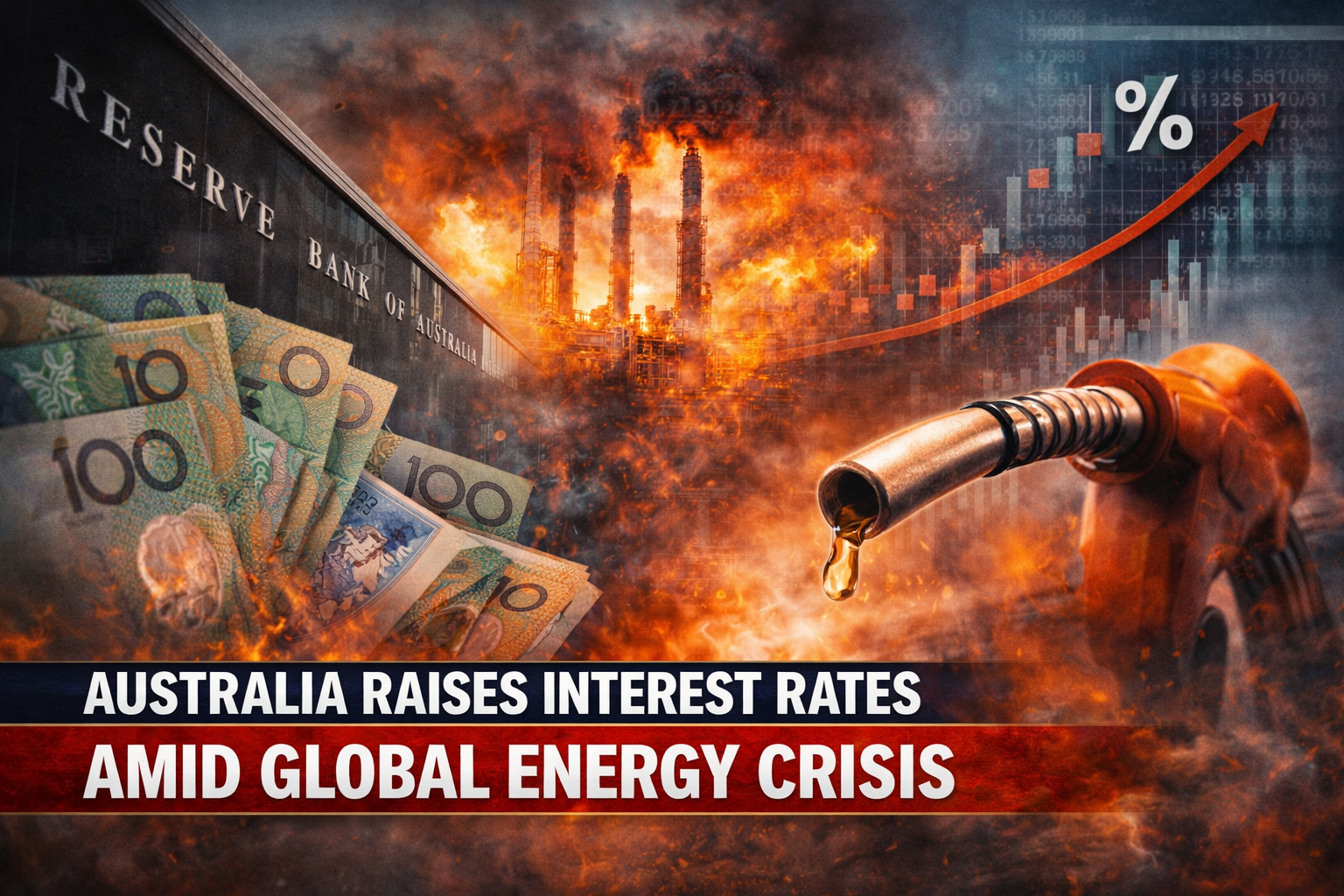
In a significant move reflecting growing economic uncertainty, the Reserve Bank of Australia has increased its benchmark interest rate to 4.1%, responding to mounting inflationary pressures fueled by the ongoing global energy crisis. The decision underscores the far-reaching impact of geopolitical tensions, particularly the escalating conflict in the Middle East, on national economies worldwide.
The recent surge in oil prices, largely driven by disruptions in key supply routes such as the Strait of Hormuz, has created ripple effects across global markets. As fuel costs rise, the price of essential goods and services tends to follow, contributing to broader inflation. Central banks, including Australia’s, are now facing the challenge of containing this inflation without significantly slowing economic growth.
By raising interest rates, the central bank aims to reduce consumer spending and borrowing. Higher rates typically make loans more expensive, which can cool demand and help stabilize prices over time. However, this approach also places additional financial strain on households, particularly those with mortgages and other forms of debt.
Economic analysts suggest that this move may not be an isolated one. If global energy prices continue to climb due to prolonged geopolitical instability, other countries could adopt similar monetary tightening measures. This could lead to a synchronized slowdown in global economic activity, increasing the risk of recession in some regions.
The decision also highlights how interconnected the modern global economy has become. A conflict in one part of the world can quickly influence inflation, interest rates, and financial stability in another. For Australia, a nation heavily integrated into global trade, such external shocks present ongoing challenges for policymakers.
Looking ahead, much will depend on the trajectory of the Middle East crisis and its impact on energy markets. If tensions ease and oil prices stabilize, central banks may find room to pause or reverse rate hikes. Until then, economies are likely to remain under pressure, navigating a complex mix of geopolitical risks and financial constraints.
"The decisions we make today will shape the world for generations to come."