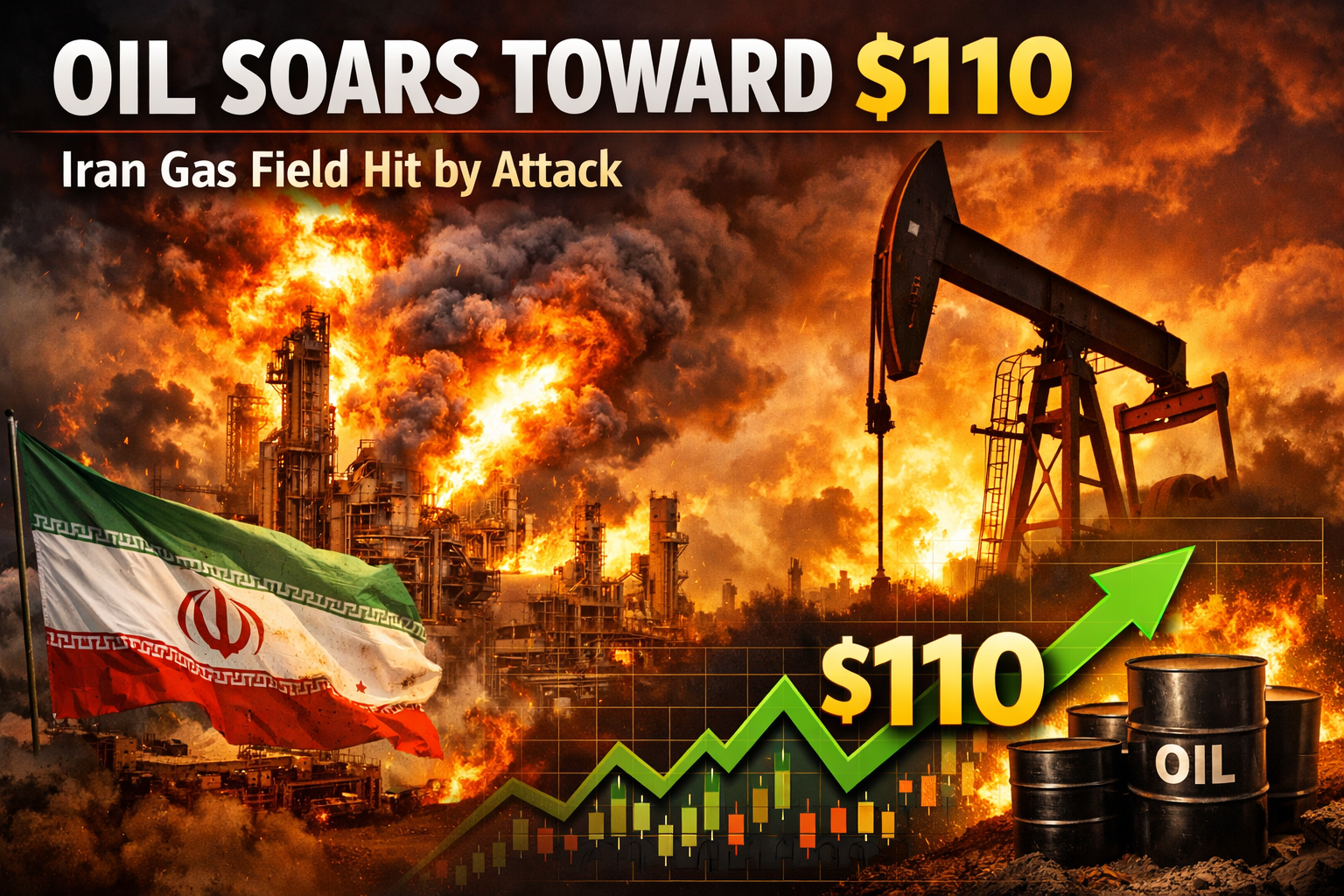
Global energy markets witnessed a sharp reaction after a major attack targeted Iran’s critical energy infrastructure, pushing crude oil prices close to the $110 per barrel mark. The strike on the South Pars gas field—one of the world’s largest natural gas reserves—has intensified fears of supply disruptions and further escalation in the already volatile Middle East region.
The incident, which occurred on 18 March 2026, is being seen as a significant development in the ongoing geopolitical tensions involving Iran and its regional adversaries. The South Pars field plays a crucial role not only in Iran’s domestic energy production but also in maintaining stability in global gas and oil supply chains. Any disruption to its operations has immediate ripple effects across international markets.
Following the strike, traders reacted swiftly, driving oil prices upward amid concerns that the conflict could expand and threaten other vital energy facilities in the Gulf region. The fear is not limited to immediate damage but extends to potential retaliatory actions that could further destabilize oil production and transportation routes.
Market analysts suggest that the surge in prices is largely driven by uncertainty rather than actual shortages at this stage. However, history shows that even the perception of risk in key oil-producing regions can lead to significant price volatility. With tensions escalating, investors are closely monitoring the situation for any signs of prolonged disruption.
The broader economic implications are also significant. Rising oil prices could translate into higher fuel costs, increased transportation expenses, and mounting inflationary pressures worldwide. For countries heavily dependent on energy imports, including India, the impact could be particularly pronounced, affecting everything from household budgets to industrial output.
In addition to economic concerns, the incident has raised geopolitical alarms. Iran has issued warnings suggesting possible responses, which could include targeting additional energy assets in the region. Such developments would not only deepen the crisis but also pose risks to global energy security.
In conclusion, the attack on the South Pars gas field marks a critical moment in the ongoing Middle East tensions. While the immediate damage is still being assessed, the market reaction underscores the fragility of global energy systems in times of conflict. As the situation unfolds, the world will be watching closely, aware that further escalation could have far-reaching consequences for both the global economy and geopolitical stability.
"The decisions we make today will shape the world for generations to come."