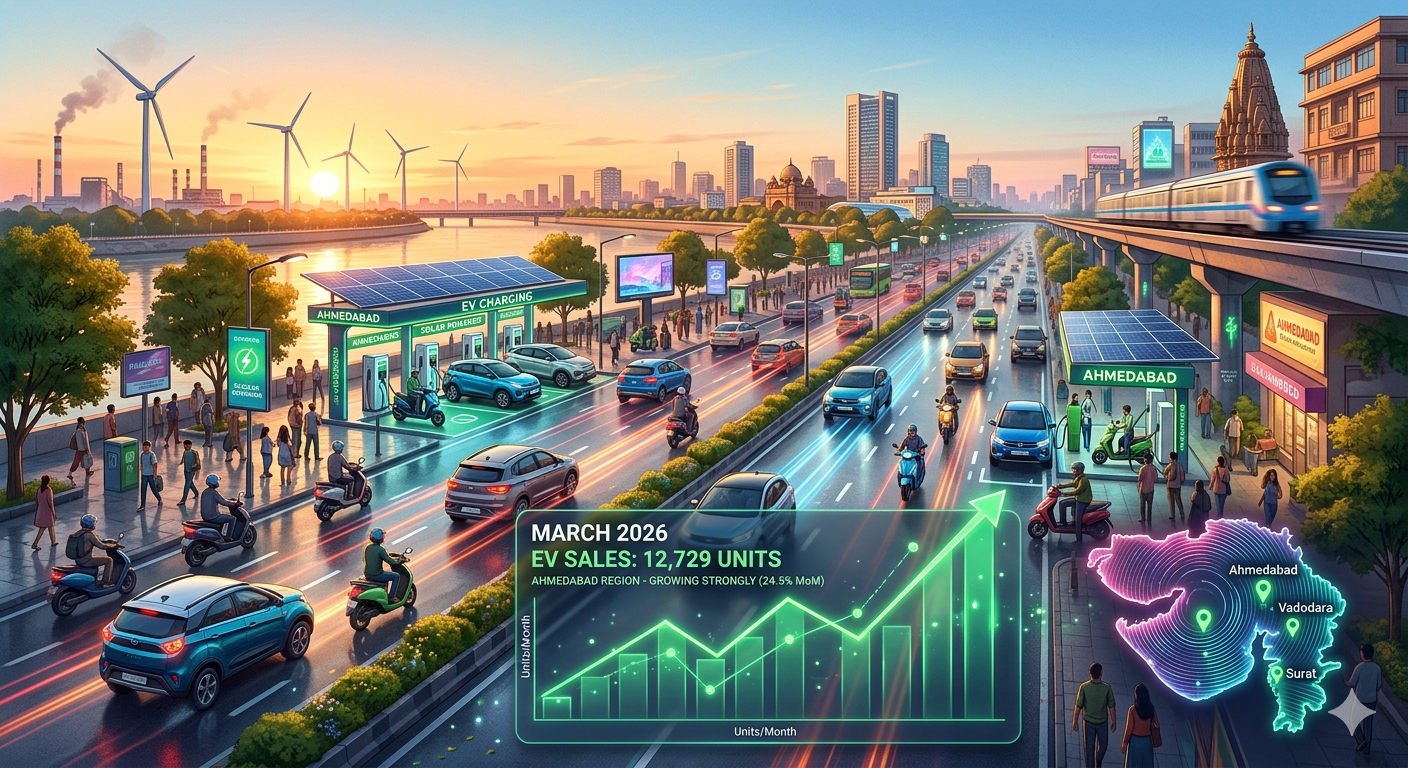
When the numbers dropped on April 1, 2026, one state stood out in India’s electric-vehicle story: Gujarat. According to Ministry of Road Transport and Highways (MoRTH) data via the Vahan portal, the state logged 12,729 EV registrations in March—up a striking 75.5% from 7,252 units a year earlier. Pure-electric vehicles (excluding hybrids) performed even better: 11,126 units versus 5,271 in March 2025, a 111% leap.
This wasn’t just another month of national enthusiasm. While India’s electric two-wheelers rose 36% and cars 49% nationally, Gujarat’s overall surge was roughly double the E2W pace and far ahead of the car segment. What made Gujarat different? A potent cocktail of immediate pain (fuel shortages), smart policy continuity, and genuine consumer calculus around total cost of ownership.
The West Asia crisis and fears of disruptions in the Strait of Hormuz had petrol and diesel stations rationing supplies in late February and early March. For a state with strong industrial and logistical backbone—where daily commuters, fleet operators, and small businesses rely on reliable wheels—this wasn’t abstract geopolitics; it was a direct threat to mobility. Dealers reported inquiries doubling across segments. “People wanted to safeguard their ability to move,” said Pranav Shah, Gujarat chairperson of the Federation of Automobile Dealers Associations (FADA). In some pockets, month-on-month sales nearly doubled as buyers rushed from mid-March onward.
Layered on top was a race against the calendar. The original deadline for the 1% RTO tax (down from the usual 6%) was March 31, 2026. Buyers knew that missing it could mean an extra ₹8,000–₹11,000 on registration depending on the vehicle. On March 30, the Gujarat government quietly extended the incentive to March 31, 2027—removing the cliff and giving the market breathing room. That single notification, coming just before month-end, likely converted hesitation into action.
It’s worth noting what Gujarat did not rely on. Direct state subsidies for two-wheelers (up to ₹20,000) and cars (up to ₹2 lakh) ended in 2024. Yet adoption accelerated anyway. Central schemes like PM e-Drive still offered per-kWh support, and municipal rebates plus rooftop-solar economics sweetened the deal for many households. Electric two-wheelers continued to dominate volumes—affordable, practical for Gujarat’s urban and semi-urban commutes—but four-wheelers saw noticeable traction among professionals and fleet owners hedging fuel-price volatility.
Analytically, this moment reveals three deeper truths about EV adoption in India.
First, energy security is becoming a stronger driver than pure environmental messaging. When fuel supply wobbles, EVs stop being a “nice-to-have green choice” and become a practical insurance policy. Gujarat’s industrial DNA—home to major auto manufacturing clusters and logistics hubs—amplified this effect. States with similar exposure to fuel-price swings may see parallel accelerations.
Second, policy predictability matters more than one-time subsidies. The extension to 2027 sends a clear signal: Gujarat is betting long-term on EVs. In a price-sensitive market, lower upfront registration costs directly improve payback periods. When buyers calculate running costs (especially with home solar), the math tilts decisively toward electric. This is value-driven adoption, not handout-driven.
Third, regional differentiation is accelerating. While Maharashtra and Uttar Pradesh still lead in absolute volumes, Gujarat’s growth rate and policy agility position it as an under-the-radar contender. Its combination of manufacturing ecosystem, coastal logistics, and now proven policy continuity could make it a model for other states seeking to move beyond metro-centric EV narratives.
Looking ahead, the extension buys time—but the real test is infrastructure and ecosystem depth. Gujarat will need to scale public and semi-public charging (especially for commercial fleets), nurture local battery and component manufacturing, and keep consumer education alive. If it does, March 2026 won’t look like a spike; it will look like the start of a structural shift. Early signs are encouraging: dealers already report sustained 30-40% growth trends, with some areas at 50-100%.
For India’s broader EV journey, Gujarat’s story offers a hopeful blueprint. When policy, consumer reality, and external shocks align, adoption doesn’t just tick up—it surges. And in a country still chasing its 30% EV penetration target by 2030, every state that turns “possible” into “proven” matters.
Disclaimer: This article is based on publicly available MoRTH/Vahan data and news reports as of April 2, 2026. EV market figures can be revised, and sales performance depends on multiple economic, policy, and supply-chain variables. The content is for informational and analytical purposes only and does not constitute financial, investment, or purchase advice. Readers should consult official sources and professionals before making decisions related to electric vehicles or related markets.
"The decisions we make today will shape the world for generations to come."