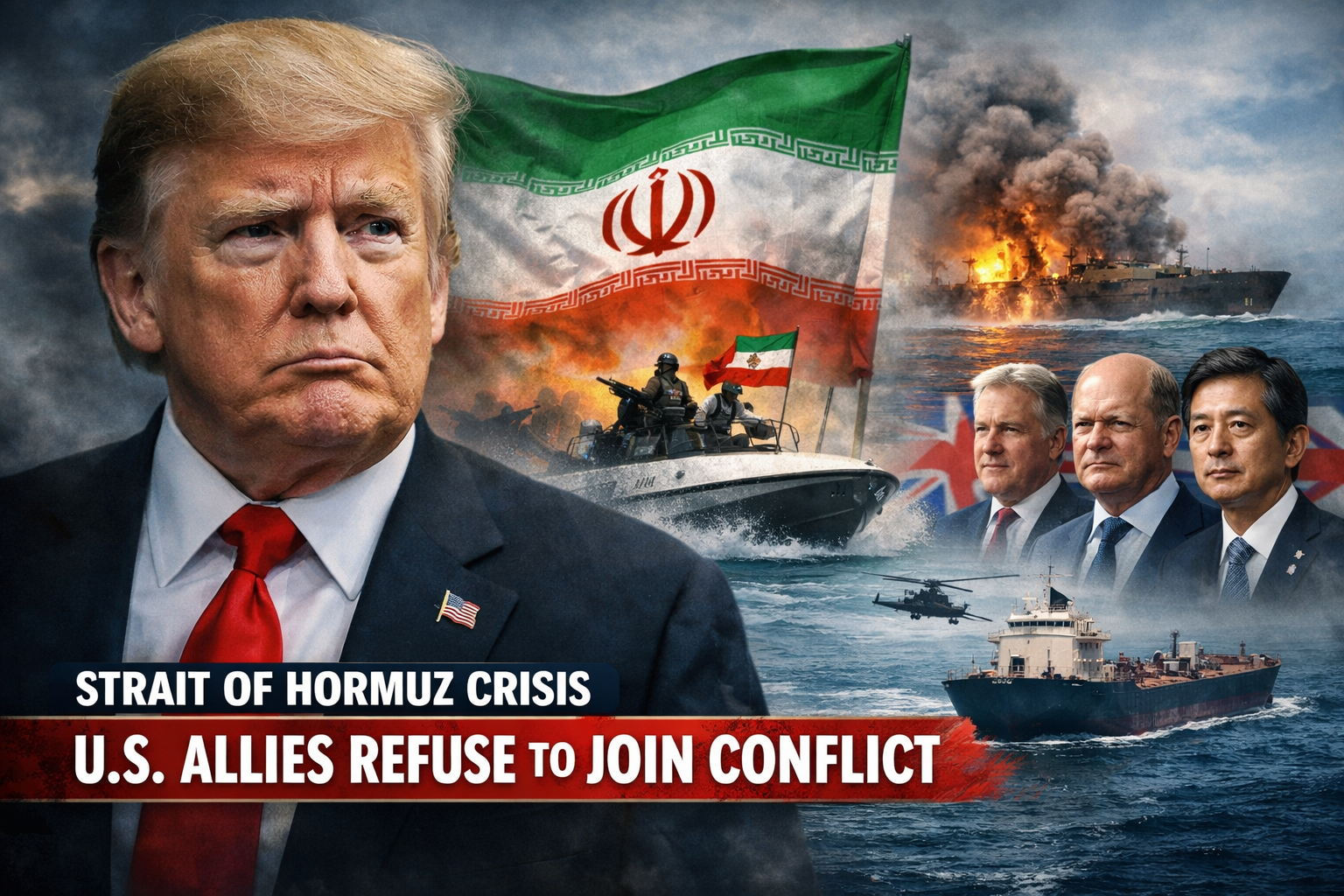
The ongoing crisis in the Strait of Hormuz has exposed growing divisions between the United States and its traditional allies, as several key nations have declined Washington’s request for military support in securing the vital maritime route. The development marks a significant diplomatic challenge for former US President Donald Trump, who has been actively seeking international backing amid escalating tensions with Iran.
The Strait of Hormuz, a narrow but strategically crucial waterway, serves as a primary channel for global oil shipments. With Iran tightening its grip over the region in response to recent military confrontations, the United States has urged allied nations to deploy naval forces to ensure the safe passage of commercial vessels. However, the response from partners such as the United Kingdom, Germany, and Japan has been notably restrained.
Several allied governments have expressed dissatisfaction over what they describe as a lack of consultation before the escalation of military actions in the Middle East. According to diplomatic sources, these countries believe that the current conflict intensified without adequate dialogue or coordination, leaving them hesitant to become directly involved. The sentiment reflects broader concerns about being drawn into a potentially prolonged and unpredictable conflict.
In addition to procedural grievances, many nations are wary of the risks associated with further escalation. Direct involvement in the Strait of Hormuz could heighten tensions with Iran, potentially triggering wider regional instability. European leaders, in particular, have emphasized the need for diplomatic solutions rather than military intervention, signaling a preference for de-escalation over confrontation.
The refusal to support Washington’s initiative has reportedly left Trump frustrated, highlighting strains within long-standing alliances. The situation underscores a shifting geopolitical landscape where traditional partnerships are increasingly influenced by national interests and strategic caution.
Meanwhile, the crisis continues to have global economic implications. Disruptions in the Strait of Hormuz have already contributed to rising oil prices and heightened uncertainty in energy markets. Countries heavily dependent on oil imports are closely monitoring the situation, as prolonged instability could impact supply chains and economic stability worldwide.
As the standoff persists, the United States faces the challenge of navigating the crisis with limited allied backing. Whether through renewed diplomatic efforts or unilateral action, the outcome of this situation is likely to shape the future of international cooperation in times of conflict.
"The decisions we make today will shape the world for generations to come."