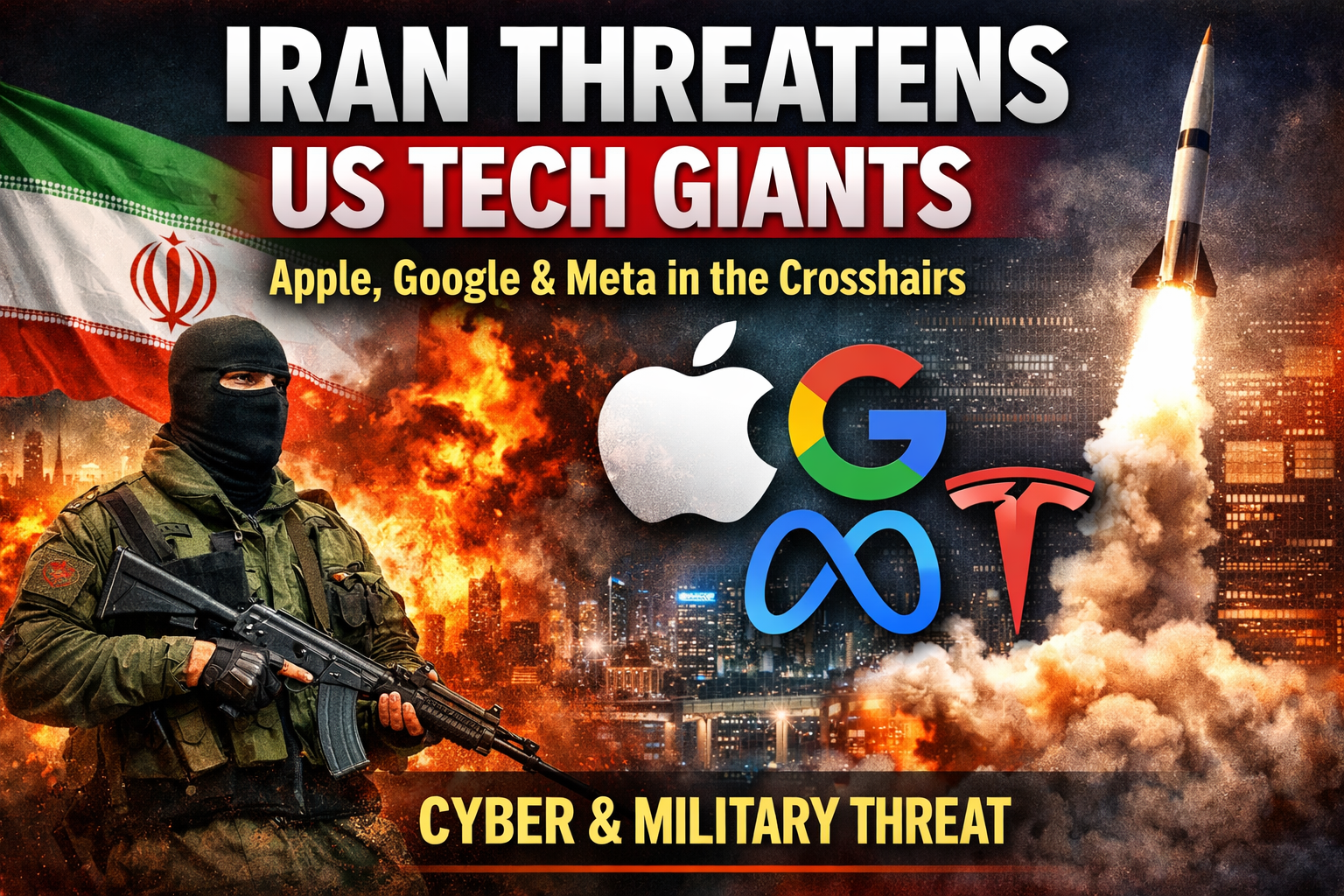
Tensions in West Asia have taken a sharp and concerning turn as Iran issues a strong warning to major American technology companies. The development comes amid escalating conflict, with Tehran alleging that advanced technologies have played a role in the targeted killing of its senior leaders.
Iran’s powerful military wing, the Islamic Revolutionary Guard Corps (IRGC), has publicly warned that companies such as Apple, Google, Meta, and Tesla could face consequences if the current situation continues. According to Iranian officials, these firms are believed to have indirectly supported operations through technologies like data analytics, artificial intelligence, and surveillance systems.
While there is no independent verification of these claims, the warning itself highlights how modern warfare is evolving. Conflicts are no longer limited to traditional weapons; instead, digital infrastructure and technological capabilities are increasingly becoming part of the battlefield.
What has raised global concern is Iran’s indication that potential “strikes” could begin soon. These actions may not necessarily be limited to physical attacks but could also involve cyber operations targeting corporate networks, servers, and digital assets. Such cyberattacks could disrupt services on a global scale, affecting millions of users and businesses.
Experts believe this situation could mark a significant shift in how conflicts are fought. Private technology companies, which have traditionally operated outside direct military confrontation, are now finding themselves at the center of geopolitical tensions. This raises critical questions about the role and responsibility of tech firms in conflict zones.
The potential fallout of such actions extends far beyond the Middle East. Any disruption involving major global companies could impact financial markets, communication systems, and international relations. Governments and organizations worldwide are closely monitoring the situation, aware that even a limited escalation could have widespread consequences.
As the situation unfolds, the coming days will be crucial in determining whether this warning remains a strategic statement or develops into a broader and more dangerous phase of conflict.
"The decisions we make today will shape the world for generations to come."