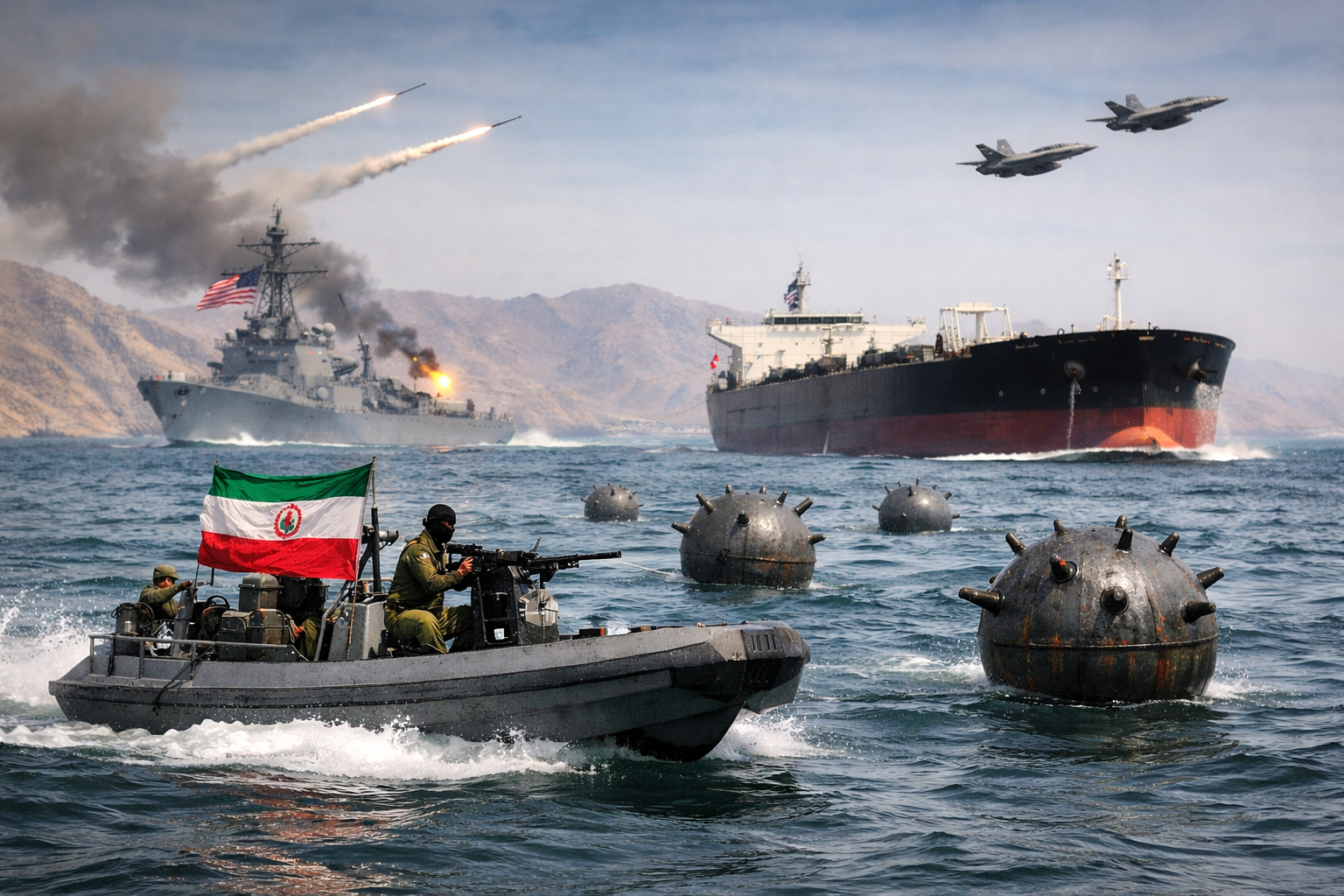
The geopolitical situation in the Middle East has intensified after reports emerged that Strait of Hormuz may have been mined by Iran, raising serious concerns about global energy security and maritime safety. The development has drawn sharp reactions from the United States, with Donald Trump warning Tehran of “consequences never seen before” if the situation escalates further.
According to security sources and international monitoring agencies, Iranian forces allegedly deployed naval mines in parts of the narrow waterway that connects the Persian Gulf with the Gulf of Oman. The Strait of Hormuz is one of the most strategically important maritime routes in the world, with nearly 20 percent of the global oil supply transported through this corridor every day. Any disruption in this passage could severely impact global energy markets and shipping operations.
The move reportedly came amid rising tensions between Iran and Western powers following recent military confrontations in the region. Intelligence reports suggest that the mines could be intended as a deterrent against potential naval operations by the United States and its allies. However, such actions risk escalating the already fragile situation in the Gulf.
Responding to the reports, Donald Trump issued a strong warning, stating that the United States would not tolerate any attempt to block or threaten international shipping routes. He emphasized that any hostile move against global trade lanes would trigger a powerful response. Trump's statement has further heightened diplomatic and military alertness across the region.
Military analysts note that mining the Strait of Hormuz could have immediate global consequences. Oil prices are highly sensitive to developments in the Gulf, and even the perception of risk in the waterway can lead to market volatility. Several international shipping companies are reportedly reviewing their routes and security protocols as a precaution.
Meanwhile, global leaders have called for restraint and diplomatic engagement to prevent the crisis from spiraling into a larger regional conflict. The situation continues to evolve, with naval forces from multiple countries increasing surveillance in and around the Strait.
As tensions remain high, the international community is closely monitoring developments in the region, aware that any escalation could affect not only the Middle East but also the global economy.
"The decisions we make today will shape the world for generations to come."