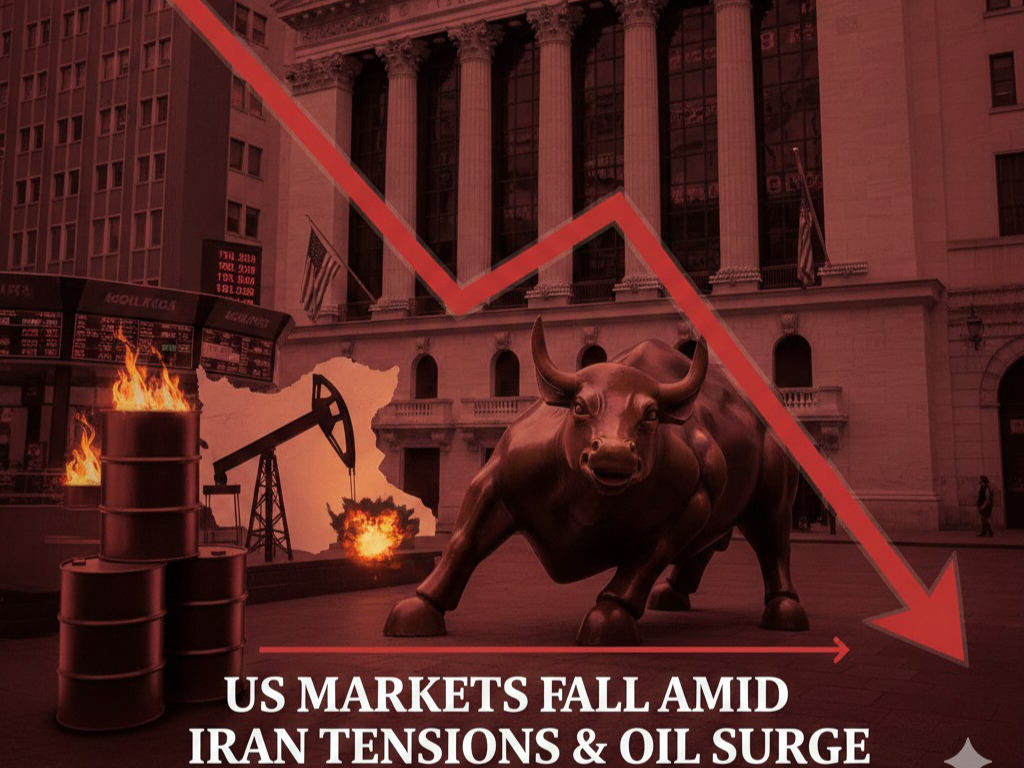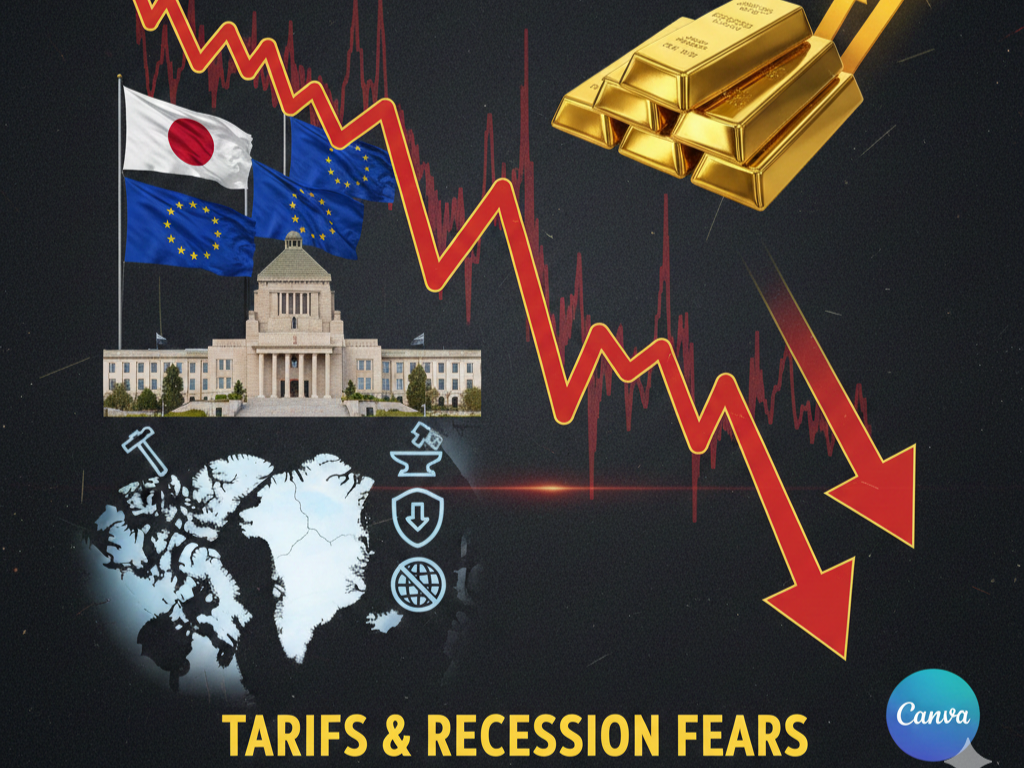
President Donald Trump's threat to impose escalating tariffs on eight European nations unless the U.S. secures full control of Greenland has sparked widespread market turmoil, driving Asian equities lower and propelling gold to record highs. The announcement, posted on Truth Social Saturday, targets Denmark, Norway, Sweden, France, Germany, the UK, Netherlands, and Finland with 10% tariffs starting February 1, rising to 25% by June 1—explicitly tied to Greenland's "Complete and Total purchase." As of Tuesday morning IST, investors flock to safe havens amid thin U.S. holiday trading, with attention shifting to Trump's Davos speech Wednesday and an EU emergency summit Thursday.
Market Declines and Safe-Haven Rally
Asian markets opened sharply lower Monday, reflecting tariff fears and renewed trade war jitters. Japan's Nikkei 225 shed 0.7% to close at 53,583.57, while Hong Kong's Hang Seng tumbled 1.1% to 26,563.90; broader regional indices fell 0.5-1.0%. U.S. futures extended losses post-Martin Luther King Jr. Day holiday, with S&P 500 contracts down 0.9% and Nasdaq futures off 1.1%; 10-year Treasury yields climbed to 4.26%.
Gold rocketed to a record intraday peak of $4,689 per ounce, up 1-2.1%, as investors sought refuge from geopolitical risks—silver also notched all-time highs. Bitcoin plunged nearly 3% to $92,500, wiping over $100 billion from crypto markets in 24 hours. Europe's Stoxx 600 dropped 1.2%—its worst day in two months—with DAX and CAC 40 each down over 1.3%; autos (BMW -3.7%) and luxury (LVMH -4.7%) led declines.
Tariff Trigger: Greenland's Strategic Stakes
Trump's move revives his long-standing interest in Greenland, an autonomous Danish territory pivotal to Arctic geopolitics. The island holds vast untapped resources—13% of global undiscovered oil, 30% natural gas—plus rare earth minerals critical for tech and defense; melting ice opens Northern Sea Routes slashing Asia-Europe shipping by 50%. Control offers U.S. dominance in the GIUK gap (Greenland-Iceland-UK), countering Russia's militarized Arctic bases and China's "Near-Arctic" ambitions.
The president doubled down Monday, vowing to "100%" enforce tariffs absent a deal, rejecting force but emphasizing strategic necessity amid Russia-NATO tensions. Markets fear escalation into a transatlantic trade war, echoing 2018-2020 battles but now laced with Arctic power plays.
EU Countermeasures and Diplomatic Push
Brussels called an emergency summit for Thursday, with Commission spokesperson Olof Gill confirming reviews of €93 billion ($108 billion) suspended U.S. tariffs—potentially activating February 6. France advocates the EU's Anti-Coercion Instrument, which could bar U.S. firms from the single market; leaders like Kaja Kallas warn tariffs erode "shared prosperity."
EU allies stand firm: Denmark calls it "unacceptable pressure," while NATO notes Greenland's role in collective defense. Retaliation targets loom on U.S. agriculture, tech, and autos, but diplomacy prevails—"avoid escalation," per officials.
Japan Election Fuels Fiscal Fears
Prime Minister Sanae Takaichi announced Monday parliament's dissolution Friday for a February 8 snap election, pitching boosted spending and security amid tariff ripples. 40-year JGB yields hit a record 4%, 10-year at 2.3% (1999 highs), signaling investor angst over debt.
China Data Offers Mixed Relief
China met its 2025 GDP target at 5% with Q4 growth of 4.5% YoY, buoyed by exports—but retail sales rose just 0.9% and property prices fell, exposing domestic frailties.
Outlook: Davos, Summits, and Volatility
Trump's WEF address Wednesday may elaborate U.S. Arctic policy; EU response follows Thursday. U.S. markets reopen today with VIX spiked—watch yields, gold, and EU rhetoric for cues. Analysts see prolonged uncertainty testing global growth.
"The decisions we make today will shape the world for generations to come."