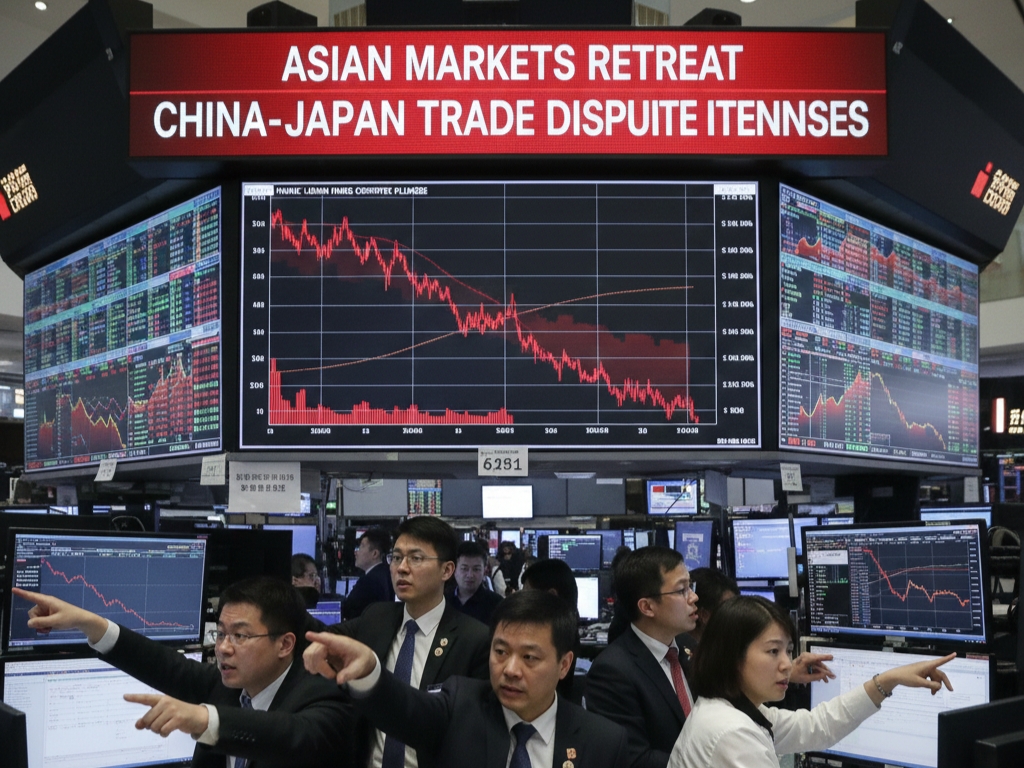
Hong Kong and Japanese stock markets declined sharply on Wednesday after China's Ministry of Commerce imposed immediate export controls on over 800 dual-use items to Japan, targeting products like chemicals, electronics, and aerospace technologies that could bolster military capabilities. The measures stem from Japanese Prime Minister Sanae Takaichi's November remarks labeling a potential Chinese attack on Taiwan as an existential crisis for Japan, prompting Beijing to accuse Tokyo of interfering in its internal affairs.
The Hang Seng Index dropped 0.8% to 26,488.53 by mid-morning, erasing gains from a seven-week high, while Japan's Nikkei 225 fell 0.4% at open with the yen weakening to 156.80 per dollar. Tech giants Alibaba tumbled 3% to HK$146.30, Tencent shed 1.5% to HK$623, BYD lost 2.6% to HK$96.60, and PetroChina declined 2.1% to HK$8.09, reflecting broad pressure on technology and energy sectors. Japan lodged a formal protest, deeming the ban "completely unacceptable" and a deviation from international norms, especially as China considers tightening rare earth exports—materials Japan sources 70% from China, potentially shaving 0.43% off its GDP if prolonged.
This retreat disrupts Asia's record-strong year start, with the MSCI Asia Pacific Index hitting all-time highs on AI optimism and expected Fed rate cuts, though South Korea's Kospi rose 0.7% and Australia's S&P/ASX 200 gained 0.2%. Analysts note the vague enforcement leaves room for pressure, amid Japan's rising defense spending to 9 trillion yen and China's doubled military budget over the decade. Beijing frames the controls as safeguarding national security, while Tokyo urges retraction amid fears for supply chains in autos and tech.