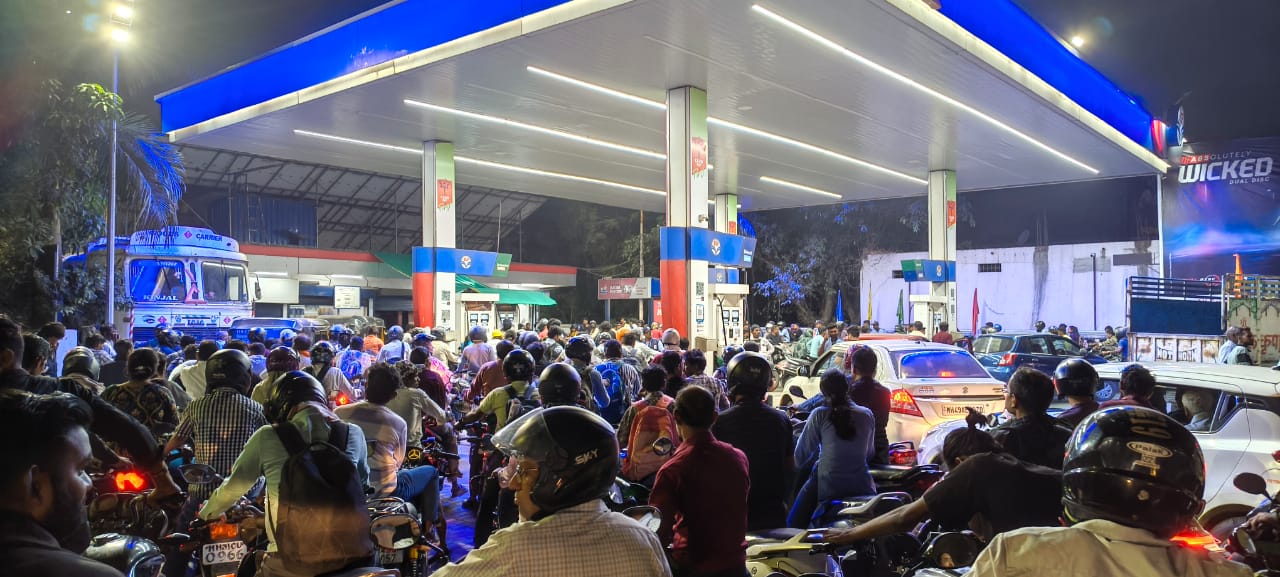
Nagpur is witnessing an unusual and concerning situation at several fuel stations, where “No Petrol” signs have started appearing, sparking anxiety among residents. At first glance, it may seem like the city is facing a fuel shortage—but the reality tells a different story.
The root of the issue lies not in supply, but in a sudden shift in the payment system introduced by major oil companies. Until recently, petrol pump dealers were allowed to purchase fuel on credit, giving them flexibility to manage daily operations and cash flow. However, this system has now been abruptly replaced with a strict “no credit” policy.
Under the new rules, dealers must make advance payments before receiving fuel supplies. This unexpected change has put many petrol pump owners under financial pressure, as they are now required to arrange large sums of money upfront—something not all dealers are immediately prepared for.
As a result, several petrol pumps in Nagpur have either run out of stock or temporarily shut down operations, not because fuel is unavailable, but because they are unable to procure it under the new payment terms.
The situation is further complicated by the fact that many dealers themselves extend credit to regular customers such as transport operators and local businesses. With incoming payments delayed and outgoing payments now required upfront, the entire financial cycle has been disrupted.
Despite the visible disruption at some fuel stations, officials maintain that there is no actual shortage of petrol or diesel in Nagpur’s depots. Fuel supplies remain stable at the source—the challenge lies purely in distribution and financial adjustment.
For the public, this means there is no need for panic, but some inconvenience may persist in the short term. Long queues or limited availability at select pumps could continue until dealers adapt to the new system or negotiations bring some relief.
Experts believe that if the issue is not resolved quickly, it could escalate into a broader disruption, especially in high-demand areas. For now, all eyes are on how oil companies and dealers navigate this sudden transition
"The decisions we make today will shape the world for generations to come."