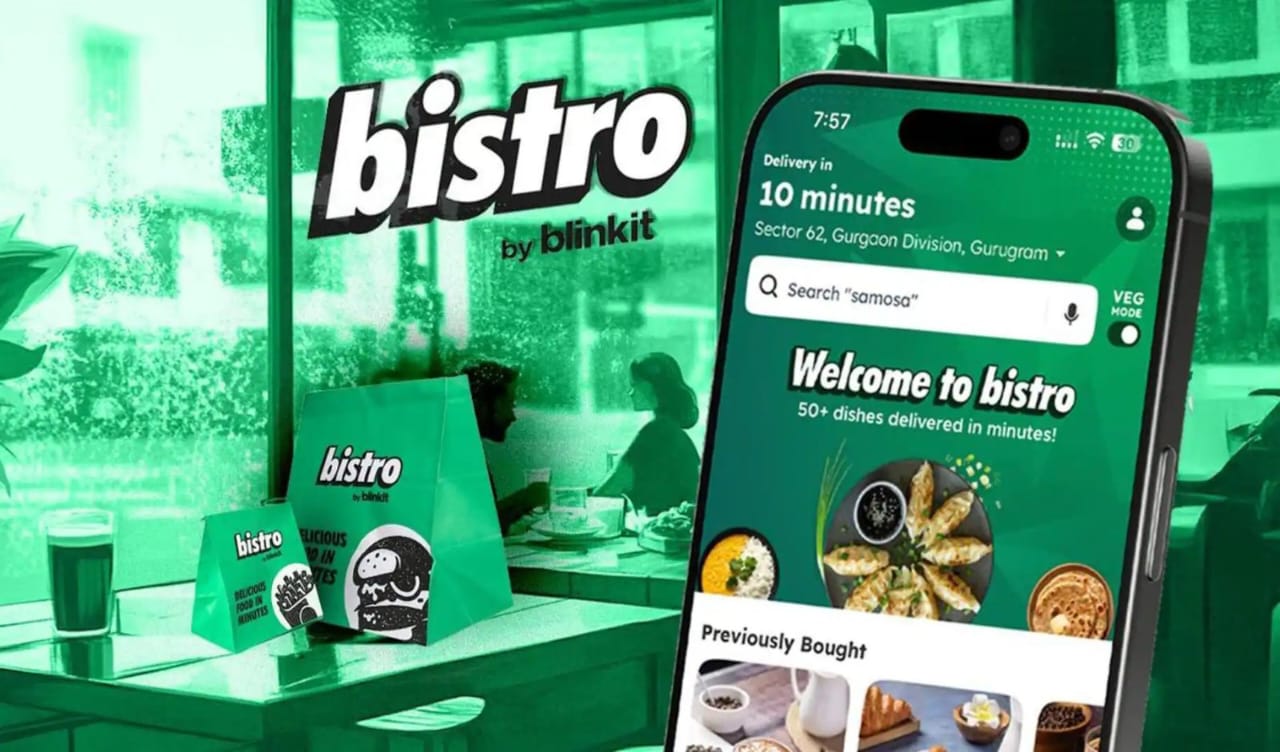
Eternal Ltd’s experiment with ultra-fast food delivery is proving to be an expensive one. The company’s quick food delivery brand Bistro has reported losses of nearly ₹150 crore over the last three quarters, while generating revenue of less than ₹20 crore, highlighting the financial strain of building a new delivery model from scratch.
Bistro is Eternal’s in-house food delivery initiative, designed to deliver freshly prepared meals in under 10 minutes. Unlike traditional food delivery platforms that rely on restaurant partners, Bistro follows an owned-kitchen model, where Eternal manages kitchen infrastructure, staff, and operations directly. While this gives the company greater control over speed and quality, it has significantly increased costs.
Heavy Investments, Limited Revenue
According to company disclosures, Bistro recorded losses of approximately ₹45 crore in Q1, ₹55 crore in Q2, and ₹51 crore in Q3, taking total losses close to ₹150 crore in just nine months. During the same period, revenue remained modest, crossing only ₹14 crore in the most recent quarter, as the service is still in an early testing phase.
The primary reason for these losses is high upfront investment. Eternal has set up around 45 cloud kitchens across major markets such as Delhi-NCR and Bengaluru. These kitchens require spending on real estate, equipment, staffing, inventory, and logistics long before customer volumes reach sustainable levels.
Company executives have clarified that the losses are largely investment-driven and intentional, as Bistro is currently focused on testing demand, improving execution, and refining the business model rather than chasing short-term profitability.
Strategic Shift After Earlier Setbacks
Bistro represents Eternal’s renewed attempt at quick food delivery after shutting down earlier initiatives like Zomato Instant and Zomato Everyday in 2025 due to weak consumer demand and operational challenges. Learning from those experiments, Eternal has moved away from restaurant-dependent models to a fully controlled kitchen network under Bistro.
The strategy targets two specific consumer needs: affordable, home-style meals and fast-moving snack items that can be prepared and delivered rapidly. Management believes this approach can unlock incremental demand without cannibalising Zomato’s core food delivery business.
Losses Amid Strong Group Performance
Despite Bistro’s mounting losses, Eternal’s overall financial health remains strong. The company reported a 73% year-on-year jump in consolidated net profit to ₹102 crore in Q3, supported by robust growth in its food delivery and quick-commerce arms. Blinkit, in particular, continues to be a major growth engine, contributing significantly to revenue expansion.
Eternal has acknowledged that Bistro is still far from breakeven and that monetisation remains a challenge. However, the company has indicated it will continue calibrated investments, expanding cautiously while closely tracking unit economics and customer response.
Long Road Ahead
Bistro’s performance underlines the risks involved in building ultra-fast food delivery at scale. While consumer interest exists, the cost structure of owned kitchens and rapid delivery remains difficult to sustain. For Eternal, Bistro is a long-term bet rather than a short-term profit driver.
Whether the experiment evolves into a scalable business or follows the fate of earlier quick-delivery attempts will depend on how effectively Eternal can balance speed, cost, and demand in one of the most competitive segments of India’s digital economy.
"The decisions we make today will shape the world for generations to come."