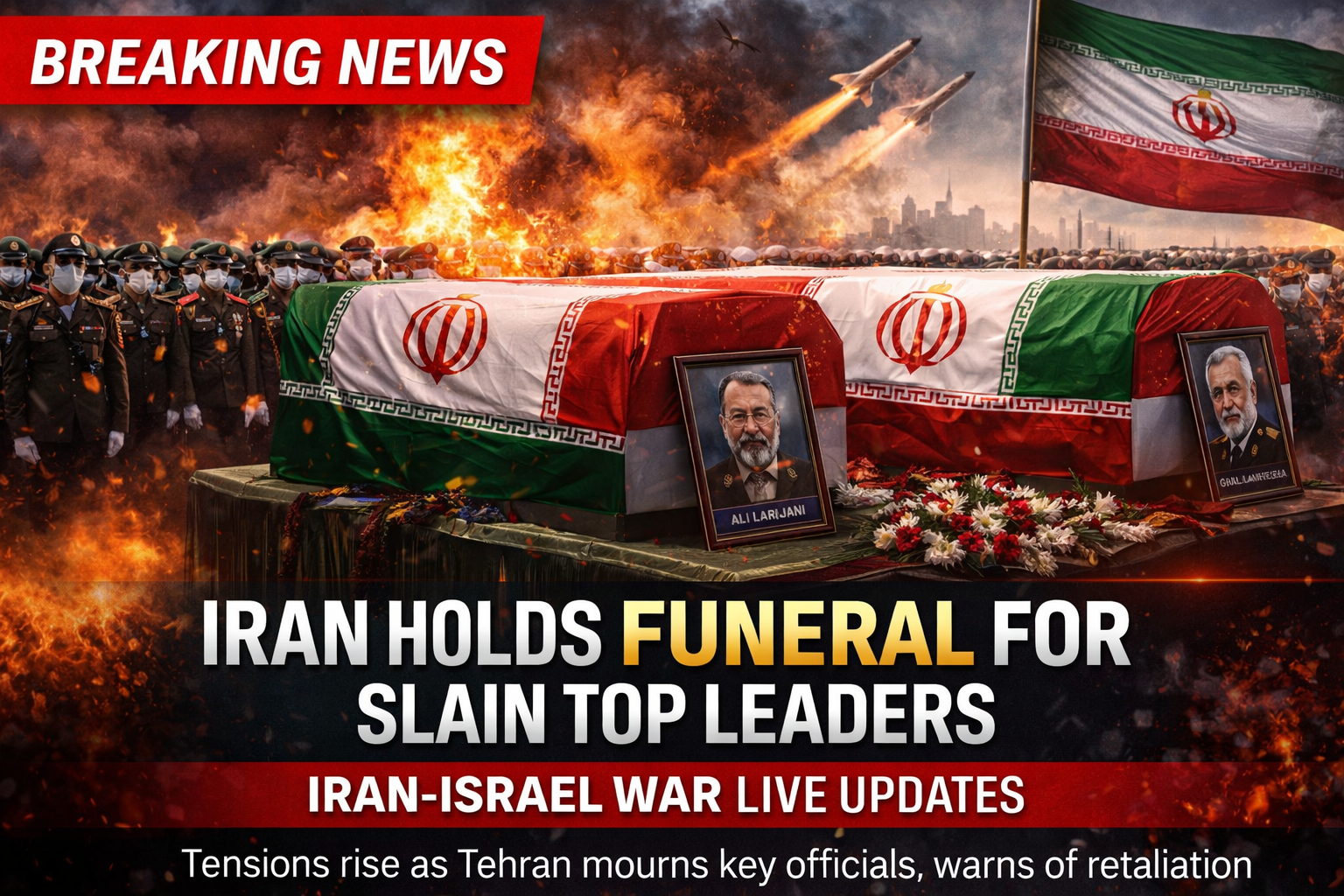
The conflict between Iran and Israel has entered a more volatile phase as Tehran prepares to hold state funerals for two of its senior officials killed in recent strikes. The ceremonies, scheduled for today, are expected to draw significant public and political attention, reflecting the gravity of the losses.
Among those being honored is Ali Larijani, a prominent figure known for his influence in Iran’s political and security landscape. Alongside him is Gholamreza Soleimani, who played a crucial role in overseeing Iran’s paramilitary forces. Their deaths mark a significant escalation in the ongoing hostilities, signaling a shift toward more direct and high-level targeting.
According to emerging reports, both leaders were killed in precision strikes attributed to Israeli military operations. While official confirmations remain measured, the incident has intensified public sentiment within Iran, with calls for a decisive response growing louder across political circles.
The funerals are not only a moment of national mourning but also a strategic signal. Large-scale state ceremonies in Iran often carry political weight, serving to unify public opinion and project resilience. Analysts suggest that the events could also be used to reinforce the government’s stance and prepare the ground for potential retaliatory actions.
The broader implications of these developments extend beyond the immediate conflict. Increased tensions between Iran and Israel have already raised concerns about regional stability, energy security, and global economic impact. Any further escalation could draw in additional actors and widen the scope of the confrontation.
For now, the focus remains on Tehran, where the funerals symbolize both loss and defiance. As the situation unfolds, the international community will be closely monitoring Iran’s next move, aware that each step carries the potential to reshape the trajectory of the conflict.
"The decisions we make today will shape the world for generations to come."