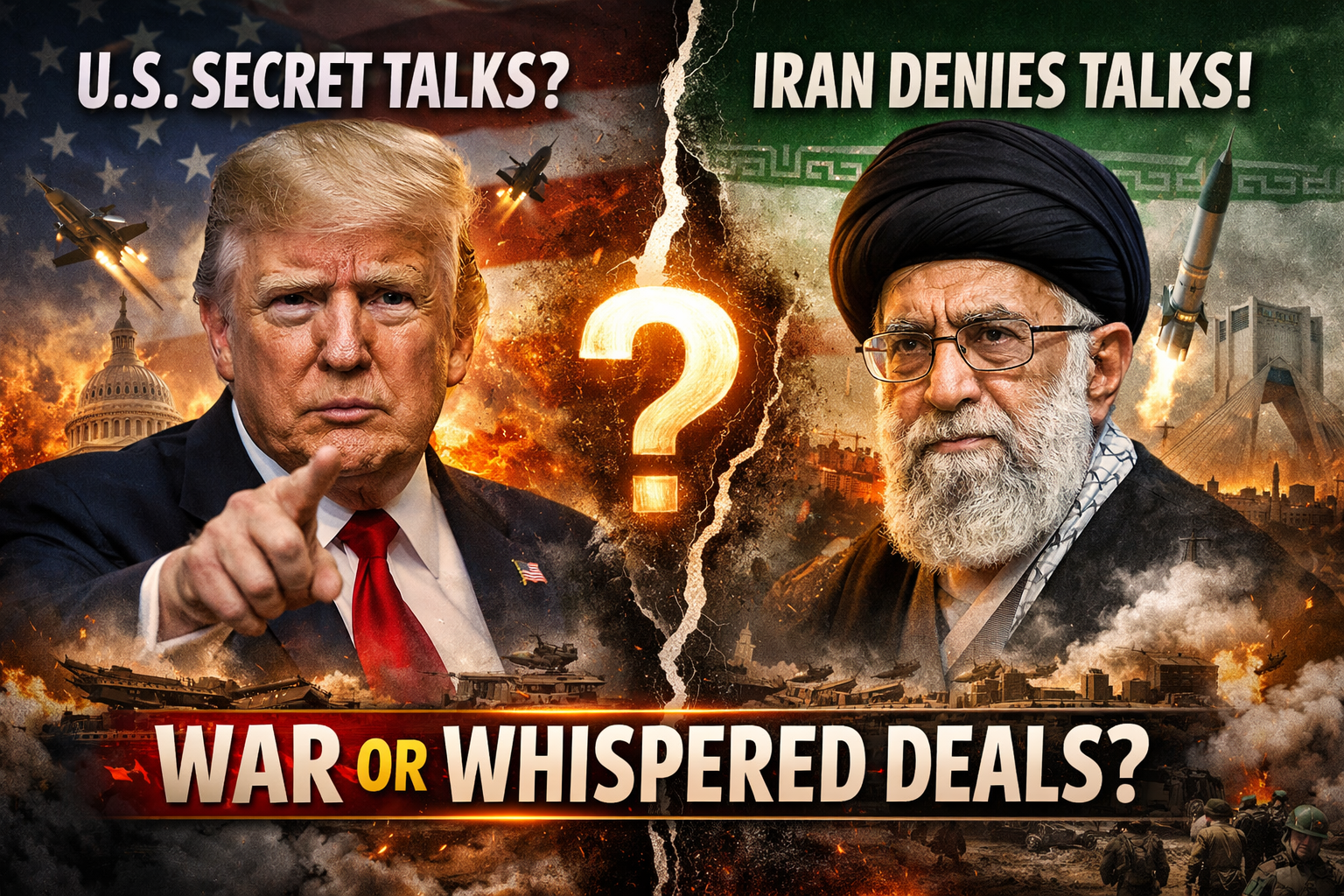
The ongoing Iran–Israel war, now deeply entangled with the United States, has entered a complex phase where military confrontation and political messaging are unfolding side by side. Recent developments have exposed a sharp contradiction: while former U.S. President Donald Trump claims that productive talks with Iran are underway, Tehran has categorically denied any such negotiations.
This contradiction is not just a diplomatic disagreement—it reflects a deeper geopolitical strategy shaping the future of the conflict.
War on the Ground, Words in the Air
Since late February 2026, the conflict has escalated rapidly following coordinated strikes by the U.S. and Israel on Iranian targets. Iran retaliated with missile attacks across the region, turning the situation into a full-scale regional crisis.
Even as discussions of diplomacy emerge, the reality on the ground remains violent. Israel has continued launching strikes on Tehran and other strategic locations, targeting military and intelligence infrastructure.
This creates a paradox: talks are being discussed, but the war has not slowed down.
Trump’s Narrative: Diplomacy or Strategy?
Donald Trump recently stated that the United States has had “very good and productive” conversations with Iran and even paused planned strikes on Iranian energy infrastructure for five days to allow diplomacy a chance.
He has also hinted at a larger objective—“regime change” in Iran, suggesting that the current leadership could be replaced as a result of the conflict.
From a strategic perspective, such statements may serve multiple purposes:
Creating pressure on Iran to negotiate
Sending signals to global markets and allies
Presenting a controlled and optimistic narrative to domestic audiences
Interestingly, markets reacted positively, with oil prices falling amid hopes of de-escalation.
Iran’s Response: Denial and Defiance
In stark contrast, Iran’s Foreign Ministry and senior officials have rejected Trump’s claims outright. They insist that no direct talks with the United States are taking place and have described such statements as misinformation or psychological warfare.
Iran’s stance reflects a broader strategic posture:
Avoid appearing weak under pressure
Maintain internal unity and control
Keep negotiation channels ambiguous while continuing resistance
At the same time, reports suggest that indirect messages or backchannel communications may exist, even if formal talks are officially denied.
The Bigger Picture: War Beyond Weapons
This situation highlights that modern conflicts are no longer fought only with missiles and armies. They are also fought through:
Information warfare (controlling the narrative)
Economic signals (impact on oil and markets)
Psychological pressure (public statements, threats, and denials)
The Strait of Hormuz, a critical global oil route, has become a central point of tension, with its closure already affecting global energy stability.
Meanwhile, despite intense military action, intelligence reports suggest that Iran’s political system remains intact and even more consolidated under hardline forces.
"The decisions we make today will shape the world for generations to come."