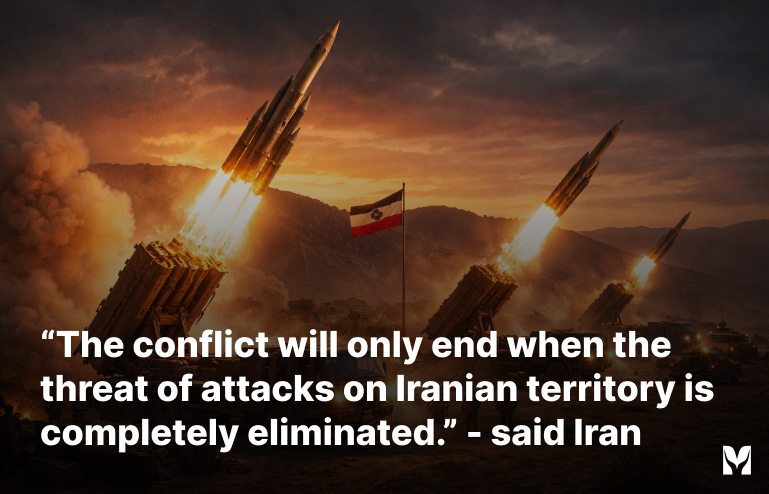
As tensions in the Middle East reach a critical point, Iran has issued a strong and uncompromising warning to the United States and Israel, signaling that the conflict is far from over. A statement attributed to Iran’s Khatam al-Anbiya Central Headquarters, the country’s unified military command, makes it clear: the war will continue unless external attacks on Iranian territory are completely removed from the strategic agenda of its adversaries.
The warning reflects a hardened stance from Tehran as the conflict intensifies across the region, with both sides exchanging strikes and threats in what is quickly evolving into a prolonged confrontation.
A Direct Message to Washington and Tel Aviv
Iran’s military leadership has made its position explicit—any continued aggression will be met with escalation, not restraint. Officials warned that if Iranian infrastructure is targeted, retaliation will be broader and more severe.
According to Iranian state-linked statements, the message is simple:
- Attack Iran → Expect larger counterattacks
- Continue pressure → War continues
A spokesperson for Khatam al-Anbiya emphasized that Iran’s armed forces are prepared to intensify their response if necessary, signaling readiness for a sustained conflict.
Escalation Driven by Recent Attacks
The warning comes after a series of high-impact military developments:
- U.S. and Israeli strikes on Iranian targets, including nuclear-linked and military infrastructure
- Iranian missile and drone attacks targeting Israeli cities and U.S. bases
- Rising threats to energy routes, particularly around the Strait of Hormuz
In response to U.S. threats to strike Iranian power infrastructure, Tehran has also warned that American and allied infrastructure across the region could become targets.
At the same time, the conflict has already disrupted global energy flows, with the Strait of Hormuz—through which roughly 20% of global oil passes—becoming a major flashpoint.
A War With No Clear End Yet
Iran’s latest statement suggests that it does not see a quick resolution. Instead, it is framing the war as conditional:
The conflict will only end when the threat of attacks on Iranian territory is completely eliminated.
This aligns with broader messaging from Iranian leadership, which has repeatedly emphasized its right to retaliate and defend its sovereignty.
Meanwhile, the United States has taken an increasingly aggressive posture. President Donald Trump has issued ultimatums, including threats to target Iranian power plants if strategic demands are not met, further escalating tensions.
Global Stakes Rising
The implications of this standoff extend far beyond the region:
- Oil prices are rising due to fears of supply disruption
- Global shipping routes are under threat
- Regional allies are being drawn into the conflict
The situation is no longer just a bilateral conflict—it is becoming a multi-front geopolitical crisis with economic and security consequences worldwide.
Conclusion
Iran’s warning marks a turning point in tone—moving from reactive defense to a clear declaration of endurance. By stating that the war will continue until threats are removed, Tehran is signaling that it is prepared for a prolonged confrontation rather than a quick resolution.
With both sides unwilling to back down and military actions intensifying, the risk of a broader regional war continues to grow. For now, diplomacy appears limited, and the world watches as tensions inch closer to a potentially wider conflict.
"The decisions we make today will shape the world for generations to come."