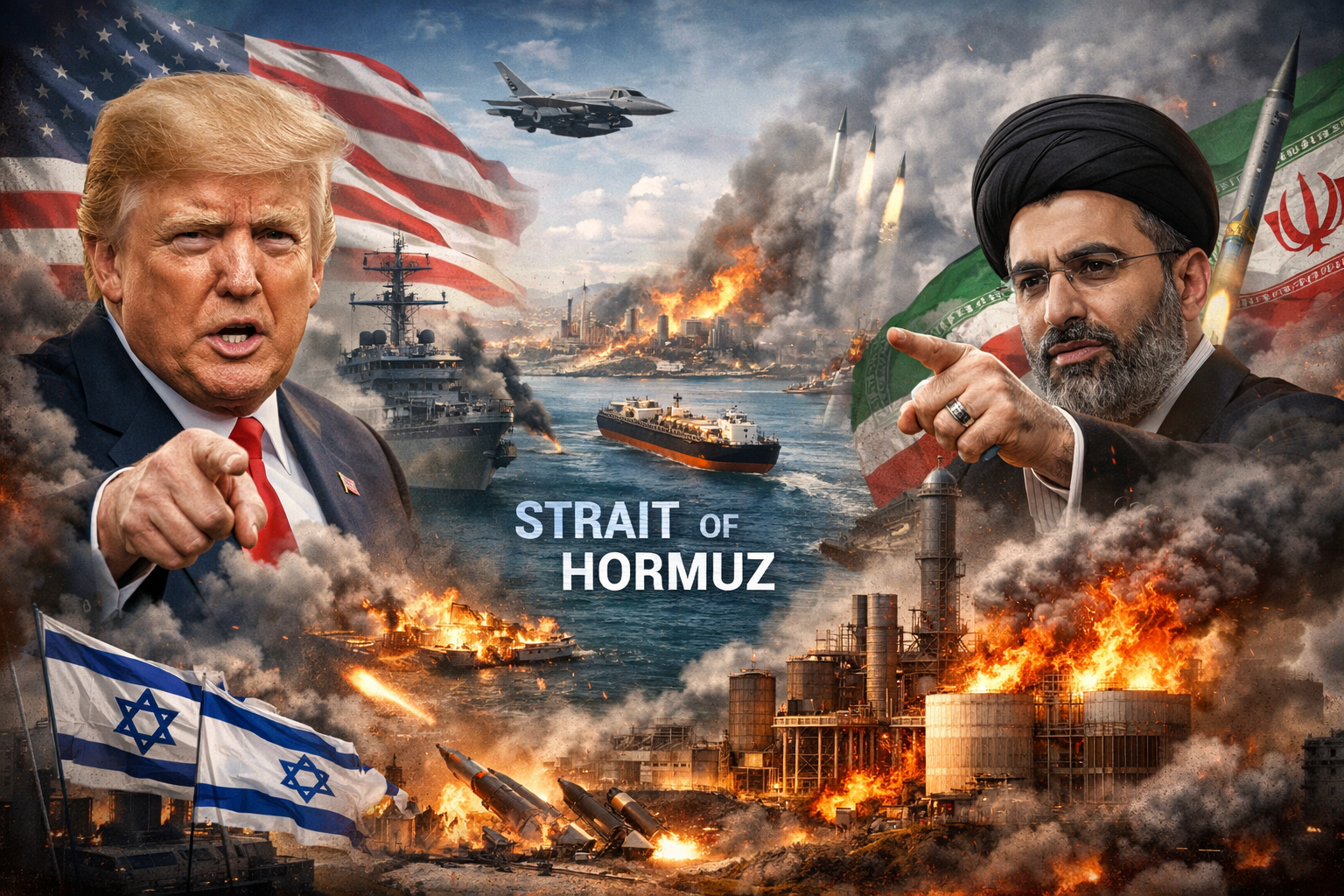
The situation in the Middle East is becoming more tense with each passing day. What started as a conflict between Iran and Israel is now slowly pulling in bigger powers, making the entire world uneasy.
Recently, U.S. President Donald Trump issued a strong warning to Iran. He made it clear that if Iran does not ease the situation around the Strait of Hormuz, the United States could take serious action, including possible strikes on Iran’s power plants. This statement has added a new level of seriousness to an already fragile situation.
The Strait of Hormuz may sound like just another location, but in reality, it is one of the most important routes for global oil supply. A large portion of the world’s oil passes through this narrow stretch of water. Any disruption here doesn’t just affect one region—it impacts fuel prices, economies, and daily life across the globe.
Iran, however, is not backing down. The response from Tehran has been firm and clear: any attack on its infrastructure will be met with retaliation. What’s more concerning is that Iran has hinted at targeting critical systems, not just military bases. This means essential services like electricity, communication, and water systems could also be at risk if the situation escalates.
At the same time, the ongoing conflict between Iran and Israel continues to intensify. Both sides have been exchanging attacks, keeping the region on edge. With the United States now more directly involved, the chances of the conflict spreading further are increasing.
What makes this situation particularly worrying is its global impact. Rising oil prices, unstable markets, and geopolitical uncertainty are already being felt. Countries that rely heavily on oil imports, including many in Asia, are watching the situation very closely.
In simple terms, the world is at a critical point. One wrong move could push this conflict into a much larger and more dangerous phase. For now, all eyes are on how both sides act in the coming days, because the decisions made now could shape the future of the region—and possibly the world.
"The decisions we make today will shape the world for generations to come."