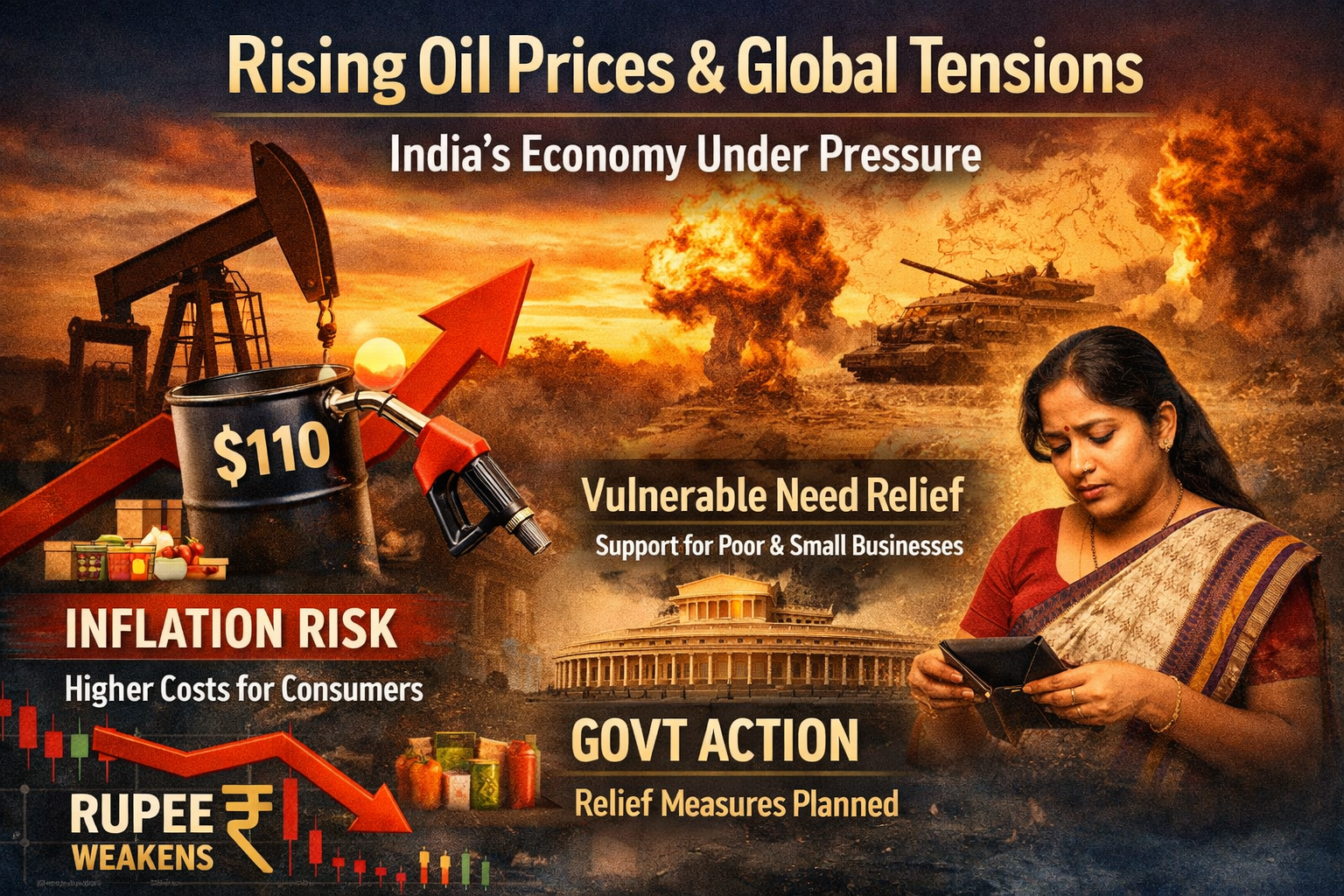
India is once again navigating through uncertain economic waters as escalating tensions in the Middle East begin to impact global crude oil prices. Over the past few days, oil prices have surged sharply, driven by fears of supply disruptions and geopolitical instability. For a country like India—where nearly 85% of crude oil is imported—this development carries serious economic implications.
Why Oil Prices Matter So Much
Crude oil is not just another commodity; it is the backbone of multiple sectors in the Indian economy. From transportation and logistics to agriculture and manufacturing, fuel costs directly or indirectly influence almost every aspect of economic activity. When oil prices rise globally, India’s import bill increases significantly. This, in turn, affects the value of the rupee and puts pressure on the country’s fiscal balance.
A weaker rupee makes imports even more expensive, creating a cycle that can lead to persistent inflation. As companies face higher input costs, they often pass these expenses on to consumers, resulting in higher prices for goods and services. This is why even a moderate increase in crude oil prices can quickly translate into noticeable changes in everyday expenses.
Inflation Concerns Begin to Rise
One of the biggest worries at the moment is inflation. Higher fuel prices lead to increased transportation costs, which then affect food prices and essential commodities. For the average household, this means spending more on basics like groceries, travel, and electricity.
Economic experts warn that if oil prices remain elevated for a prolonged period, inflation could rise beyond the comfort zone of policymakers. This might force the central bank to consider tightening monetary policy, which could lead to higher interest rates. As a result, loans—whether home, auto, or personal—could become more expensive, reducing overall consumer spending.
Government Steps In: Relief Measures on the Horizon
Recognizing the potential impact on citizens, especially low-income groups and small businesses, the government has indicated that relief measures may be introduced. These measures are likely to focus on cushioning the most vulnerable sections from the immediate effects of rising costs.
Possible steps could include targeted subsidies, tax adjustments on fuel, or direct financial support schemes. The aim would be to balance economic stability while ensuring that the burden does not fall disproportionately on those least able to bear it.
At the same time, the government is walking a tightrope. On one hand, it must control inflation and support growth; on the other, it needs to maintain fiscal discipline and avoid excessive borrowing.
Impact on Businesses and Markets
Rising oil prices do not just affect consumers—they also impact businesses significantly. Industries that rely heavily on transportation, such as logistics, aviation, and e-commerce, are likely to see increased operational costs. Similarly, sectors like cement, steel, and chemicals may face margin pressures due to higher energy expenses.
Stock markets often react negatively to such uncertainty. Investors tend to pull back during periods of global instability, leading to increased volatility. In recent sessions, Indian markets have shown signs of nervousness, with fluctuations driven by both global cues and domestic concerns.
Foreign investors, in particular, may adopt a cautious approach, leading to capital outflows. This can further weaken the currency and add to market instability.
India’s Strength: Strong Economic Fundamentals
Despite these challenges, India is not without its strengths. The country has relatively strong foreign exchange reserves, a stable banking system, and consistent domestic demand. These factors provide a cushion against external shocks.
Moreover, India’s diversified economy and ongoing infrastructure development projects continue to support long-term growth prospects. While short-term disruptions are possible, the broader economic outlook remains resilient.
What Lies Ahead
The coming weeks will be crucial in determining how the situation unfolds. Much will depend on global geopolitical developments and whether oil prices stabilize or continue to rise. Policymakers will need to remain proactive, adapting strategies to evolving conditions.
For individuals, this is a time to be financially cautious—monitoring expenses, avoiding unnecessary debt, and staying informed about economic trends. For businesses, it is about managing costs efficiently and preparing for potential volatility.
"The decisions we make today will shape the world for generations to come."