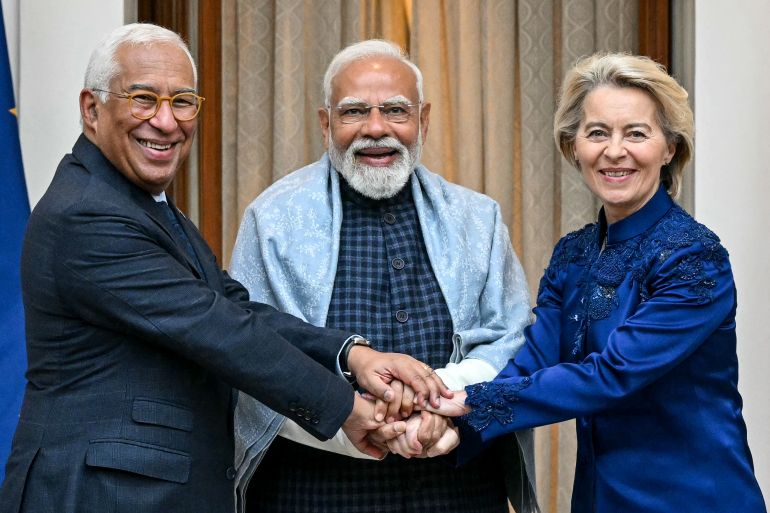
The recently announced free trade agreement between India and the European Union has been hailed as one of the most ambitious economic partnerships in recent years. Often described as the “mother of all trade deals,” the agreement marks a significant milestone after nearly two decades of negotiations. However, as highlighted by CNBC Daily Open, the story is far from over. The deal’s true impact will depend on what happens next.
A Long Road to Consensus
India and the EU, two of the world’s largest economic blocs, finally reached a breakthrough after years of stalled talks. The agreement aims to deepen economic integration by reducing trade barriers, expanding market access, and encouraging cross-border investment. Together, India and the EU represent a massive share of global population, production, and consumption, making this deal strategically important well beyond bilateral trade.
Key Elements of the Agreement
Under the proposed free trade framework, tariffs on a large majority of goods traded between India and the EU will be reduced or eliminated over time. This is expected to benefit Indian exporters in sectors such as textiles, pharmaceuticals, information technology services, and gems and jewellery.
For the European Union, the deal opens doors to India’s fast-growing consumer market, particularly for automobiles, industrial machinery, high-end manufactured goods, wines, and spirits. Both sides see the agreement as a way to unlock new growth opportunities and strengthen supply chains.
Why the Deal Is Not “Done Yet”
Despite the announcement, several critical steps remain before the agreement becomes operational. The legal text still needs to undergo detailed review, followed by formal signing. After that, the deal must receive political and parliamentary approvals within the EU and clearance from India’s government.
In addition, some sensitive sectors have been deliberately protected, and the implementation of tariff reductions will be gradual. These unresolved details explain why analysts and CNBC describe the agreement as a work in progress rather than a finished chapter.
Carbon Rules Remain a Key Concern
One of the most challenging issues is the EU’s Carbon Border Adjustment Mechanism (CBAM). While the trade deal moves forward, Europe has chosen to retain its carbon-related import rules. India has raised concerns that these measures could hurt exports from carbon-intensive industries such as steel and cement. Ongoing discussions will determine whether practical solutions can be found without undermining climate commitments.
Strategic Importance in a Changing World
Beyond economics, the EU–India trade deal carries strong geopolitical significance. At a time when global trade is being reshaped by U.S.–China tensions, supply-chain disruptions, and protectionist trends, both India and the EU are seeking reliable, long-term partners. This agreement reflects a broader strategy to diversify trade relationships and reduce dependence on any single market.
What Lies Ahead
If implemented effectively, the trade deal has the potential to significantly boost bilateral trade, investment flows, and job creation on both sides. However, its success will depend on smooth execution, regulatory clarity, and the ability to balance economic growth with environmental and domestic industry concerns.
"The decisions we make today will shape the world for generations to come."