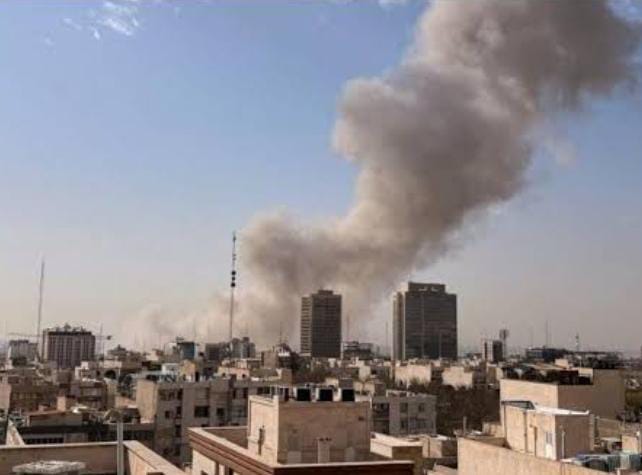
The Middle East stands at a dangerous crossroads after reports of coordinated military strikes by the United States and Israel on Iranian territory triggered sharp reactions from Tehran. According to emerging developments, multiple high-value targets inside Iran were hit in what analysts describe as one of the most significant escalations in recent regional history.
Iranian President Masoud Pezeshkian strongly condemned the alleged killing of Supreme Leader Ali Khamenei, calling it a “declaration of war against Muslims.” His statement, broadcast on state media, accused Washington and Tel Aviv of crossing a red line that could destabilize the entire region.
Reports suggest that the joint US–Israel operation targeted strategic military facilities, air defense systems, and high-ranking leadership compounds in and around Tehran. While independent confirmation of all details remains limited, the Iranian government has acknowledged significant damage and casualties.
The political consequences of such an action are immense. Iran has long maintained that any attempt to assassinate its top leadership would be treated as an act of full-scale war. In response to the alleged attack, Iranian officials warned of “severe and historic retaliation,” raising concerns of missile strikes, proxy engagements, and broader military confrontation.
On the other side, neither United States nor Israel has issued a detailed public statement confirming leadership casualties, though both governments have reiterated their stance on countering Iranian regional influence and security threats.
The situation has already begun affecting regional stability. Gulf nations have heightened security alerts, global oil markets reacted with volatility, and diplomatic channels are working urgently to prevent a wider conflict. Analysts warn that if retaliatory strikes intensify, the confrontation could extend beyond direct state actors and involve allied militias across the region.
International observers are closely monitoring developments, as the potential fallout could reshape Middle Eastern geopolitics for years to come. With tensions running high and rhetoric intensifying, the coming days may prove decisive in determining whether diplomacy prevails or the region descends into broader warfare.
"The decisions we make today will shape the world for generations to come."