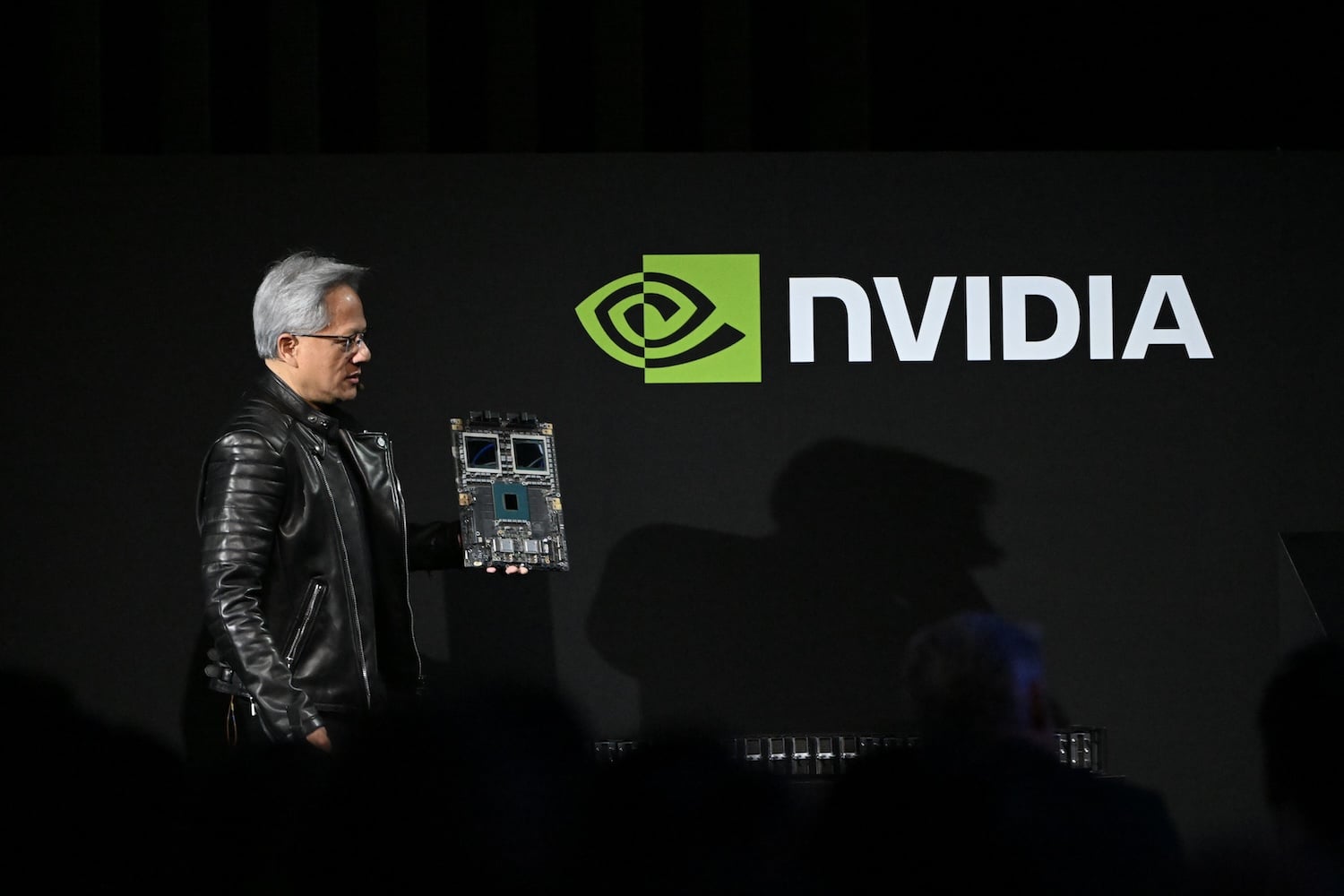
SANTA CLARA, CA — For weeks, a nervous whisper had been rippling through the trading floors of Manhattan and the boardrooms of Silicon Valley: Has the AI fever finally broken? On Wednesday evening, February 25, 2026, Nvidia (NVDA) didn't just answer that question—it detonated it. In a financial performance that felt more like a geopolitical event than a corporate earnings call, CEO Jensen Huang delivered a set of numbers that defied even the most aggressive "whisper targets" on the Street.
The Numbers That Shook the Market
While the bears were betting on a slowdown, Nvidia reported a staggering $68.1 billion in quarterly revenue, representing a massive 73% leap from the previous year. But the real shockwave came from the bottom line. With an Earnings Per Share (EPS) of $1.62, Nvidia comfortably bypassed the $1.53 consensus, proving that its pricing power remains untouched despite rising competition from AMD and internal silicon projects at Google and Amazon.
The "Insane" Blackwell Factor
The suspense leading into this report centered on one word: Blackwell. Market skeptics had spent months theorizing about thermal delays and supply chain bottlenecks for Nvidia’s next-gen architecture.
Huang dismissed those concerns with a single, evocative descriptor: "Insane." The demand for Blackwell chips—the brains behind the next generation of Human-Level AI—is currently outstripping supply by a margin that suggests the AI infrastructure build-out is actually accelerating, not tapering off.
A $78 Billion Cliffhanger
The most jaw-dropping moment of the night wasn't the past quarter’s success, but the map for the future. Nvidia issued a Q1 FY2027 revenue guidance of $78 billion.
To put that in perspective: that is nearly $5 billion higher than even the most optimistic analyst estimates. It signals a world where "Sovereign AI"—nations like Saudi Arabia, Japan, and the UAE buying chips to build national intelligence—is becoming as significant a revenue driver as Microsoft or Meta.
"We are no longer just upgrading computers," noted one senior analyst at a top-tier investment bank. "We are witnessing the wholesale replacement of the world’s $1 trillion traditional data center install base with accelerated computing. And Nvidia owns the only blueprint that matters."
The Verdict: The King Stays King
As the dust settles on Q4, the narrative has shifted. The debate is no longer about whether the AI demand is "real"—the $68 billion in cash says it is. The new suspense lies in a different question: Can anyone actually stop them?
With profit margins holding steady at a historic 75%, Nvidia has evolved from a chipmaker into the central bank of the AI economy. For investors, the "shockwave" of February 2026 may be remembered as the moment the AI revolution stopped being a trend and became an era.
"The decisions we make today will shape the world for generations to come."