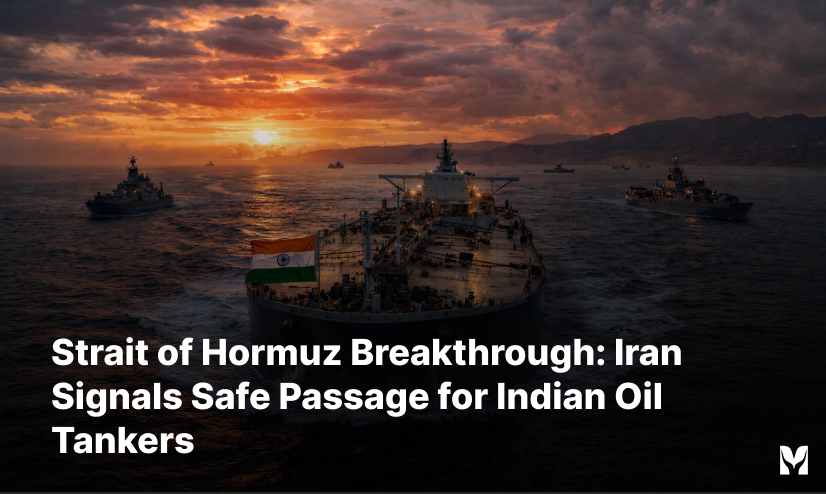
Amid rising tensions in West Asia and growing threats to global shipping routes, Iran has signaled that Indian-linked oil tankers will be allowed to pass safely through the strategically critical Strait of Hormuz. The move comes after diplomatic engagement between India and Iran aimed at protecting energy supplies and maritime security during the ongoing regional conflict.
The Strait of Hormuz, a narrow waterway connecting the Persian Gulf to the Gulf of Oman, is one of the most vital energy chokepoints in the world. Nearly a fifth of the global oil supply passes through this route, making any disruption a serious concern for energy-importing nations such as India.
Diplomatic Talks Behind the Decision
The development follows discussions between India’s External Affairs Minister S. Jaishankar and Iranian Foreign Minister Abbas Araghchi, during which the safety of Indian shipping and oil supplies was a key topic. Following these talks, at least two India-linked vessels—identified as Pushpak and Parimal—were reported to have safely transited the Strait of Hormuz.
The safe passage is being viewed as a diplomatic breakthrough at a time when maritime traffic in the region has sharply declined due to security threats and military escalation. Several vessels connected to Western countries have reportedly faced restrictions or heightened scrutiny in the area.
A Region Under Pressure
The decision comes as the wider Middle East conflict continues to disrupt shipping lanes. Since late February, tensions between Iran and Western-backed forces have increased significantly, leading to attacks on commercial vessels and growing fears of a full-scale maritime blockade.
In recent days, a Thai-flagged cargo ship traveling toward India was struck by projectiles near the Strait of Hormuz, underscoring the dangers facing civilian shipping in the region.
Insurance premiums for vessels passing through the strait have also surged dramatically as insurers classify the route as a high-risk war zone. Many shipping companies have temporarily halted transit through the region due to safety concerns.
Why the Strait of Hormuz Matters for India
India relies heavily on crude imports from the Middle East, with a significant portion of these shipments passing through the Strait of Hormuz. Any disruption in the route could impact fuel prices, refinery operations, and the broader economy.
By allowing Indian-linked vessels to continue operating, Iran appears to be balancing its military posture with economic realities, ensuring that key energy trade routes remain at least partially functional.
Strategic Significance
Analysts believe the move may also signal Iran’s attempt to maintain diplomatic ties with major Asian economies such as India and China while escalating pressure on Western shipping.
At the same time, the situation in the Strait of Hormuz remains volatile. Military activity, attacks on commercial vessels, and rising geopolitical tensions continue to pose risks to global energy supply chains.
For now, India has managed to secure a limited but important corridor for its oil shipments—offering some relief to markets already rattled by war fears and rising energy prices.
What is confirmed
- Iran reportedly allowed at least two Indian tankers — Pushpak and Parimal — to pass safely through the Strait of Hormuz.
- This reportedly happened after talks between India’s External Affairs Minister S. Jaishankar and Iran’s Foreign Minister Abbas Araghchi regarding maritime safety.
- The move is seen as important because about 40% of India’s crude imports pass through the Strait of Hormuz.
What is still unclear
- Some reports say the arrangement is based on diplomatic understanding, not an official public deal.
- A source also said Iran has not formally confirmed a broad agreement for all Indian ships yet.
"The decisions we make today will shape the world for generations to come."