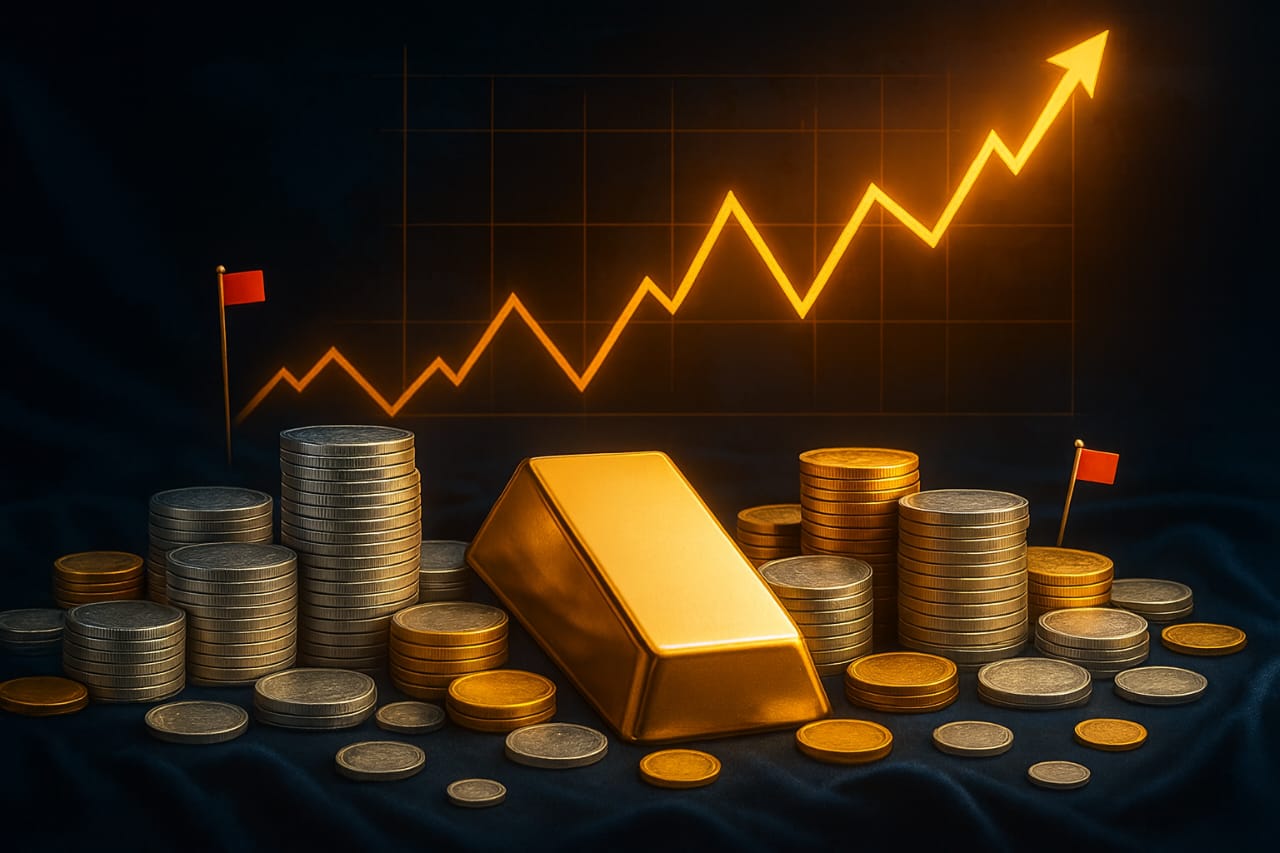
Global commodity markets witnessed renewed interest in precious metals on Wednesday, February 11, 2026, as gold and silver prices climbed in early Asian trading. This uptick in prices came on the back of weaker-than-expected U.S. economic data and increasing market attention on upcoming U.S. payrolls figures — key indicators that influence investor expectations and monetary policy outlooks.
What Happened in Commodity Markets?
On Wednesday, both gold and silver recorded gains after data showed that U.S. retail sales growth softened in December, suggesting that consumer spending — a major driver of economic growth — may be slowing down. This weakened economic signal caused Treasury yields to fall and the U.S. dollar to weaken, making non-yielding assets such as gold and silver more attractive to investors.
Spot gold rose modestly, supported by the softer economic backdrop.
Silver prices also climbed as investors sought alternative stores of value.
The moves reflect how global markets are reacting to signs of slowing growth in the world’s largest economy and the shift in expectations around future interest rate policies.
Why Are These Prices Rising?
Weaker U.S. Economic Data:
Reports showing slower retail sales hinted at a cooling U.S. economy. When growth indicators soften, central banks like the Federal Reserve are often expected to ease monetary policy to support growth — including lowering interest rates.
Treasury Yields and Dollar Movement:
Lower yields on U.S. government bonds reduced the opportunity cost of holding metals that do not pay interest. A softer dollar also makes precious metals cheaper for buyers outside the United States.
Focus on U.S. Payrolls:
With fresh jobs data — particularly nonfarm payrolls — due for release, market participants are watching closely. If this data also comes in weaker, it could further reinforce expectations of rate cuts, boosting demand for gold and silver.
What It Means for Investors
Precious metals often serve as safe-haven assets during times of uncertainty or expectations of lower interest rates. When the outlook for economic growth dims and rate cuts appear more likely, gold and silver typically benefit as investors seek alternatives to fixed-income instruments.
Domestic Impact (India)
Markets in India have shown corresponding movements in commodity prices. On the Multi Commodity Exchange (MCX), gold and silver futures saw gains as traders positioned themselves ahead of global macroeconomic cues. Specifically, silver futures advanced significantly, and gold also registered positive movements.
This reflects how international trends often influence domestic markets, with global economic signals being quickly absorbed by Indian commodity traders and investors.
"The decisions we make today will shape the world for generations to come."