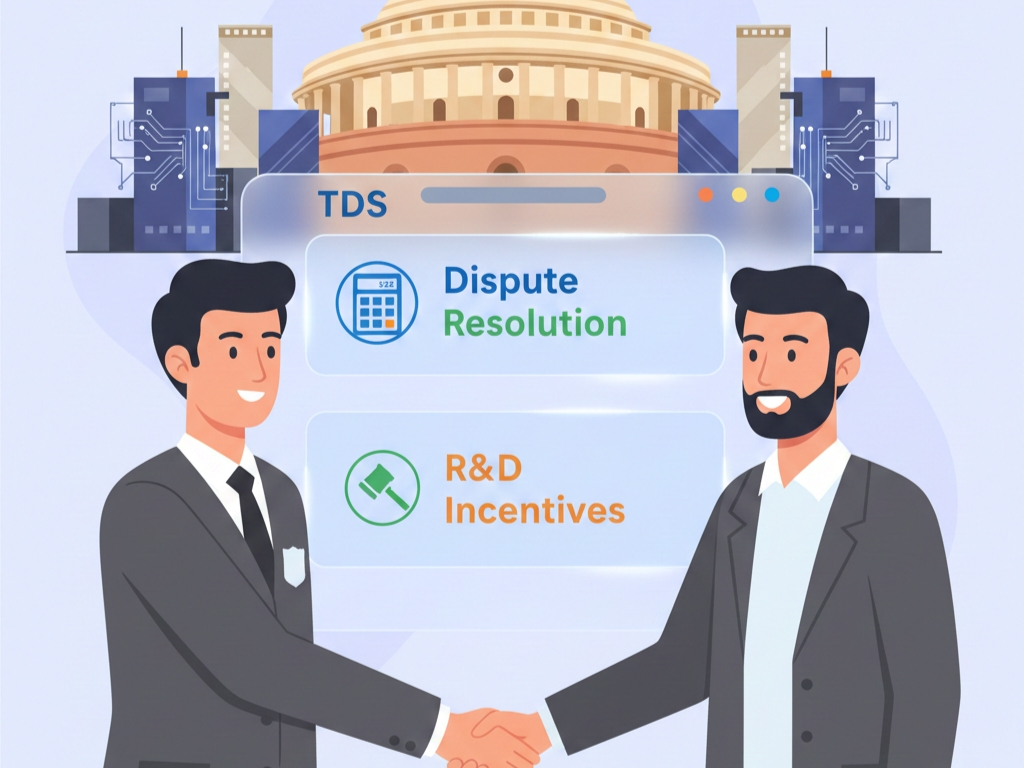
As Union Budget 2026 approaches, the government’s tax agenda is shifting decisively from rewriting laws to fixing how the system works on the ground. With the new Income Tax Act, 2025 already enacted and slated to replace the 1961 law from April 1, 2026, the emphasis is now on smoother implementation, lower litigation and more predictable administration rather than headline rate cuts. Tax experts argue that India’s main pain points lie in procedure, enforcement and dispute handling, not in the basic design of direct tax legislation.
New tax law, new priorities
The Income Tax Act, 2025 ushers in a modernised framework that will govern income earned from April 1, 2026, with the first returns filed in the 2027 assessment cycle. It aims to simplify provisions, clarify definitions and reduce ambiguity around capital gains, business income and compliance obligations while consolidating several procedural powers under a more technology-driven regime. This has created space for Budget 2026 to move away from structural amendments and instead focus on administrative tweaks, decriminalisation and taxpayer-friendly processes that make the new law workable in practice.
TDS simplification tops the wishlist
Tax deduction at source has emerged as the single biggest target for simplification, with corporates and consultants calling the current multi-rate, multi-section structure a compliance nightmare. Despite being only a collection mechanism, the fragmented TDS framework frequently sparks disputes over classification, timing and paperwork even when no real revenue loss occurs. Leading advisors have suggested collapsing the maze of provisions into just a few broad buckets: one rate for salary, one uniform rate for most routine non-salary payments, and a higher rate for exceptional or windfall income.
Clearing the litigation logjam
India’s tax litigation backlog remains massive, with hundreds of thousands of appeals locked up at the Commissioner (Appeals) level and disputed demands running into well over ₹15–18 lakh crore across forums, according to industry representations and business chambers. The faceless assessment and appeal systems have improved transparency but have not yet delivered the speed and closure that taxpayers expected, especially in high-stake corporate disputes. Past settlement schemes launched around 2020 and re-opened later saw strong participation and gave the government quick revenue while easing caseloads, strengthening the argument for a permanent, comprehensive dispute resolution framework covering both direct taxes and areas like customs.
Administrative reforms and taxpayer experience
Beyond TDS and litigation, Budget 2026 is also expected to sharpen focus on day-to-day administrative conduct—ranging from notices and penalties to prosecution thresholds under the new Act. Experts have called for clearer guardrails on when stringent provisions like 120% penalties, search actions or criminal proceedings can be invoked, alongside better training and accountability for field officers. There is growing consensus that stable rules, consistent interpretations and time-bound disposal of cases will matter more to businesses and the middle class than incremental tweaks to slab rates or exemptions.
Push for high-tech manufacturing and R&D
Parallel to compliance reforms, policy attention is turning to strategic tax support for high-tech manufacturing, particularly semiconductors and advanced electronics. Under the India Semiconductor Mission, the Centre already offers fiscal support of up to 50% of eligible project cost for approved fabrication units, positioning India as a competitive destination for chip investments. However, many analysts argue that India still lags global peers on dedicated R&D incentives, and Budget 2026 is seen as a chance to introduce sharper, time-bound benefits that reward genuine innovation rather than broad, open-ended deductions.
Middle class expectations and narrative shift
For salaried taxpayers and small businesses, the conversation around Budget 2026 is less about dramatic tax cuts and more about fewer notices, simpler forms and reduced fear of inadvertent non-compliance. The combination of a brand-new Income Tax Act, streamlined TDS, faster dispute resolution and calibrated high-tech incentives is being framed as a move towards a more predictable and partnership-based tax environment where taxpayers are treated as stakeholders in growth, not adversaries.