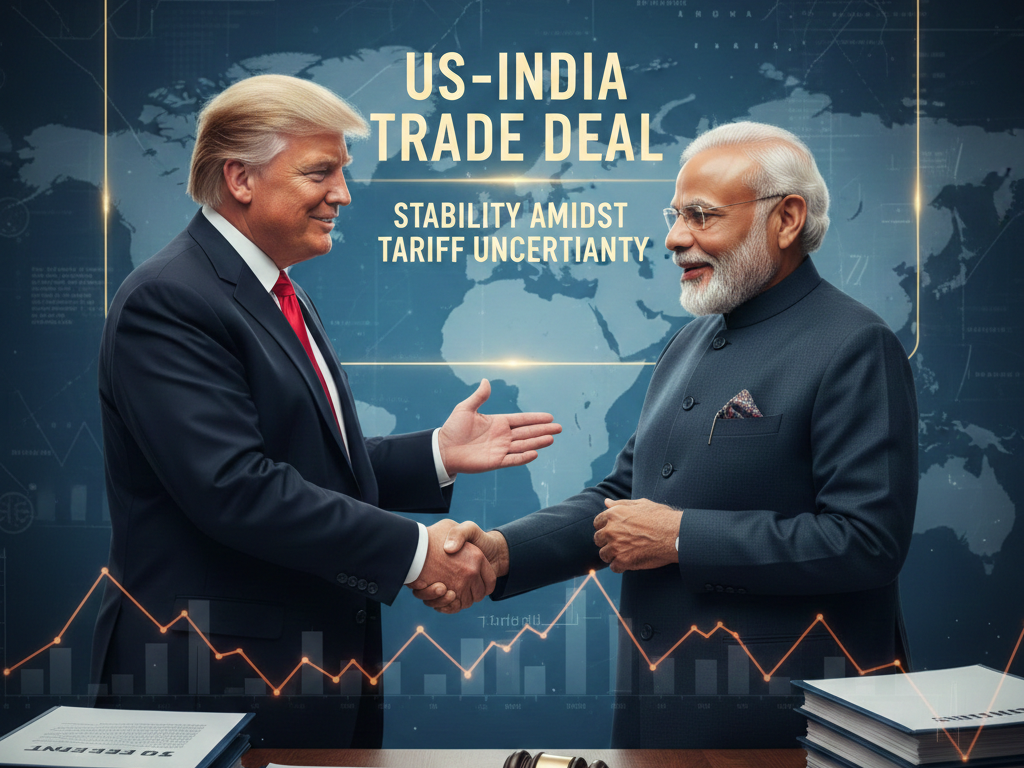
In a significant move towards strengthening economic ties, the United States has announced the removal of the additional 25 % duty on goods imported from India, effective from February 7, 2026. This decision comes as part of an interim trade framework reached between the two nations, aiming to end recent tariff tensions and expand bilateral trade cooperation.
The extra tariff, initially imposed by the U.S. in August 2025 as a punitive measure linked to India’s imports of Russian crude oil, had added to existing trade costs and challenged Indian exporters’ competitiveness. Under the executive order issued by the White House, this surcharge will no longer apply to Indian products entering the U.S. market from 12:01 a.m. EST on February 7, 2026.
What Prompted the Change?
The tariff rollback follows India’s commitment to stop directly or indirectly importing Russian oil and to work with the U.S. on broader economic cooperation, including defence and energy. As part of the deal, both countries have also outlined a framework to reduce overall tariffs and improve market access for exporters on both sides.
Key Components of the Interim Trade Framework
Tariff Adjustment: The U.S. will reduce its tariff rate on most Indian goods to around 18 % from higher previous levels, offering better access for products such as textiles, leather, chemicals, and machinery.
Market Opening: India has agreed to reduce or eliminate tariffs on a range of American industrial and agricultural products, including items like soybean oil, tree nuts, fruits, and wine, subject to final negotiations.
Enhanced Cooperation: Both nations have expressed intentions to work on defence collaboration, supply-chain integration, and regulatory alignment over the coming years.
Future Prospects: A formal interim trade deal is expected to be signed soon, potentially by mid-March 2026, laying the groundwork for a comprehensive bilateral trade agreement.
Impact on Businesses and Economy
The removal of the extra duty and the reduction in tariffs are poised to deliver immediate relief for Indian exporters by lowering costs and improving pricing power in the vast U.S. market. Industries such as textiles, pharmaceuticals, gems and jewellery, and machinery are expected to benefit significantly.
For American businesses, increased access to India’s growing economy presents opportunities in sectors like energy, aerospace, technology, and food products. Government officials from both countries have described the framework as a balanced approach that supports jobs, industrial growth, and long-term trade stability.
Strategic Significance
Analysts view the interim trade deal not merely as an economic agreement but as a strategic partnership enhancer, given the broader geopolitical context. Reduced trade friction reinforces cooperation on energy security, defence, and global supply chains, reflecting a shared interest in deeper engagement beyond trade negotiations.
"The decisions we make today will shape the world for generations to come."