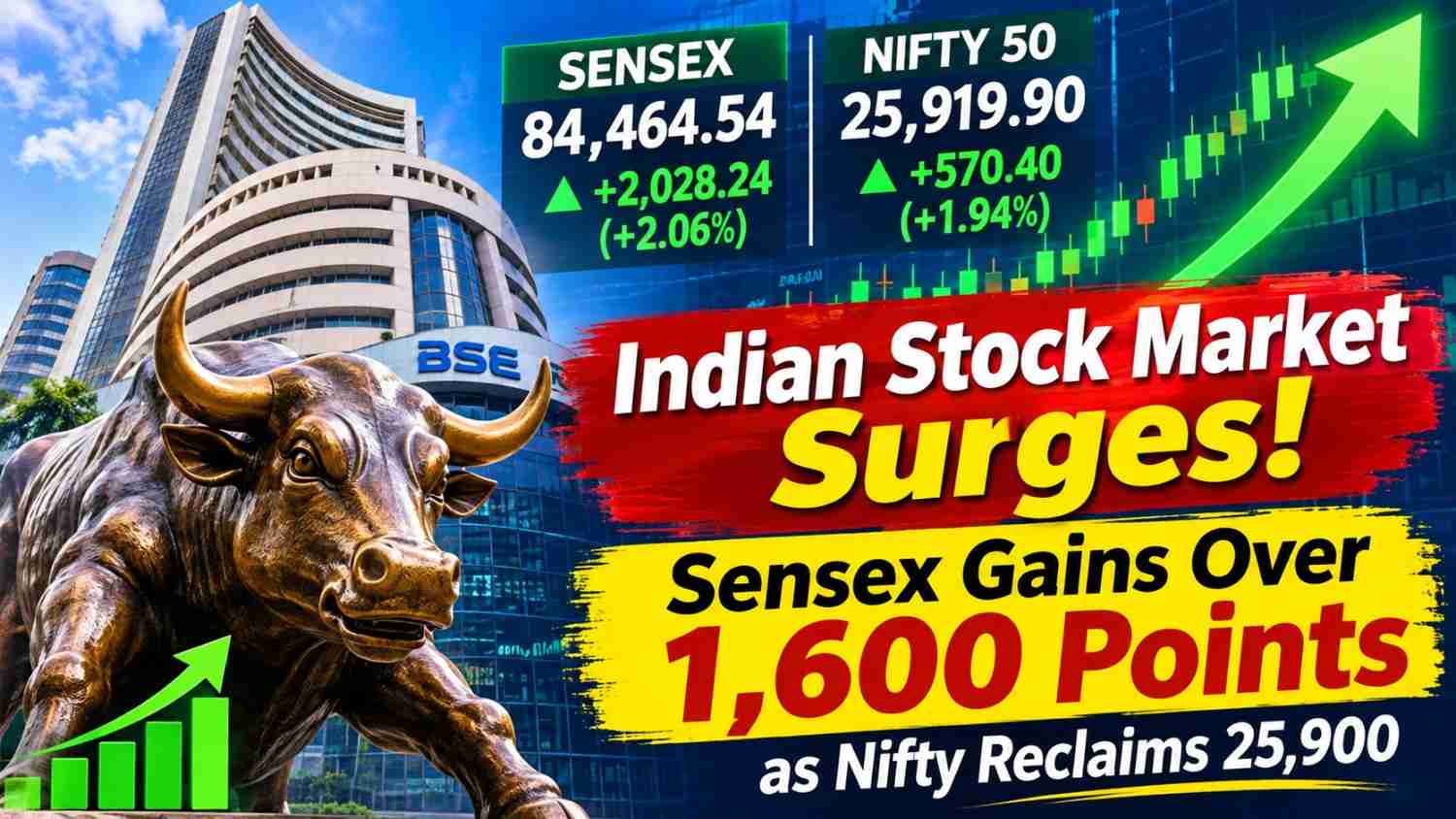
On 5 November 2026 the Nifty 50 opened at 24,378.05 and closed at 24,536.60, a gain of 576 points or 2.40 percent. It was the index’s sharpest single-day rise since April and its highest close in nearly three months. The Sensex jumped 2,008.61 points to 79,310.01. Bank Nifty rose even more sharply. The session extended a six-day winning streak that has added more than 8 percent to the benchmarks.
Nifty 50 Top Performers (5 November 2026)
| Rank | Stock | Closing Price (₹) | Change (%) |
|---|---|---|---|
| 1 | Bajaj Finance | 1,070.00 | +7.65 |
| 2 | Shriram Finance | 964.00 | +6.08 |
| 3 | Mahindra & Mahindra | 3,127.50 | +5.59 |
| 4 | Maruti Suzuki | 12,652.00 | +5.48 |
| 5 | Tata Motors PV | 293.70 | +5.46 |
| 6 | InterGlobe Aviation | ~5,434 | +5.7 |
| 7 | ICICI Bank | 1,500.00 | +5.33 |
| 8 | Bajaj Finserv | ~1,839 | +4.7 |
| 9 | Asian Paints | ~2,529 | +4.5 |
| 10 | Axis Bank | ~1,280 | +3.9 |
Key Laggards
- Apollo Hospitals: around –2.66%
- ONGC: around –2.13%
- NTPC: around –1.63%
Financials and automobiles dominated the advance. Rate-sensitive and consumption-linked names attracted strong buying while energy and some defensive stocks lagged, consistent with the sharp drop in crude prices.
The drivers of the rally were external and familiar. A sharp decline in crude oil, strong global cues after the US midterm results, and continued foreign institutional buying lifted sentiment. Market breadth was positive and several stocks hit fresh 52-week highs. On the surface this looked like a clean, broad-based recovery.
Look past the numbers and the picture is less comforting. Indian markets have once again risen on the back of global liquidity, commodity prices and foreign flows rather than any meaningful improvement in domestic fundamentals. Real wage growth for large sections of the workforce remains muted. Rural demand is still patchy. Manufacturing competitiveness continues to lag. Job creation in the formal sector has not kept pace with the number of young people entering the labour market every year.
Policy has specialised in creating the conditions for equity market optimism while leaving the real economy under-supported. Ease of doing business rankings improve on paper. Tax collections rise. Yet the cost of capital for small and mid-sized firms stays high, logistics remain expensive, and skill mismatches persist. When the index rallies 2.4 percent in a day on the back of cheaper oil and American election results, it is not evidence of policy success. It is evidence that the market can still be driven by external factors while structural weaknesses at home remain unaddressed.
The six-day streak has added substantial paper wealth for those already invested. For the majority of households that have little or no equity exposure, the rally changes nothing about stagnant incomes, high food and fuel costs, or limited access to quality employment. The government will claim credit for market stability and investor confidence. The more honest reading is that foreign capital and global commodity moves are still doing the heavy lifting while domestic policy continues to under-deliver on the basics that would make growth more inclusive and more durable.
Nifty has delivered a strong session. The system around it has not. Until policy shifts from celebrating index levels to fixing the foundations of demand, skills and competitiveness, these rallies will remain temporary gifts from abroad rather than the product of a stronger domestic economy.
Disclaimer
This article is for informational purposes only and does not constitute investment advice. Past performance is not indicative of future results. Readers should conduct their own research or consult a qualified financial advisor before making any investment decisions.
Official Sources
NSE and BSE closing data for 5 November 2026; reports from The Hindu Business Line, Moneycontrol, ET Now, HDFC Sky and related market coverage.