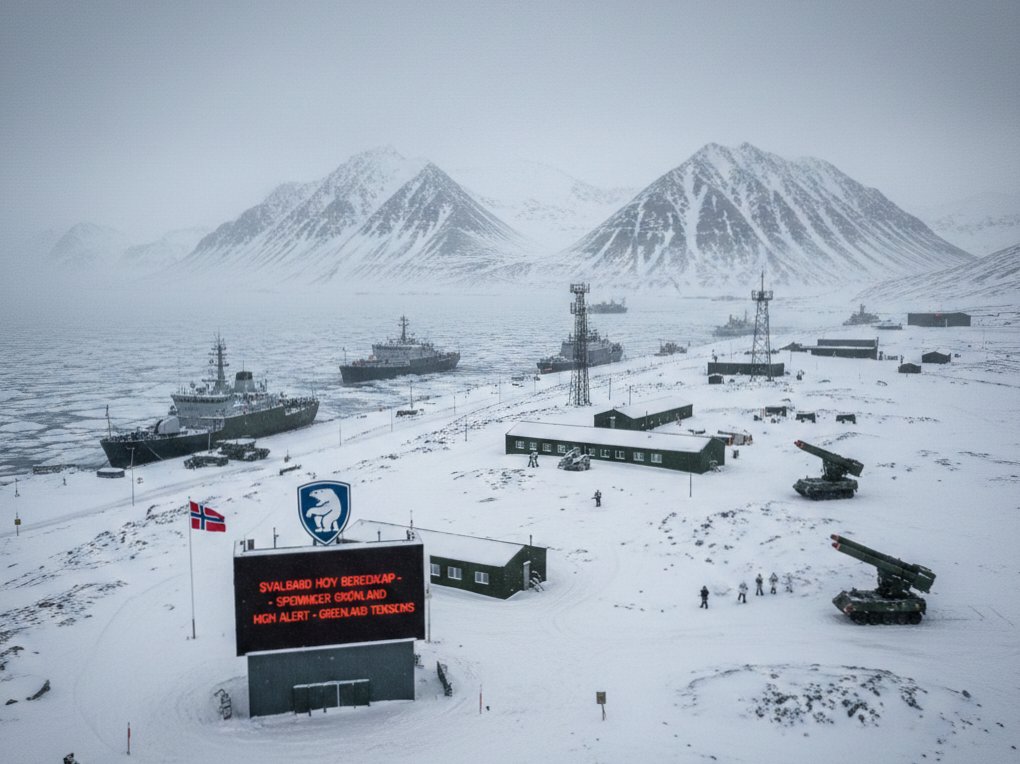
Norway's remote Arctic archipelago of Svalbard has emerged as a flashpoint in escalating global tensions following U.S. President Donald Trump's aggressive rhetoric toward annexing Greenland from Denmark. Norwegian leaders, drawing direct parallels between the two territories, are bolstering defenses and tightening regulations to safeguard their sovereignty over the mineral-rich islands, which are governed by the 1920 Svalbard Treaty. This treaty grants Norway full control while allowing equal economic access to dozens of signatory nations, a delicate balance now strained by climate change, resource competition, and great power ambitions.
Roots of the Crisis
The current unease traces back to early 2026 when Trump reiterated U.S. interest in purchasing or seizing Greenland, citing national security and rare earth mineral needs, with the White House refusing to dismiss military options against NATO ally Denmark. This stance alarmed Oslo, as Svalbard—located 1,000 km north of mainland Norway with 60,000 sq km of icy terrain—faces similar vulnerabilities despite its treaty protections. Home to just 2,500 residents, mostly in Longyearbyen, the archipelago boasts vast deposits of coal, rare earths vital for electric vehicles and renewables, and strategic positions near vital shipping routes and Russian military bases on the Kola Peninsula.
Experts warn of a "domino effect," where perceived U.S. disregard for international law could embolden rivals. Russia already operates coal mines in Barentsburg, complete with Soviet-era monuments, and has protested Norway's recent continental shelf claims as treaty violations. China runs the Yellow River Station for "Arctic research," but Norwegian officials have cracked down on perceived encroachments, such as denying student visas and removing symbolic lion statues interpreted as territorial assertions.
Norway's Swift Measures
In response, Oslo implemented a series of hardening policies. Non-Norwegian residents can no longer vote in local elections unless they've lived on mainland Norway for three years, foreign land sales are banned, and access for foreign researchers is curtailed amid security reviews. State Secretary Eivind Vad Petterson declared Svalbard in its "most serious security situation since 1945," affirming it as "unquestionably Norwegian sovereign territory" during a January 2026 address.
Opposition voices amplified the urgency; Labour Party leader Kirsti Bergstø called for a special parliamentary debate on risks from U.S. actions potentially destabilizing Arctic norms. Prime Minister Jonas Gahr Støre's government has also ramped up military patrols and satellite monitoring infrastructure, while publicly backing Denmark's hold on Greenland to deter copycat moves.
Great Powers' Shadows
Russia views Svalbard as critical for its Northern Fleet operations and has increased provocative naval maneuvers nearby since the Ukraine conflict began. Beijing, meanwhile, eyes Arctic sea lanes opening due to melting ice, with its research station doubling as a potential dual-use facility. Analysts from the New York Times describe it as a "tug of war at the top of the world," where Svalbard's demilitarized status hangs by a thread amid NATO-Russia frictions.
The island's extreme environment—more polar bears than people, temperatures plunging to -34°C, and round-the-clock winter darkness—adds to its mystique, but also underscores the high stakes of militarization.
Broader Arctic Implications
Beyond immediate threats, Svalbard exemplifies the Arctic's transformation into a contested domain. Melting glaciers expose resources worth trillions, while new shipping passages cut Asia-Europe transit times dramatically. Norway balances treaty obligations with NATO commitments, hosting allied exercises while insisting on peaceful science collaboration. As of February 2026, no overt incursions have occurred, but the wary atmosphere persists, with locals and officials alike watching Greenland developments closely.
"The decisions we make today will shape the world for generations to come."