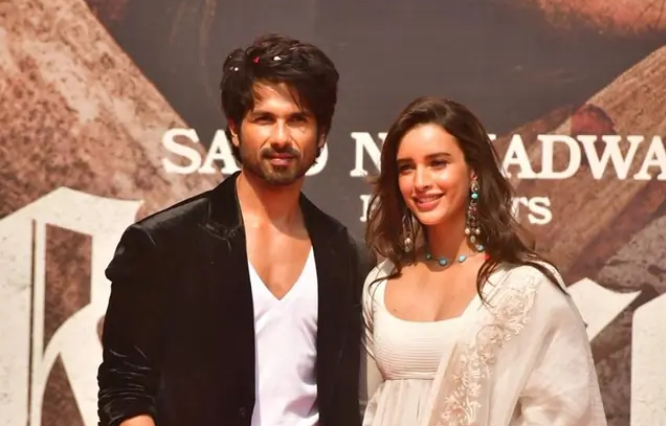
The cinematic landscape of Bollywood is often defined by its shifts in temperament—from the chocolate-boy romances of the early 2000s to the hyper-masculine "alpha" sagas of the current decade. However, when the duo of Shahid Kapoor and Vishal Bhardwaj reunites, the result is rarely a trend-follower; it is a trend-setter. With the launch of the trailer for O’Romeo, the industry has officially witnessed the birth of what could be the most visceral anti-hero of the year: Haseen Ustara.
Set against the jagged edges of a 1990s Mumbai underworld, O’Romeo marks the fourth collaboration between Kapoor and Bhardwaj, following the cult successes of Kaminey, Haider, and Rangoon. This time, the stakes are bloodier, the romance is more toxic, and the "Romeo" in question isn't wooing from a balcony—he is slashing through his enemies with a razor.
The Man with the Razor: Shahid Kapoor’s Darkest Transformation
The 3-minute 8-second trailer waste no time in establishing its tone. We see a feral Shahid Kapoor, eyes wild and body a canvas of ink, portraying a man who views violence not as a last resort, but as a primary language. Kapoor’s character, Haseen Ustara, is a contract killer and gang leader who earns his moniker from his weapon of choice: the ustara (razor).
The trailer’s most chilling dialogue—“Ustra se panga nahi lene ka, shareer se aatma kaat ke le jaata hai” (Don't mess with Ustara, he cuts the soul right out of the body)—sets the stage for a performance that is "quirky, menacing, and deeply conflicted." For Kapoor, this appears to be a spiritual successor to his work in Kabir Singh and Animal, but refined through the poetic, brooding lens of Vishal Bhardwaj. It is a performance rooted in "truth and vulnerability" rather than just shock value.
The Muse and the Mission: Triptii Dimri as Afsha
Opposite Kapoor is the "National Crush" Triptii Dimri, who plays Afsha. In a refreshing departure from her recent roles, Dimri appears to inhabit a character inspired by the real-life Sapna Didi (Ashraf Khan). The trailer depicts her as a woman in distress who seeks Ustara’s help to execute a high-profile assassination—specifically targeting the man who orchestrated her husband’s murder.
The chemistry between Shahid and Triptii is palpable but poisoned. Their relationship is described as a "love-hate saga" where passion and survival are indistinguishable. As Ustara trains her in the arts of combat and weaponry, the lines between mentor, protector, and obsessive lover begin to blur, leading to what Bhardwaj describes as "the irreversible consequences of love denied."
A Stellar Ensemble in a Savage World
Vishal Bhardwaj has always been a master of casting, and O’Romeo is no exception. The trailer gives us glimpses of a powerhouse supporting cast that adds layers of gravitas to the carnage:
- Avinash Tiwary: Stepping into the role of the primary antagonist, Tiwary (of Laila Majnu fame) appears in a striking matador-inspired costume, fighting bulls in an arena—a metaphor for his savage, unyielding nature.
- Nana Patekar: Playing a seasoned cop named Mathur, Patekar brings a grounded, looming authority to the film. His presence serves as the moral (albeit stern) counterweight to Ustara’s lawlessness.
- Farida Jalal: In a viral moment from the trailer, the veteran actress shocks the audience by uttering a bold profanity, playing Ustara’s grandmother who provides the film’s philosophical backbone: "Ishq mein aashique dar jaye to Romeo, mar jaye to c**tiya."
- The Extended Cast: The film also features Tamannaah Bhatia, Disha Patani (in a high-energy dance number), and a special appearance by Vikrant Massey, ensuring the world of O’Romeo feels lived-in and expansive.
The Bhardwaj Aesthetic: Poetic Violence
While the film is being marketed as an action-drama, the "Bhardwaj touch" is evident in every frame. This isn't just a "massy" entertainer; it is a Mumbai Western. The director, who also composed the music and co-wrote the screenplay, uses hyper-stylised visuals and a haunting score to elevate the grit.
The collaboration with Gulzar and Arijit Singh for the soundtrack (highlighted by the song "Hum To Tere Hi Liye The") suggests that beneath the blood and tattoos lies a tragic, poetic core. Much like Bhardwaj's previous Shakespearean adaptations (Maqbool, Omkara), O’Romeo uses the "Romeo and Juliet" template to explore themes of betrayal, generational trauma, and the psychological toll of a life of crime.
Real-Life Inspiration and Controversy
The film is reportedly inspired by true events, specifically the accounts of Hussain Ustara and Sapna Didi found in Hussain Zaidi’s book Mafia Queens of Mumbai. This connection has already stirred the pot; the trailer launch in Mumbai was preceded by legal threats from the family of the real Hussain Ustara, who alleged that the film distorts factual details of his life.
Despite these hurdles, the producers (Sajid Nadiadwala) and Bhardwaj have moved forward, positioning the film as a fictionalized "dark reimagining" rather than a strict biopic.
The Stakes for Shahid Kapoor
For Shahid Kapoor, O’Romeo is a pivotal release. While his recent theatrical outings like Deva and Jersey saw moderate or underwhelming box-office returns, his portrayal of "gray" characters remains his strongest suit. By returning to the director who gave him his career-best roles in Kaminey and Haider, Kapoor is clearly aiming to reclaim his title as the king of the intense, brooding protagonist.
"Internal complexity excites me far more today," Kapoor recently stated. "I'm interested in the nuances that make a character feel real, even if they are morally ambiguous."
A Valentine's Day Like No Other
Releasing on February 13, 2026, O’Romeo is set to offer a stark, blood-soaked alternative to the traditional romantic comedies usually reserved for Valentine's Week. It is a film that promises to challenge the audience's perception of heroism while delivering the high-octane thrills expected of a modern actioner.
With its blend of Shakespearean tragedy, 90s underworld nostalgia, and a transformative performance by Shahid Kapoor, O’Romeo isn't just a movie—it’s a violent, poetic roar from one of India's most celebrated filmmaking duos.
"The decisions we make today will shape the world for generations to come."