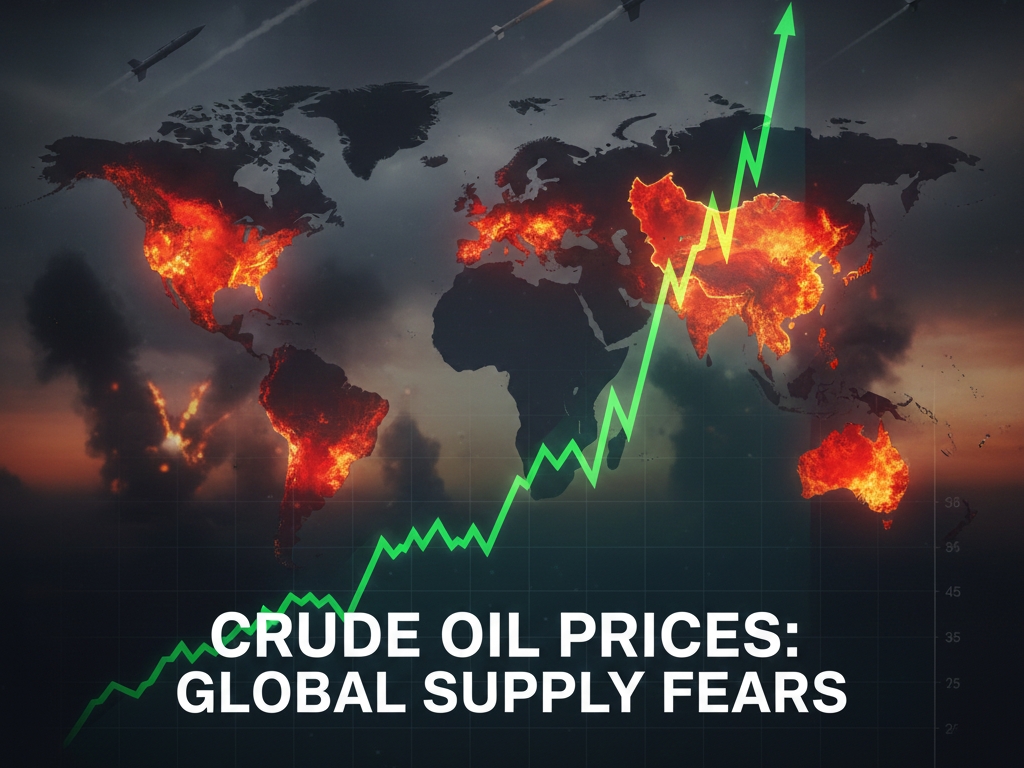
Oil prices extended gains for a third consecutive day on Friday, January 9, 2026, with Brent crude settling at $63.34 per barrel (up 2.18%) and West Texas Intermediate (WTI) at $59.12 (up 2.35%), marking the longest weekly winning streak since June. The rally reflects escalating protests in Iran, OPEC's fourth-largest producer, threatening over 3 million barrels of daily output, overshadowing analyst warnings of global oversupply. Weekly, Brent gained approximately 4% and WTI rose about 3%.
Protests erupted across Iran on December 28 have intensified into the worst unrest in years, spreading to Tehran, Mashhad, Isfahan, and beyond, with a nationwide internet blackout on Thursday and strikes at South Pars refineries—the heart of natural gas production—paralyzing the energy sector. Iran produces over 3 million barrels daily, and analysts like Phil Flynn of Price Futures Group state the uprising keeps markets on edge, while Ole Hansen of Saxo Bank notes protests gathering momentum, raising disruption fears. Over 500 deaths and 10,600 arrests reported as of January 12, with the regime signaling a crackdown; U.S. President Trump warns of severe consequences and weighs military options, including a Tuesday advisory meeting.
Beyond Iran, multiple supply risks converge: Russia fired hypersonic Oreshnik missiles at Ukrainian energy infrastructure on Friday, escalating attacks on military-industrial targets. Venezuelan oil flows remain uncertain after U.S. capture of Nicolás Maduro on January 3; the Trump administration met Chevron, Vitol, and Trafigura executives to control sales indefinitely, with OPEC output falling to 28.40 million barrels per day in December (down 100,000 from November), led by Iran and Venezuela declines. As of Monday, January 12, Brent reached $63.65 (up 0.49%) and WTI $59.42 (up 0.51%), with Tehran eyeing nuclear talks amid worker calls to halt exports.
Despite the rebound, bearish sentiment dominates: A Goldman Sachs survey (January 5-7) of over 1,100 institutional clients found 59% bearish or slightly bearish on crude—near decade-high pessimism—with a record viewing oil as a top short. Forecasts predict 2026 surpluses of 0.5-3.5 million barrels daily; Haitong Futures warns rising inventories cap gains unless Iran risks escalate, while Westpac's Robert Rennie projects $50 per barrel in Q1 amid narrow-range oscillation from Venezuelan shifts and higher production elsewhere.