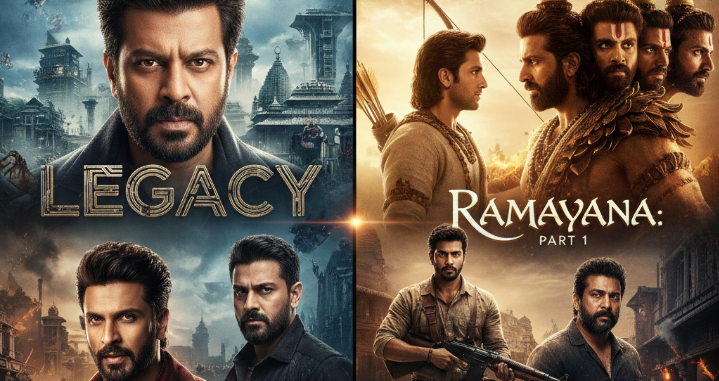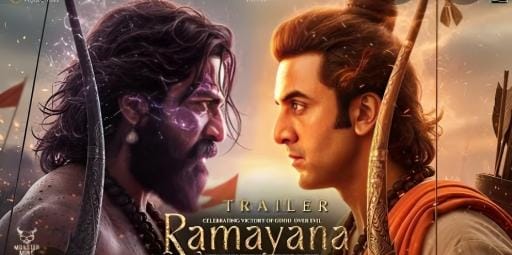
For decades, the Indian film industry has been defined by its larger-than-life storytelling, but the upcoming adaptation of the Ramayana by director Nitesh Tiwari is moving the needle from "grand" to "unprecedented." As of early 2026, the buzz surrounding this project has transcended typical movie hype, evolving into a case study of cinematic ambition. With a staggering combined budget of ₹4,000 crore (approximately $500 million) for a two-part saga, this is not just the most expensive Bollywood movie—it is one of the most expensive film productions globally, rivaling Hollywood's biggest franchises like Avatar or The Avengers.
The Visionary Behind the Lens
Nitesh Tiwari, the man who delivered Dangal—India’s highest-grossing film to date—is the captain of this ship. Known for his ability to weave deep emotional resonance with technical perfection, Tiwari’s transition from realistic sports dramas to a high-fantasy mythological epic is the talk of the industry. His vision for the Ramayana isn't just a retelling of a familiar story; it is an attempt to create a "cultural bridge" that presents Indian heritage using the most advanced filmmaking technology currently available on the planet.
A Stellar Ensemble: The Faces of an Epic
The casting of the film has been a masterstroke in pan-Indian appeal, bridging the gap between Bollywood and the South Indian film industries:
- Ranbir Kapoor as Lord Ram: Following the massive success of Animal and Brahmastra, Kapoor has reportedly undergone rigorous physical and vocal training to embody the grace and stoicism of the Maryada Purushottam.
- Sai Pallavi as Sita: Bringing her trademark poise and powerhouse acting, Pallavi’s inclusion has been hailed as a win for "performance-first" casting.
- Yash as Ravana: The KGF superstar brings a formidable presence to the antagonist, reimagining the demon king not just as a villain, but as a complex, "indestructible" force of nature.
- Sunny Deol as Hanuman: Riding the wave of his Gadar 2 resurgence, Deol’s casting as the ultimate devotee adds a layer of raw, traditional power to the ensemble.
The Global Tech Powerhouse
What truly sets this project apart from previous mythological attempts like Adipurush is the technical pedigree. The film is produced by Namit Malhotra’s Prime Focus Studios and DNEG, the seven-time Oscar-winning VFX house responsible for the visuals in Dune, Oppenheimer, and Interstellar.
The production is utilizing IMAX 1.43:1 format photography, a first for Indian cinema, ensuring that the scale of the Vanar Sena's battles and the grandeur of Lanka are experienced in the highest possible resolution. Furthermore, the music is a historic collaboration between two-time Oscar winner A.R. Rahman and the legendary Hans Zimmer. This marks Zimmer’s debut in Indian cinema, promising a sonic palette that blends ancient Indian ragas with Hollywood’s sweeping orchestral grandeur.
Financial Stakes and Market Impact
The financial scale is staggering. At an average cost of ₹2,000 crore per part, the film needs to perform at a level never before seen in the domestic market to reach break-even. However, the strategy is clearly "Global or Bust." By hiring Hollywood action choreographers like Terry Notary (Planet of the Apes) and Guy Norris (Mad Max: Fury Road), the makers are targeting a worldwide audience, hoping to do for Indian mythology what The Lord of the Rings did for Western folklore.
Interestingly, the film has already begun to pay off before a single trailer has dropped. In mid-2025, the release of a simple "first glimpse" caused the market capitalization of Prime Focus to surge by over ₹1,000 crore in just 48 hours, proving that investors see the Ramayana as a lucrative brand rather than just a movie.
Challenges and Comparisons
The path hasn't been without its hurdles. Scheduling conflicts with other major releases—specifically Sanjay Leela Bhansali’s Love and War—have created a ripple effect in Bollywood’s 2026 calendar. With Ramayana: Part 1 slated for a Diwali 2026 release and Part 2 for Diwali 2027, the industry is bracing for a total shift in how "tentpole" films are marketed and consumed.
The Cultural Responsibility
Beyond the numbers, Nitesh Tiwari and Namit Malhotra have been vocal about the "soul" of the film. In a recent press interaction, Tiwari noted, "We are not simply making a film; we are offering a vision... shaped by excellence and made to transcend borders." For an Indian audience, the Ramayana is more than a story—it is a foundation of identity. The challenge for the creators is to balance the "spectacle" of ₹4,000 crore with the "sanctity" of the source material.
As we look toward Diwali 2026, the Ramayana stands as a testament to the new "Global Bollywood." It represents a shift from regional storytelling to a world-class cinematic experience. If successful, it will not only redefine the box office but also establish a new gold standard for how the East tells its stories to the West.